Ovum

Definition and stakes

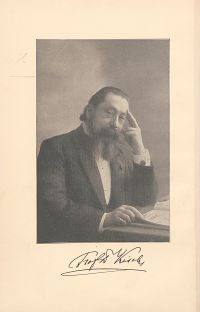
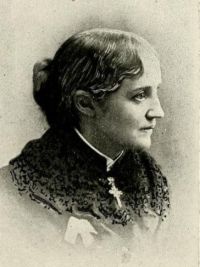
Portrait of E. Heinrich Kisch E. Heinrich Kisch,  The sexual life of woman in its physiological…

“ The ovum, after its discharge from the ovary, like the spermatozoon after its discharge from the testicle, tends sooner or later toward death, and the only thing that can save either from this ultimate fate, is for the two to unite to form a new organism. Precisely what moment in the history of the detached ovum is the most favourable, is a matter regarding which we have no exact information, but it is probable that at the moment of its discharge from the ruptured follicle, it is at the zenith of its vital powers. ”
Source: Gutenberg

A. B. Granville,  Graphic illustrations of abortion and the diseases of menstruation

“ In one point of view, more especially, is the present diseased Ovum particularly interesting to me; for it exhibits the most distinct proof that what I call the cortex of the Ovum, and which others have, without direct evidence, considered as a membrane of the uterus, is, in good truth, a natural covering of the Ovum. It is this very natural covering of the Ovum which is liable, from disease, to become fleshy, opaque, vascular, and lastly coriaceous, thereby cutting short the supply, or accretion of substance to the fœtus, and thus destroying its life and producing abortion. ”
Source: Gutenberg

Louis Berman,  The Glands Regulating Personality

“ As the destined ovum within its nest, the follicle, grows, its fluid affects the interstitial cells to send their specific stuff into the blood. There it circulates, hits this gland and that, makes some more active, others less, transforms the chemistry of the cells, and engorges the mucous membranes, most of all those of the nose and of the uterus. It is all to welcome the mature ovum and its possible impregnation, to prepare a site for its landing and settlement, blood and food for its nutrition, safety for its development. ”
Source: Gutenberg

Get perspective with Kwize: daily news enlightened by great literature