“ Presently there came in a lady, more beautiful than can be imagined anywhere but in a fairy tale, who said: ‘Thou who art in my house, name thyself! If thou art an old man, thou shalt be my father; if a middle-aged man, my brother; but if a young man, thou shalt be my husband dear. And if thou art a woman, and an old one, thou shalt be my grandmother; if middle-aged, my mother; and if a girl, thou shalt be my own sister.’ Thereupon he came forth. ”
Quotes about “follicle”
 Joyce Kilmer,
Trees, and Other Poems
(1914)
Joyce Kilmer,
Trees, and Other Poems
(1914)
“ Beneath our Lady Folly's tread? Why has she left us, wise in woe, Shrewd, practical, uncomforted? We cannot love or dream or sing, We are too cynical to pray, There is no joy in anything Since Lady Folly went away. ”
William Crosbie Hunter, Evening Round-Up
“ The painted, powdered, tinsel, fluff, feathers and furebelow girl may be dashing now and you may envy her, but you, with your quiet, sweet, simple, sensible ways—you will win real love, real respect, real affection, real pleasures, real satisfaction, in all the days to come; you will make a success of your life.Frills and feathers may be an attraction to the girl who makes the fizzle of her life, but sweetness and simplicity, and sentiment and sense, are precious jewels that will endure for all time. ”
James Campbell, Polygamy and Monogamy Compared (1869)
“ Shall these heaven-born impulses of nature be regarded, or must they be repressed? Shall we permit these tendrils of our love to bind themselves around some kindred heart, or shall we suffer them to be rudely torn asunder, and cast aside to wither and decay? Implanted for the noblest purposes within our breasts, interwoven with the very fibres of our being, the laws of God and of nature unquestionably demand their indulgence. ”

“ These women, who thus without more ado renounce motherhood, have they ever held a child, not in their bosom, but even in their arms? Have they ever felt the thrill of tenderness such a soft-limbed creature, made, as it seems, of a flower’s soft surfaces and fair tints, inspires? ”
Margaret Warner Morley, The Renewal of Life; How and When to Tell the Story to the Young
“ Flower—Ovary, Style, Stigma, Stamens, Anthers, Petals, Sepals In teaching the later facts of the reproductive life, it is a great help for the child to know the names and uses of certain parts of the flower; in many flowers, as for instance the lily, the parts can be seen without pulling the flower to pieces. In the centre is the ovary, as the child already knows. Let him notice the long stalk on top of it and learn to call this the style. On top of the style is a knob—the stigma. Ovary, style, and stigma together make the pistil. ”
Francis Bradley Bradley-Birt, Bengal Fairy Tales (1920)
“ His old father, anticipating death, thought of settling his son in life, and therefore was on the look out for a wife for him. When the idea of marriage was haunting the young man's thoughts, he one night dreamed of a girl of the colour of gold and with hair as black as a dark cloud. ”
 Jeffery Farnol,
The Geste of Duke Jocelyn
Jeffery Farnol,
The Geste of Duke Jocelyn
“ So wilt thou go, come joy, come pain, come life or death, since a maid is made to make man saint or devil, some days glad and some days sad, but ever and always a fool. And thou art Fool by profession, and, being lover professed and confessed, art doubly a fool; and since, good Folly, love's but folly and thou, a Fool, art deep in folly, so is thy state most melancholy. ”
Anonymous, The Lustful Turk (1828)
“ There can be no doubt she gained by its discovery. How magical is the influence of the distinction of our sex over the feelings of the softer one. Shrieks, cries, tears and resistance accompanied the discovery and my seizing of her, but directly she felt its head dividing her lips of life her resistance ceased, and her cries became hushed; as it penetrated her tears became dried; but when it pierced her up to the quick, soft exclamations, tremulous sighs and a general trembling of the limbs and body only accompanied our complete junction. ”
Arthur Waugh, The Yellow Book (1894)
“ It is out of date, no doubt, to clamour for modesty; but the woman who describes the sensations of childbirth does so, it is to be presumed—not as the writer of advice to a wife—but as an artist producing literature for art's sake. ”
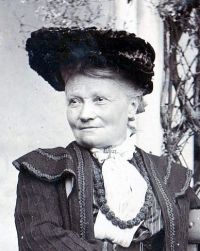 Flora Annie Webster Steel,
English Fairy Tales
Flora Annie Webster Steel,
English Fairy Tales
“ Look you here, I have been searching for a maiden to wife, and your daughter who can spin five skeins a day is the very one for me. Only, mind you, though for eleven months of the year she shall be Queen indeed, and have all she likes to eat, all the gowns she likes to get, all the company she likes to keep, and everything her heart desires, in the twelfth month she must set to work and spin five skeins a day, and if she does not she must die. ”
Frederick Martin, The Life of John Clare
“ When spring and summer was gone, and the cold wind came blowing over the fen, the poor little thing told her lover that she was in the way of becoming a mother, and, with tears in her eyes, entreated him to make her his wife. ”
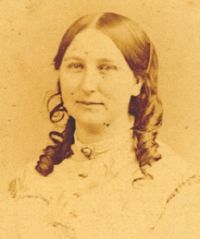 Mrs. J. H. Riddell,
The Earl's promise
(1873)
Mrs. J. H. Riddell,
The Earl's promise
(1873)
“ Curls, book-muslin, blue eyes, sashes to match, blushes when spoken to, no original or commonplace observations to advance when invited out to the mild dissipation of tea, and a carpet-dance; such was the raw material from which men of that generation chose wives for themselves, mothers for their children. ”
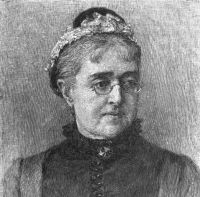 E. Lynn Linton,
Modern Women and What is Said of Them
E. Lynn Linton,
Modern Women and What is Said of Them
“ Folly is the true capillary attraction of the moral world, and penetrates every stratum of society; and the folly of extravagant attire in the drawing-room is reproduced in the nursery. Not content with bewildering men's minds, and emptying their husband's [307] purses for the enhancement of their own charms, women do the same by their children, and the mother who leaves the health, and mind, and temper, and purity of her offspring in the keeping of a hired nurse takes especial care of the color and cut of the frocks and petticoats ”
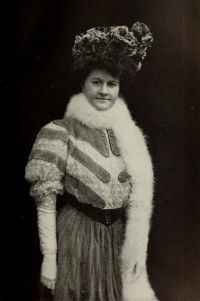 Ellen Anderson Gholson Glasgow,
Life and Gabriella: The Story of a Woman's Courage
Ellen Anderson Gholson Glasgow,
Life and Gabriella: The Story of a Woman's Courage
“ From the shining nimbus of her hair to her small tripping feet she was the incarnation of girlhood—of that white and gold girlhood which has intoxicated the imagination of man. She shed the allurement of sex as unconsciously as a flower sheds its perfume. ”
George H. Napheys, The Physical Life of Woman: Advice to the Maiden…
“ Late hours, children's parties, sensational novels, 'flashy' papers, love stories, the drama, the ball-room, talk of beaux, love, and marriage,—that atmosphere of riper years which is so often and so injudiciously thrown around childhood,—all hasten the event which transforms the girl into the woman. ”
Various, The Little Review, February 1915…
“ Thy lady’s unknown body is untried music to thee. Thy hands would touch the strings, thy ear catch the vibrations her soul modulates to sounds of sighs and sobs at the call of love. Look at my whiteness! Think of thy unrest! The secrets of thy lady’s body are not learnt through the strong desires common to the herd of men or the fainting dreams of impassioned women. Fool! inscribed as thou art in the heavenly registers by a woman as God’s Fool, thou must learn the mystic’s lore about the body of thy Love. Thy desire is towards thy lady, and her will, not thine, is thy law. ”
Emory Adams Allen, The Golden Gems of Life; Or, Gathered Jewels for the Home Circle
“ The babe that perished on the bosom of its mother, like a flower that bowed its head and drooped amid the death-frosts of time,—that babe, not only in its image, but in its influence, still lives and speaks in the chambers of the mother's heart. ”
Margaret Warner Morley, The Renewal of Life; How and When to Tell the Story to the Young
“ All the facts of sex-life can be learned in the flower, and the associations thus indelibly impressed cannot fail to leave at least a trace of fragrance and loveliness on even an obtuse nature. No matter what the later experiences or mistakes may be, the whole conception of this side of life cannot sink so low as might be the case if there were not this flower-sweet background. ”
“ And thinking the time to reveal himself had come, he took the pill from his mouth, and disclosed his natural form. And he said: "Beautiful maiden, I am he whom you bought and enslaved with a kindly glance in the garden. I was sick at the separation from you; so I took the form of a girl, and came here. So now bring heaven in a loving glance to my love-tortured heart." ”
 Hippolyte Taine,
History of English Literature Volume 1…
Hippolyte Taine,
History of English Literature Volume 1…
“ Everyone gets married, everyone dances, everything ends with a "rustic revelry." Where is the pleasantness of these puerilities? First, the fact of its being puerile; the absence of the serious is refreshing; There are no events, and there is no plot. We gently follow the easy current of graceful or melancholy emotions, which takes us away and moves us about without wearying. ”
The Rāmāyana, Volume 1. Bālakāndam and Ayodhyākāndam
“ And as they perfect in every limb, and unparalleled on earth in beauty, and endowed with all qualities, and furnished with youth and grace, were in the garden, like unto stars embosomed among clouds, that life of all, the air, beheld them and said,— "I seek for ye: do ye become my wives. ”
 James Lane Allen,
The Mettle of the Pasture
James Lane Allen,
The Mettle of the Pasture
“ As she strolled around the garden under the cloudy flush of the evening sky dressed in white, a shawl of white lace over one arm, a rose on her breast, she had the exquisiteness of a long past, during which women have been chosen in marriage for health and beauty and children and the power to charm. ”
Florence Warden, Forge and furnace: A novel (1896)
“ And as he thought about the girl in this new aspect his new-born infatuation seemed to die away, the glamour and the glow faded, and he thought of her only as a poor little nestling which, deprived of its natural right of warmth and love and tenderness, lives a starved life, but bears its privations with a brave look. ”
author:Metta Victoria Fuller Victor, Poems of Sentiment and Imagination (1851)
“ The delicately tinted cheek, the bright lips' sweet unrest, That quivered all unconsciously to the pulse within her breast; The drooping eyelid glittering with bright and happy tears— The memory of that bridal night hath haunted me for years. ”
Kenneth Folingsby, Meda: a Tale of the Future (1891)
“ On the other hand, when our women adorn themselves with flowers, they adorn themselves with beautiful new born beauty, short lived, it is true, but pure and free from the curse of a horrible record of crime. ”
Judith Drake, An Essay in Defence of the Female Sex (1696)
“ These, and innumerable others of the like Nature, are the lesser Follies of Mankind, by which their Vanity makes ’em fit only to be laugh’d at. There are others, who by more studied and refin’d Follies arrive to be more considerable, and make a great Figure and Party among their Sex. ”
Robert Montgomery Bird, The Hawks of Hawk-Hollow: A Tradition of Pennsylavania
“ What have you or I to do with the love of woman? This is but a folly.—You have no friend or kinsman left to advise or help you.—Well, if the girl be willing to fly, why, put her upon a fleet horse, and to-morrow she shall be beyond the reach of a Falconer. ”
Chautauqua Institution, The Chautauquan, Vol. 04, December 1883
“ Their tempers are worldly, and make a worldly atmosphere in the home. Pride, the ambition of show, and social standing, envy to what is above, and jealousy of what is below, follies of dress and fashion, and the more foolish elation, when a son is praised, or a daughter admired in the matter of personal appearance, or, what is no better, a manifest preparing and foretasting of this folly, when the son or daughter is so young as to be more certainly poisoned by the infection of it. ”
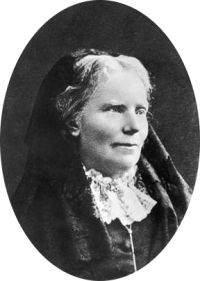 Elizabeth Blackwell,
Essays in medical sociology, Volume 1…
(1902)
Elizabeth Blackwell,
Essays in medical sociology, Volume 1…
(1902)
“ Why, if you could hear those boys of fourteen, who blush before mothers and sneak off in silence in the presence of their daughters, talking among each other, it would be the woman’s turn to blush then. ”
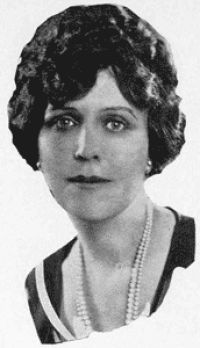 Helen Rowland,
The Rubáiyát of a Bachelor
Helen Rowland,
The Rubáiyát of a Bachelor
“ OULD you the spangle of existence spend In Matrimony? Slow about, my Friend! A maiden's hair is more oft false than true, And on the chemist may her blush depend. [54] MAIDEN'S hair is more oft false than true! Aye, and her Modiste is, perchance, the clue, Could you but know it, to her sylph-like grace, And, peradventure, to her Figure, too. ”
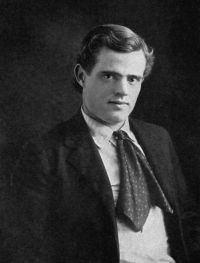 Jack London,
The Kempton-Wace Letters
Jack London,
The Kempton-Wace Letters
“ Separated from codes and conventions, shorn of imagination, divested of romance, stripped naked down to the core of the matter, it was old Mother Nature crying through us, every man and woman of us, for progeny. Her one unceasing and eternal cry—Progeny! Progeny! Progeny!Just as little girls, instinctively foreshadowing motherhood, play with dolls, so children feel vague sex promptings, and in sweetly ridiculous ways love and quarrel and make up after the [Pg 197] approved fashion of lovers. You loved little girls in pigtails and pinafores. We all did. ”
Denis Florence MacCarthy, Poems
“ Forget the time-flakes on their hairs, And laugh, light-hearted boys again. When those who now are wedded wives, By children of their own embraced, Recall their early joys, and taste Anew the childhood of their lives. ”
Sarah Fielding, Remarks on Clarissa (1749)
“ For what shall we say, if all these Complaints of a Character Wounded, these Declarations of increasing Regrets of meeting me, of Resentments never to be got over for my seducing her away, these angry Commands to leave her,—what shall we say, if all were to mean nothing but Matrimony?—And what if my forbearing to enter upon that Subject comes out to be the true Cause of her Petulance and Uneasiness. ”
S. D. Gordon, Quiet Talks on John's Gospel
“ She broods in spirit till her child looks into her eyes, bearing the image, in face and mental impress and spirit, which the brooding months have given. She broods over the inarticulate days when the babe cannot tell the felt needs except to a brooding mother's keen insight. ”
Mary Wollstonecraft Shelley, Falkner: A Novel
“ How many blooming girls have they sacrificed to their peculiar views! With what careless eyes they regard the sweetest emotions of nature! never shall my adored girl be made the victim of that loveless race. Do you remember our sweet child? She was lovely from her birth; and surely, if ever angel assumed an earthly vesture, it took a form like my darling: her loveliness expresses only the beauty of her disposition: so young, yet so full of sensibility; her temper is without a flaw, and her intelligence transcends her age. ”
 Desiderius Erasmus,
The Praise of Folly
Desiderius Erasmus,
The Praise of Folly
“ Whereas women's cheeks are ever plump and smooth, their voice small, their skin soft, as if they imitated a certain kind of perpetual youth. Again, what greater thing do they wish in their whole lives than that they may please the man? For to what other purpose are all those dresses, washes, baths, slops, perfumes, and those several little tricks of setting their faces, painting their eyebrows, and smoothing their skins? And now tell me, what higher letters of recommendation have they to men than this folly? ”
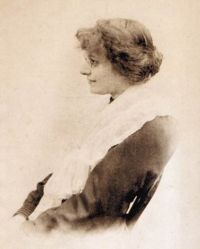 Eleanor Farjeon,
Martin Pippin in the Apple Orchard
Eleanor Farjeon,
Martin Pippin in the Apple Orchard
“ She will tend it and cherish it, laugh and cry with it, dress it in a new dress every day and dandle it in the world's eye for joy and pride in it—nay, she will bid the whole world come into her nursery to admire the pretty secret she keeps so well. ”

“ And the poet's words are especially applicable to a newborn babe. For there is nothing so imperfect, so helpless, so naked, so shapeless, so foul as a newborn babe: to whom almost alone nature has given an impure outlet to the light of day: being kneaded with blood, and full of defilement, and like one killed rather than born: which no one would touch, or lift up, or kiss, or embrace, but from natural affection. ”
Donald G. French, Highways of Canadian Literature
“ After reading that noble poem of love and pathos, and being moved to emotion too deep for tears, one knows that all distinctions for sex are man-made and ephemeral and abortive—that only ‘soul,’ whatever be its form of earthly tenement, is real. ”
Sir John Falstaffe, The Theater (1720)
“ The young Things come in blushing, and express all the Fears and Confusions natural to Youth and Innocence: Immediately I examine them: One tells me, she desires to know when she shall be married; another is as importunate to learn when she shall be a Widow: I interrupt them, by telling one, I know that she is a married Woman ”
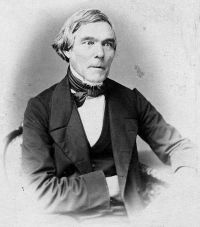 Elias Lönnrot,
The Kalevala — Rune VIII
Elias Lönnrot,
The Kalevala — Rune VIII
“ Thus the lives of married women; Maidens living with their mothers Are like ripe and ruddy berries; Married women, far too many, Are like dogs enchained in kennel, Rarely do they ask for favors, Not to wives are favors given.' ”
Henry James, The American scene (1907)
“ What would the right word be but that nature, in these lights, was no single one of the horrid things I have named, but was, instead of them all, that quite other happy and charming thing, feminine?—feminine from head to foot, in expression, tone and touch, mistress throughout of the feminine attitude and effect. ”
