Pistil

Definition and stakes

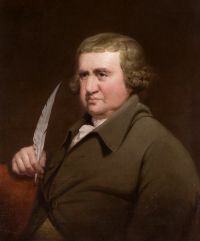
Portrait of James Bruce James Bruce,  Select Specimens of Natural History Collected in Travels to Discover the Source of the Nile…

“ The top of the tube, divided into five segments, or petals, arrives about one third up the pistil, and makes the figure of a calix or perianthium to it. From this tube proceeds a great number of very small capillaments of a 33 pink colour, at the end of each of which hangs a purple stigma. At the top of this pistil is a large bunch of still finer fibres, or capillaments, with stigmata likewise, and at the end the pistil is rounded as if forming a fruit; without a very distinct drawing, it would be difficult to make a description that should be intelligible. ”
Source: Gutenberg

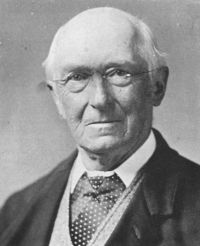
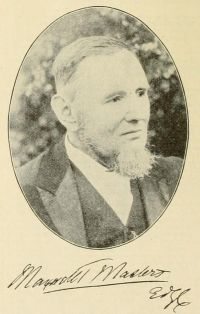
Portrait of Maxwell T. Masters Maxwell T. Masters,  Vegetable Teratology

“ It is of interest, as it sometimes serves to illustrate the morphological nature of the pistil. Of this the double-flowering cherry is a well-known illustration, the pistil being here represented by two small foliar laminæ, whose midribs are prolonged with a short style, terminated by an imperfect stigma. It is usually the basal portion of the pistil, the ovary, which is thus specially affected, the margins being also often disunited so as to expose the ovules. These latter organs may be absent or they may themselves be the subjects of foliaceous development. ”
Source: Gutenberg

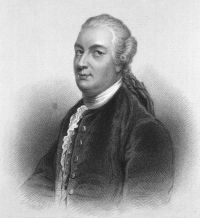
Portrait of Gaston Tissandier Gaston Tissandier,  Popular Scientific Recreations

“ The pistil consists of two parts—viz., the ovary or germen, which contains the ovules or young seeds, a, and the stigma, b, either placed upon the ovary, or upon the style, or stalk, which is between the stigma and the ovary.
A pistil may be of one carpel (simple) , or of more than one (compound) . The carpels or the carpellary leaves are the “ovaries.”
The pistil is a very important test for the classification of plants; some trees have no pistils, and the ovules are consequently naked. Such plants are called gymnospermæ.
”
Source: Gutenberg

Get perspective with Kwize: daily news enlightened by great literature