Summary

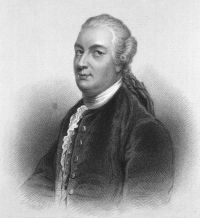
Portrait of James Bruce James Bruce Select Specimens of Natural History Collected in Travels to Discover the Source of the Nile…

Its thighs are covered with feathers of the same colour as the belly, which reach more than half way down his leg; his legs and feet are black, marked distinctly with scales. He has two toes before and one behind, each of which have a sharp and crooked claw. I never saw his nest; but in flying, and while sitting, he perfectly resembles the cuckoo. I never heard, nor could I learn from any others, that he had any voice or song. He makes a sharp, snapping noise, as often as he catches the bees, which is plainly from closing his beak.
Source: Gutenberg

Portrait of James Bruce James Bruce Select Specimens of Natural History Collected in Travels to Discover the Source of the Nile…

Nothing can be more beautiful, or more compounded, than the formation of this flower, though it has no odour; the head is composed of about thirty of these small branches now described, which make a very beautiful mass, and is of a pink colour of different shades. At sun-set, the leaves on each side of the branch shut face to face like the sensitive tribe. I never saw any seed or fruit that it bore, nor any thing like the rudiments of seed, unless it be that very small rotundity that appears at the end of the pistil, which seem to bear no proportion to so large a tree.
Source: Gutenberg

Portrait of James Bruce James Bruce Select Specimens of Natural History Collected in Travels to Discover the Source of the Nile…

These are the wretched subterfuges of low minds, as distant from science as they are from honour and virtue. Why, if the animal was equally known to Mr Brander and me, did he not, when writing upon it, give his name, his manners, the uses to which he was destined, and the places where he resided? why send to Algiers for an account of him, after having him so long in his possession, since at Algiers he was probably as great a stranger as he was at Stockholm? why call him a fox, or pronounce his genus, yet write to Algiers for particulars to decide what that genus was?
Source: Gutenberg

Get perspective with Kwize: daily news enlightened by great literature