“ For surely the study of natural history means only the study of plants and animals themselves, which, at the moment of using the words “Natural History,” we assume to be the most important part of nature. ”
Natural history
Definition and stakes
Natural history, the study of organisms in their natural environments, has developed from ancient observational methods into a multidisciplinary field encompassing biology, geology, and more. Samuel Butler highlighted its emphasis on plants and animals as nature’s most essential elements, while Charles Kingsley connected it to wider sciences such as geography and economics.
Hugh Miller stressed its temporal dimension, incorporating geological history to chart the evolution of life through time. This integration portrays natural history as both an observational practice and a fundamental basis for comprehending ecological and scientific interrelations.
Quotes about “natural history”
Various, The Atlantic Monthly, Volume 09…
“ It is my intention, in this series of papers, to give the history of the progress in Natural History from the beginning,—to show how men first approached Nature,—how the facts of Natural History have been accumulated, and how those facts have been converted into science. In so doing, I shall present the methods employed in Natural History on a wider scale and with broader generalizations than if I limited myself to the study as it exists to-day. The history of humanity, in its efforts to understand the Creation, resembles the development of any individual mind engaged in the same direction. ”
 Charles Kingsley,
Scientific Essays and Lectures
Charles Kingsley,
Scientific Essays and Lectures
“ For natural history stands to man’s power over Nature, that is, to his power of being useful to himself and to mankind, in the same relation as do geography, grammar, arithmetic, geometry, political economy ”
John Lord, Beacon Lights of History, Volume 03…
“ His Natural History treats of everything in the natural world,--of the heavenly bodies, of the elements, of thunder and lightning, of the winds and seasons, of the changes and phenomena of the earth, of countries and nations, of seas and rivers, of men, animals, birds, fishes, and plants, of minerals and medicines and precious stones, of commerce and the fine arts. He is full of errors, but his work is among the most valuable productions of antiquity. ”
John Phillips, A Treatise on Geology (1852)
“ Thus the study of the ancient natural history of the earth draws help from every kind of inquiry which man can make into the actual constitution of nature, but robs none of its interest or glory; on the contrary, by the novelty of its discovered facts, fresh problems are presented to the cultivators of natural science, and a perpetual excitement is kept up, which has proved of infinite service to them all. ”
Charles Kingsley,
Scientific Essays and Lectures
“ They deal each of them, with realms of Nature. Geology is, literally, the natural history of soils and lands; chemistry the natural history of compounds, organic and inorganic; meteorology the natural history of climates; astronomy the natural history of planetary and solar bodies. And more, you cannot now study deeply any branch of what is popularly called Natural History—that is, plants and animals—without finding it necessary to learn something, and more and more as you go deeper, of those very sciences. ”
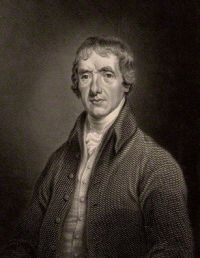 John Aikin,
The Seasons — An Essay On the Plan and Character of Thomson's Seasons
(1791)
John Aikin,
The Seasons — An Essay On the Plan and Character of Thomson's Seasons
(1791)
“ Natural History, in its most extensive signification, includes every observation relative to the distinctions, resemblances, and changes of all the bodies, both animate and inanimate, which Nature offers to us. ”
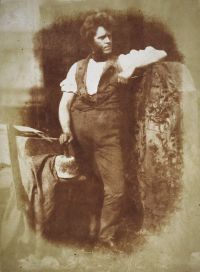 Hugh Miller,
The Foot-prints of the Creator
(1850)
Hugh Miller,
The Foot-prints of the Creator
(1850)
“ In Geology, which is Natural History extended over all ages, this principle has a still wider scope,—embracing not merely the characteristics and conditions of the beings which now exist, but of all, so far as we can learn regarding them, which have ever existed, and involving the consideration of not merely their peculiarities as races placed before us without relation to time, but also of the history of their rise, increase, decline, and extinction. ”
Charles Kingsley,
Glaucus; Or, The Wonders of the Shore
“ Where all was chaos, every man was useful who could contribute a single spot of organized standing ground in the shape of a fact or a specimen. But it is a question whether Natural History would have ever attained its present honours, had not Geology arisen, to connect every other branch of Natural History with problems as vast and awful as they are captivating to the imagination. ”
 Johann Reinhold Forster,
Travels into North America, Volume 2…
(1770)
Johann Reinhold Forster,
Travels into North America, Volume 2…
(1770)
“ Natural history ought to be studied as a collection of facts; not as the history of our guesses or opinions. Nature varies in an infinite manner; and Providence has diversified the instinct of animals, and their œconomy, and adapted it to the various seasons and climates. ”
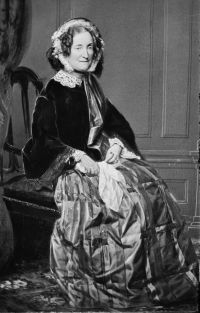 Lydia Sigourney,
Sketch of Connecticut, Forty Years Since
(1824)
Lydia Sigourney,
Sketch of Connecticut, Forty Years Since
(1824)
“ He was particularly fond of the science of Natural History, and of exploring those labyrinths in which nature delights to involve her operations, where she has made man, both the habitant of a region of wonders, and a link in their mysterious chain. ”
B. F. Cocker, Christianity and Greek Philosophy
“ As the natural history of the earth may now be read in the successive strata and deposits which form its crust, so the history of humanity may be read in the successive deposits of thought and language, of philosophy and art, which register its gradual progression. ”
editor W.L. Distant, The Zoologist (1900)
“ Consequently it is a spot worthy of a local natural historian, and when a body of naturalists unite to describe its fauna, flora, geology, and other natural features, and do so in an exhaustive manner, we recognize a very useful addition to British natural history. ”
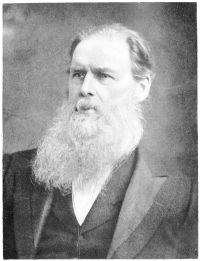 Edward B. Tylor,
Anthropology
(1881)
Edward B. Tylor,
Anthropology
(1881)
“ Having now sketched what history, archæology, and geology teach as to man’s age and course on the earth, we shall proceed in the following chapters to describe more fully Man and his varieties as they appear in natural history, next examining the nature and growth of Language, and afterwards the development of the knowledge, arts, and institutions, which make up Civilization. ”
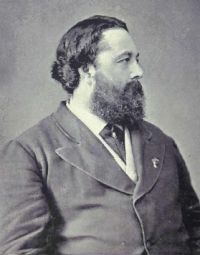 Thomas Sterry Hunt,
Popular Science Monthly
(1883)
Thomas Sterry Hunt,
Popular Science Monthly
(1883)
“ The study of nature in its details presents itself to the mind in a twofold aspect—as historical and as philosophical. The first of these gives rise to a General Physiography or description of nature, which we commonly call Natural History as applied to each of the three great divisions designated as the mineral, vegetable, and animal kingdoms. ”
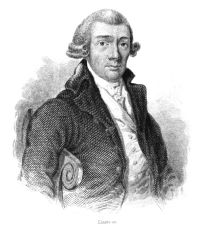 Dru Drury,
Illustrations of Exotic Entomology
Dru Drury,
Illustrations of Exotic Entomology
“ It is a pleasing reflection to consider the great strides natural history is making in this kingdom, as well as in other parts of the world; and the many publications on the various subjects of nature, that have made their appearance within these last three or four years, is a circumstance that must give every man of a liberal mind the greatest satisfaction. We see persons, skilled in natural history, receiving encouragements and reward from men of rank and property, according to their respective abilities. ”
Various, Popular Science Monthly (1914)
“ The chance and the duty of natural history to beneficently influence the attitude of people generally toward the world—toward nature, man and society. You will not, I trust, have understood me to mean natural history in any restrictive sense. ”
 George Santayana,
The Life of Reason: The Phases of Human Progress
George Santayana,
The Life of Reason: The Phases of Human Progress
“ And of course, if the material basis of human strength could be discovered and better exploited, the free activity of the mind would be not arrested but enlarged. Geology adds something to the interest of landscape, and botany much to the charm of flowers; natural history increases the pleasure with which we view society and the justice with which we judge it. ”
Joseph A. Hester, Early Man in the New World
“ Published in co-operation with The American Museum of Natural History by Doubleday Anchor Books, this series introduces the student and the general reader to the study of man—his origins, his nature, and his environment—and to the whole natural world, from sub-microscopic life to the universe at large. ”
John Phillips, A Treatise on Geology (1852)
“ Strong in its fundamental facts, corroborated in its inferences by the progress of all collateral branches of the study of Creation, linked in union with the highest forms of scientific truth, and grasping at objects full of the noblest interest for man, and the most reverential thoughts toward the Maker and Preserver of the Universe, nothing but the general decay of the human intellect will permit Geology to languish, till the Natural History of the ancient earth be known to its modern occupier Man. ”
 Thomas Henry Huxley,
The Advance of Science in the Last Half-Century
(1887)
Thomas Henry Huxley,
The Advance of Science in the Last Half-Century
(1887)
“ The publication of 'The Principles of Geology,' in 1830, constituted an epoch in geological science. But it also constituted an epoch in the modern history of the doctrines of evolution, by raising in the mind of every intelligent reader this question: If natural causation is competent to account for the not-living part of our globe, why should it not account for the living part? ”
 Alfred Russel Wallace,
The Malay Archipelago, Volume 1
Alfred Russel Wallace,
The Malay Archipelago, Volume 1
“ It has generally been the custom of writers on Natural History to take the habits and instincts of animals as fixed points, and to consider their structure and organization, as specially adapted, to be in accordance with these. ”
Charles Grant Blairfindie Allen, Popular Science Monthly (1880)
“ The relation between physical conditions and history in its wider acceptation being thus fundamental, it may be well to consider in somewhat greater detail the special reactions of a single tolerably definite portion of the natural environment upon human development. ”
 Andrew Dickson White,
History of the Warfare of Science with Theology in Christendom
Andrew Dickson White,
History of the Warfare of Science with Theology in Christendom
“ To the same manner of explaining striking appearances in physical geography, and especially strange rocks and boulders, we mainly owe the innumerable stories of the transformation of living beings, and especially of men and women, into these natural features. ”
Alfred Russel Wallace,
A narrative of travels on the Amazon and Rio Negro…
(1853)
“ In all works on Natural History, we constantly find details of the marvellous adaptation of animals to their food, their habits, and the localities in which they are found. ”
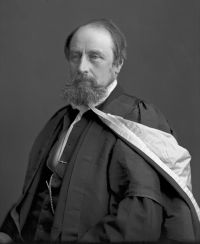 Sir John William Dawson,
The Origin of the World According to Revelation and Science
Sir John William Dawson,
The Origin of the World According to Revelation and Science
“ They now afford at once the materials of improvement in the arts and of comfortable subsistence in extreme climates, and subjects of surpassing interest to the naturalist. Similar instances may be gleaned by the natural theologian from nearly every part of the geological history. ”
 Ernest Thompson Seton,
Wild Animals I Have Known
Ernest Thompson Seton,
Wild Animals I Have Known
“ I believe that natural history has lost much by the vague general treatment that is so common. ”
 Charles Darwin,
On the Origin of Species By Means of Natural Selection
Charles Darwin,
On the Origin of Species By Means of Natural Selection
“ For my part, following out Lyell’s metaphor, I look at the natural geological record, as a history of the world imperfectly kept, and written in a changing dialect; of this history we possess the last volume alone, relating only to two or three countries. Of this volume, only here and there a short chapter has been preserved; and of each page, only here and there a few lines. ”
Robert Chambers, Vestiges of the Natural History of Creation
“ Geology at first seems inconsistent with the authority of the Mosaic record. A storm of unreasoning indignation rises against its teachers. In time, its truths, being found quite irresistible, are admitted, and mankind continue to regard the Scriptures with the same respect as before. So also with several other sciences. ”
W. H. Dallinger, The Creator, and what we may know of the method of creation (1887)
“ What life on life, through age on age, moved in stately march from the lower to the higher, while the rocks kept imperishable record! The facts of geology, so far as they carry us, are more accurate and certain than any records of human history. ”
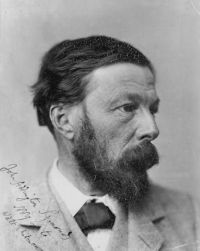 John Addington Symonds,
Studies of the Greek Poets (Vol 2 of 2…
John Addington Symonds,
Studies of the Greek Poets (Vol 2 of 2…
“ Geology, together with the speculations of comparative anatomists and naturalists, has altered all our notions with regard to the age of the world, and to the antecedents and early history of the human race. ”
Emory Adams Allen, The Prehistoric World; Or, Vanished Races
“ To see how, following a definite plan, the vast continents have grown to their present size and form; to see how animal and vegetable life have evolved successively higher and higher forms; to see where in this wondrous drama of creation, this strange unfolding of life, the first faint, indecisive traces of man’s presence are to be found; to learn what great changes in climate, in Geogony, and in life, had occurred before man’s appearance, let us pass in brief review the history of early geological periods. ”
William Harmon Norton, The Elements of Geology
“ In the Recent epoch the progress of man in language, in social organization, in the arts of life, in morals and religion, has left ample records which are for other sciences than ours to read; here, therefore, geology gives place to archaeology and history. ”
 J. Howard Moore,
The Universal Kinship
J. Howard Moore,
The Universal Kinship
“ One of the strongest pieces of evidence bearing on evolution that is furnished by any department of knowledge is that furnished by geology. It is the evidence of the rocks. Geology is, among other things, a history of the earth. ”
Charles Darwin,
On the Origin of Species By Means of Natural Selection
“ In the distant future I see open fields for far more important researches. Psychology will be based on a new foundation, that of the necessary acquirement of each mental power and capacity by gradation. Light will be thrown on the origin of man and his history. ”
P. Martin Duncan, Heroes of science (1882)
“ The study of existing nature and its changes undertaken in order to comprehend the past changes during geological ages—The uniformity of natural operations under law—Catastrophes abolished—The succession of life on the globe, and that of the tertiary ages explained—The antiquity of man and of the great ice age considered. ”
William Harmon Norton, The Elements of Geology
“ Our brief study of the outlines of geology has given us, it is hoped, some great and lasting good. To conceive a past so different from the present has stimulated the imagination, and to follow the inferences by which the conclusions of our science have been reached has exercised one of the noblest faculties of the mind,—the reason. We have learned to look on nature in new ways: every landscape, every pebble now has a meaning and tells something of its origin and history, while plants and animals have a closer interest since we have traced the long lines of their descent. ”
Hugh Miller,
The Testimony of the Rocks
“ It is a marvellous fact, whose full meaning we can as yet but imperfectly comprehend, that myriads of ages ere there existed a human mind, well nigh the same principles of classification now developed by man's intellect in our better treatises of zoology and botany, were developed on this earth by the successive geologic periods; and that the by-past productions of our planet, animal and vegetable, were chronologically arranged in its history, according to the same laws of thought which impart regularity and order to the works of the later naturalist and phytologists. ”
 H. De Vere Stacpoole,
Madness from the Sky
(1927)
H. De Vere Stacpoole,
Madness from the Sky
(1927)
“ Human nature is full of delightful surprises like this. Biological History, or, if one may use the term, Animal Archæology, was the passion of this man's life whom Nature had designed to be a leader in the world of affairs; the science of all others most remote from the affairs of men and the practice of life. ”
John Anderson, The course of creation (1851)
“ How extensive, and boundless, and minute the pursuits of geology, which touches on the history of all creatures that ever lived through all their species, genera, orders, and classes, and even remounts to the primeval condition of the planet itself during all the periods, phases, and revolutions of its existence! But of man there is no trace. ”
Hugh Miller,
The Testimony of the Rocks
“ Surveyed from the special point of view furnished by this peculiar nature of man, unique in creation, all the past of our planet divides into two periods;—the period, inclusive of every age known to the geologist, during which only the Creator wrought; and the period during which man has wrought, and to which all human history belongs. In such a view we are presented with two sets of works,—those of the Creator-worker, and those of the creature-worker ”
 Oliver Wendell Holmes Sr.,
Elsie Venner — Chapter XXII
(1891)
Oliver Wendell Holmes Sr.,
Elsie Venner — Chapter XXII
(1891)
“ So Geology proves a certain succession of events, and the best Christian in the world must make the earth's history square with it. Besides, I don't think you remember what great revelations of himself the Creator has made in the minds of the men who have built up science. ”
 Sir Charles Lyell,
Principles of Geology
Sir Charles Lyell,
Principles of Geology
“ By these researches into the state of the earth and its inhabitants at former periods, we acquire a more perfect knowledge of its present condition, and more comprehensive views concerning the laws now governing its animate and inanimate productions. When we study history, we obtain a more profound insight into human nature, by instituting a comparison between the present and former states of society. ”
 William Whewell,
History of scientific ideas
(1858)
William Whewell,
History of scientific ideas
(1858)
“ Connexion of Tradition and Science.—Events which we might naturally expect to have some bearing on geology, are narrated in the historical writings which, even on mere human grounds, have the strongest claim to our respect as records of the early history of the world, and are confirmed by the traditions of various nations all over the globe ”
James W. Lee, The Making of a Man
“ Considered as an embodiment of thought, man is the only creature who can interpret Nature. The ideas and principles that fill his great books were gathered from a study of her secrets and processes. The first books on geology, giving the history of the earth, its upheavals, changes, and transformations, were written in the rocks, sands, coal-beds, and shells of the primal ages. ”
Related terms
Authors who wrote about “natural history”
 Oswald SpenglerThomas Henry HuxleyCharles DarwinCharles KingsleyHugh MillerVariousSir John William DawsonWilliam Harmon Norton
 Ralph Waldo EmersonDru DruryAlfred Russel Wallace
 Henry David ThoreauWilliam WhewellSir Charles Lyell
 Charles LyellSamuel ButlerJohn PhillipsJohn LordGeorge SantayanaJohann Reinhold Forster