Physiography

Definition and stakes

1911 Encyclopædia Britannica, Volume 15… (1911)

“ By these paths the germs of Asiatic plants were carried over to join the endemic flora of the country, and all found suitable homes amid greatly varying conditions of climate and physiography.
Fauna.—Japan is an exception to the general rule that continents are richer in fauna than are their neighbouring islands. It has been said with truth that “an industrious collector of beetles, butterflies, neuroptera, &c., finds a greater number of species in a circuit of some miles near Tōkyō than are exhibited by the whole British Isles.”
”
Source: Wikisource

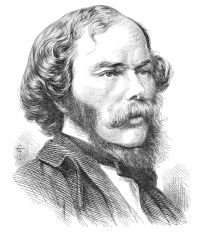
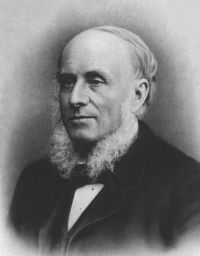
Portrait of Alexander Bain Alexander Bain,  Popular Science Monthly (1877)

“ On this subject, physiology teaches the general fact that memory reposes upon a nervous property or power, sustained, like every other physical power, by nutrition, and having its alternations of exercise and rest. It also informs us that, like every other function, the plasticity may be stunted by inaction, and impaired by over-exertion.
As far as pure physiology is concerned, I invite everybody to reflect on one circumstance in particular. The human body is a great aggregate of organs or interests—muscles, digestion, respiration, senses, brain.
”
Source: Wikisource

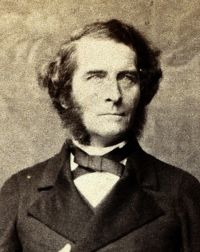
Portrait of Thomas Henry Huxley Thomas Henry Huxley,  Essays upon some Controverted Questions… (1892)

“ With respect to the first point, I am not aware that there is any one who doubts that, in the proper physiological sense of the word function, consciousness, in certain forms at any rate, is a cerebral function. In physiology we call function that effect, or series of effects, which results from the activity of an organ. Thus, it is the function of muscle to give rise to motion; and the muscle gives rise to motion when the nerve which supplies it is stimulated. ”
Source: Wikisource

Get perspective with Kwize: daily news enlightened by great literature