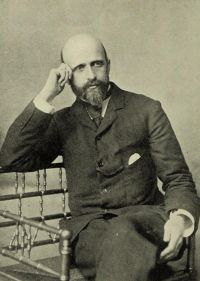
Charles Augustus Strong

Biographical details

Portrait of Charles Augustus Strong Charles Augustus Strong,  The Philosophical Review (1892)

“ A complicated process is thus explained by being resolved into simple processes which are continuously imaginable and necessary. The entire cosmic process would be completely explained, on its physical side, if we could resolve it without remainder into an infinity of simple processes, each continuously imaginable and necessary. We should then be able, if our minds were only vast enough, to picture to ourselves the entire course of nature in all its details as one continuous panorama, in which every transition would appear to us to be a necessary one. ”
Source: Wikisource

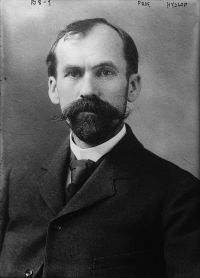
Portrait of Charles Augustus Strong Charles Augustus Strong,  The Philosophical Review (1892)

“ The popular theory conceives the relation as if the soul were situated at a point in the brain, where on the one hand it underwent changes caused by bodily processes, and on the other was able by a mere exercise of volition to impart to the body an impulse of motion. This theory, though sufficient for the needs of every-day life, overlooks that necessity of thought which obliges us to seek the explanation of every physical phenomenon in previous physical phenomena, and which finds its expression in the principle of the conservation of energy. ”
Source: Wikisource

Portrait of Charles Augustus Strong Charles Augustus Strong,  The Philosophical Review (1892)

“ Whether advocates of the common-sense theory believe they have immediate experience of the mind's power to inaugurate physical changes, or are influenced by ethical and æsthetical considerations, the idea of the physical efficacy of mind involves precisely that fallacious notion of an invisible causal nexus which Hume, Kant, and Lotze strove to overthrow. Once eliminate this imaginary bond between mental cause and physical effect, and we are left with a bare empirical succession, for which it is evident that the parallelism theory makes as ample provision as the theory of common sense. ”
Source: Wikisource

Get perspective with Kwize: daily news enlightened by great literature