Conservation, in the context of cognitive development, refers to the ability to recognize that quantities remain constant despite changes in form or appearance, a concept central to Jean Piaget’s theory. This logical skill emerges in children during the concrete operational stage (ages 7–11), as demonstrated through tasks involving liquid, number, or solid mass.
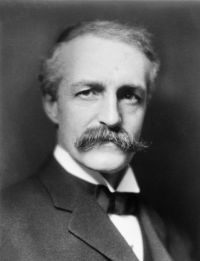
Authors such as Woodrow Wilson and Gifford Pinchot, however, examined conservation from an environmental perspective, emphasizing the preservation of natural resources and ecosystems. Their writings highlighted the interdependence of human life and the planet’s finite resources, framing conservation as both a scientific necessity and an ethical responsibility. The synthesis of these perspectives reveals that conservation, whether cognitive or ecological, depends on recognizing lasting values amid change.