AI-generated from sources
The enduring philosophical tension: Highest utilization versus the sacred ark in conservation
In Brief
- Conservation policy is defined by the fundamental conflict between pragmatic 'highest utilization' for immediate public benefit and 'preservation' based on intrinsic moral value and aesthetic worth.
- The utilitarian view frames non-use as economic waste and emphasizes scientific management and development to maximize productive efficiency for the present generation.
- The preservationist view regards pristine nature as a 'sacred ark' for unique ecosystems, asserting that its moral and aesthetic worth transcends short-term economic calculation.
- The sought-after synthesis aims for prudent management to achieve the 'greatest good to the greatest number for the longest time,' acknowledging the crucial interdependence of resources like forests and water.
Main authors
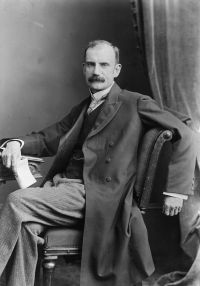
The philosophy of conservation is defined by a fundamental and persistent tension between two competing ideals: the management of natural resources for maximum human utility and the preservation of nature as an inviolable heritage [1, 2]. This core conflict shapes policy debates, pitting the immediate economic and social benefits of development against the long-term, often intangible, value of untouched ecosystems. The central question revolves around whether humanity's primary role is as a developer, harnessing the environment through science and skill, or as a steward, holding a sacred trust for generations to come [3, 4].
One school of thought champions the principle of 'highest utilization,' defining conservation as the most efficient and productive use of resources for the public good [5]. From this perspective, leaving resources undeveloped is not preservation but waste, a hindrance to progress and prosperity that locks away potential wealth and opportunity [6, 7]. In direct opposition, another viewpoint sees intrinsic value in the unspoiled, characterizing certain natural areas as 'arks' for threatened species or as sacred landscapes whose worth transcends mere economic calculation [8]. This perspective emphasizes moral and aesthetic duties over purely material gains, arguing for restraint and the protection of nature from human interference [9].
Navigating this dichotomy requires an examination of the economic, social, and ethical arguments that animate each position. The debate is not simply about whether to use resources, but how, for whom, and with what consideration for the future. It is a negotiation between the tangible demands of the present and the profound, if less easily measured, obligations to posterity, a conflict that reveals deep-seated beliefs about humanity's place in the natural world [10, 11].
The Gospel of Efficiency: Conservation as Utilization
The doctrine of 'highest utilization' frames conservation as an active, pragmatic enterprise fundamentally linked to economic development and human progress [12]. This viewpoint explicitly rejects the idea of preservation for its own sake, arguing that non-use is the antithesis of conservation, leading to business stagnation and the squandering of potential [13]. The core principle is the application of scientific knowledge and engineering prowess to manage and exploit natural resources—land, water, forests, and minerals—to yield the greatest possible utility for the largest number of people . In this model, nature is a resource base to be rationally managed; an untilled acre or an unopened mine is as useless as buried gold .
Economic imperatives are the primary engine of this philosophy. Proponents argue that the development of resources, such as through irrigation projects or forestry, forms the basis of national prosperity and supports growing communities [14, 15]. State-managed conservation is presented as a profitable public enterprise that can generate a safe and permanent revenue stream, thereby reducing the tax burden on all citizens [16]. The ultimate goal is to deliver public utilities like power, water, and light at the lowest possible cost, transforming natural assets into public services [17]. This approach quantifies the value of nature in terms of its contribution to economic well-being and the support of human settlement [18].
This utilitarian framework also grapples with the roles of government and private industry. While corporations are acknowledged as necessary engines of development, there is a strong undercurrent of concern that, if left unchecked, they could monopolize resources for private profit at the expense of the public [19, 20]. This has led to proposals for the state to retain ownership of essential resources like coal and water power, leasing them to private entities for limited periods to ensure fair compensation to the public [21]. The ideal role for the state is that of a prudent manager, handling public resources with the same intelligence an individual would devote to their own property, balancing profitable use with the prevention of heedless waste [22, 23].
The Sacred Ark: Preservation as a Moral Imperative
In stark contrast to the utilitarian view, a preservationist ethic conceives of nature as possessing an intrinsic value that is separate from, and often threatened by, human economic activity . This perspective is embodied in the idea of certain wild places, such as remote islands, serving as 'arks'—refuges not only for endangered species but for entire ecosystems that must be shielded from development . The charm of an unspoiled landscape is seen as something that man has not 'helped,' but could easily 'spoil' with hotels and tourism . This view champions the non-instrumental worth of nature, advocating for areas to be set aside purely for their ecological and aesthetic integrity.
Underpinning this stance is a powerful moral and ethical dimension. Conservation is framed as a 'sacred' duty, where the present generation acts as a trustee for its descendants, safeguarding a shared patrimony [24]. This perspective casts the exploitation of the earth as a form of theft from future generations, arguing that no individual truly owns the land but owes an obligation to society and posterity for its use [25, 26]. The beauty of the natural landscape is itself considered a public asset, and its destruction for purely commercial ends, such as impounding water without regard for scenic waterfalls, is condemned as a mark of a 'selfish age' that cannot be tolerated in a developed society [27].
This viewpoint highlights the irreversible consequences of prioritizing short-term gain. The logging of ancient forests, for example, represents a loss that cannot be meaningfully rectified by replanting, as the thousands of years of growth are gone forever [28]. While the utilitarian model is concerned with the waste of unused resources, the preservationist model is concerned with the permanent loss of unique, complex, and ancient natural systems. This creates a fundamental conflict, as the very act of 'highest utilization' can destroy the 'unspoiled' quality that preservationists seek to protect, posing a direct challenge to the idea that all of nature must be made economically productive.
A Managed Landscape: Reconciling Utility and Posterity
Many advocates for conservation seek a middle ground, attempting to synthesize the imperatives of use and preservation into a cohesive policy. This approach rejects the extreme view of conservation as total non-use, but equally condemns wanton waste and short-sighted exploitation [29]. The objective is to manage resources in a way that provides for the needs of the present generation while maintaining the productive power of those resources for the future [30]. This balanced perspective advocates for foresight and prudence, aiming for the 'maximum of efficiency and profit with the minimum of waste and cost' [31]. The guiding principle is often summarized as providing the 'greatest good to the greatest number for the longest time' .
A key insight of this integrated approach is the recognition that natural resources are interdependent [32]. The value of a forest, for example, is not limited to its timber; it plays a critical role as a 'controlling resource' by protecting the water supplies essential for thousands of towns, irrigation projects, and power generation [33, 34]. This ecosystem-based view complicates a simple cost-benefit analysis of resource extraction, suggesting that conserving one resource (like a forest) is essential for the utilization of another (like water). This necessitates a more holistic and far-sighted management strategy than one focused on single-resource exploitation.
Achieving this synthesis requires practical and often complex measures. These include conducting comprehensive ecological surveys to understand the systems being managed, a difficult task in rugged and inaccessible regions [35]. It also demands robust public education programs to build support for rational management and careful control of public access to sensitive areas [36]. Furthermore, it involves developing new economic frameworks where the costs of conservation are weighed against the value of the resources being exploited [37]. A small percentage of the revenue from development, for instance, could fund extensive management and protection programs . The ultimate issue is recognized not just as saving birds or trees, but as the rational allocation of all resources for the long-term public good [38].
The dialogue between conservation as 'highest utilization' and as the guardianship of a 'sacred ark' reveals a profound philosophical schism in humanity's relationship with the environment. One perspective, born of an era of development and scientific optimism, views nature as a repository of resources to be intelligently managed for human prosperity . The other, rooted in a sense of moral and intergenerational duty, regards the natural world as a precious heritage to be stewarded with reverence and restraint . This is not merely a technical debate over land use policy but a reflection of competing value systems.
Ultimately, the evolution of conservation thought points toward an ever-widening synthesis. The movement has expanded beyond its initial focus on soils, forests, and minerals to encompass human health, social equity, and national character [39, 40, 41]. It is now understood that conservation is not just for the benefit of future generations but is foundational to the lives and well-being of those living today . The enduring challenge lies in translating this holistic vision into practice, creating policies and institutions, often led by national governments, that can effectively balance immediate needs with the sacred and imperative trust owed to the future [42].
