Hydroelectricity

Definition and stakes

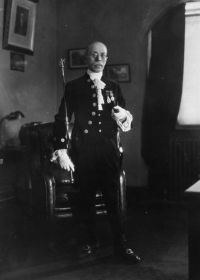
Portrait of Ernest J. Chambers Ernest J. Chambers,  The Unexploited West

“ There are a great number of magnificent water power sites, within very easy access of the surveyed route of the railway, all of which can be easily developed to furnish almost unlimited electrical energy. Hydro-electric energy could be developed at any one of these sites within a distance of thirty miles from the road, which would make transmission to points along it, or possibly operation of it actually, by electricity. It certainly assures cheap power for any manufacturing or milling centre which may develop. All these power locations must inevitably become very valuable. ”
Source: Gutenberg

Alton D. Adams,  Electric Transmission of Water Power

“ If the discharge of a stream during each twenty-four hours is just sufficient to develop the electrical energy required in a supply system during that time, the water may be made to do all of the electrical work in one of two ways. If the water-power has enough storage capacity behind it to hold the excess of water during some hours of the day, then it is only necessary to install enough water-wheels and electric generators to carry the maximum load. ”
Source: Gutenberg

William Cawthorne Unwin,  1911 Encyclopædia Britannica (1911)

“ In some cases, as at Niagara, the hydraulic power can only be economically developed in very large units, and it can be most conveniently subdivided and distributed by transformation into electrical energy. Partly from the development of new industries such as paper-making from wood pulp and electro-metallurgical processes, which require large amounts of cheap power, partly from the facility with which energy can now be transmitted to great distances electrically, there has been a great increase in the utilization of water-power in countries having natural waterfalls. ”
Source: Wikisource

Get perspective with Kwize: daily news enlightened by great literature