“ Voltage.—This plays an important part in ignition. Voltage is that quality which gives pressure or intensity to a current. It is the driving force, just as a head of water gives pressure to a stream of water.High and Low Voltage.—A high tension current,—that [105] is, one having a high voltage, will leap across a gap, whereas a low voltage must have an easy path. When the ends of a wire in a circuit are separated, air acts as a perfect insulator between them, and the slightest separation will prevent a low current from jumping across. ”
Voltage
Definition and stakes
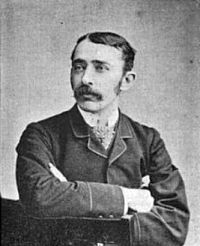
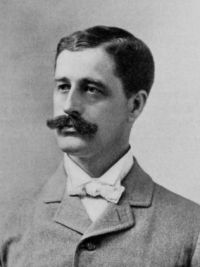
Voltage, a fundamental concept in electricity, refers to the electromotive force or pressure that drives electric current through a circuit, similar to water pressure in hydraulic systems. Authors such as James Slough Zerbe compared voltage to the "driving force" behind ignition, emphasizing its role in overcoming resistance, while A. Frederick Collins explained its dual relationship with current intensity and pressure, likening it to the discharge of a Leyden jar.
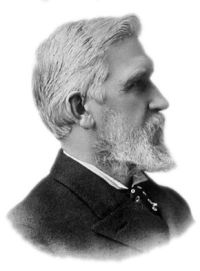
John Ambrose Fleming highlighted its transformative role in power systems, noting how transformers adjust voltage levels to manage energy efficiency. Meanwhile, John Mills demonstrated voltage’s amplifying effect in electronic tubes, showcasing its practical applications. These varied perspectives underscore voltage’s centrality in both theoretical and applied electrical engineering, bridging concepts such as resistance, current, and power transmission.
Quotes about “voltage”
 A. Frederick Collins,
Inventing for Boys
A. Frederick Collins,
Inventing for Boys
“ Current Electricity.—Whenever electricity flows in a wire, or other conductor, it acts like water flowing through a pipe and it is then called current electricity. The two most common ways to generate a current of electricity is by means of a chemical battery and by a dynamo electric machine.A current of electricity may have a small current strength, as its quantity is called, and a high voltage, as its pressure is called, like the discharge of a Leyden jar, or it may have a large current strength and a low voltage, as a current generated by a battery. ”
John Mills, Letters of a Radio-Engineer to His Son
“ It means that two volts in the grid circuit have the same effect on the plate current as ten volts in the plate circuit. If we apply a volt to the grid circuit we get five times as large an effect in the plate circuit as we would if the volt were applied there. We get a greater effect, the effect of more volts, by applying our voltage to the grid. We say that the tube acts as an “amplifier of voltage” because we can get a larger effect than the number of volts which we apply would ordinarily entitle us to. ”