Electromotive force

Definition and stakes

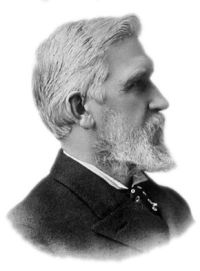
Portrait of James Clerk Maxwell James Clerk Maxwell,  A Treatise on Electricity and Magnetism (1873)

“ Another negative property of electromotive force is that it has of itself no tendency to cause the mechanical motion of any body, but only to cause a current of electricity within it.
If it actually produces a current in the body, there will be mechanical action due to that current, but if we prevent the current from being formed, there will be no mechanical action on the body itself. If the body is electrified, however, the electromotive force will move the body, as we have described in Electrostatics.
”
Source: Wikisource

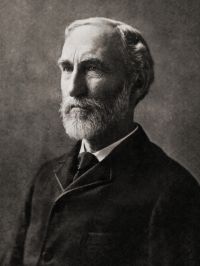
Portrait of James Clerk Maxwell James Clerk Maxwell,  A Treatise on Electricity and Magnetism (1873)

“ In the case of the electric current, we find that, when the electromotive force begins to act, it does not at once produce the full current, but that the current rises gradually. What is the electromotive force doing during the time that the opposing resistance is not able to balance it? It is increasing the electric current.
Now an ordinary force, acting on a body in the direction of its motion, increases its momentum, and communicates to it kinetic energy, or the power of doing work on account of its motion.
”
Source: Wikisource

Sir J. A. Fleming,  Waves and ripples in water, air… (1912)

“ We find that electromotive force acts differently on various substances when they are subjected to its operation. In some substances electromotive force produces a continuous electric current, and in these cases the material is called a conductor. In other cases electromotive force creates what is called electric strain, or electric displacement, and these substances are generally called non-conductors. ”
Source: Gutenberg

Get perspective with Kwize: daily news enlightened by great literature