Ampere

Definition and stakes

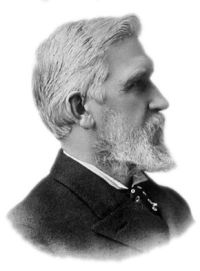
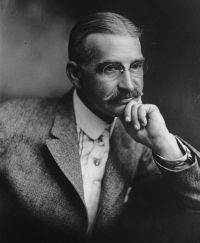
Portrait of James Clerk Maxwell James Clerk Maxwell,  A Treatise on Electricity and Magnetism (1873)

“ The experimental investigation by which Ampère established the laws of the mechanical action between electric currents is one of the most brilliant achievements in science.
The whole, theory and experiment, seems as if it had leaped, full grown and full armed, from the brain of the 'Newton of electricity. It is perfect in form, and unassailable in accuracy, and it is summed up in a formula from which all the phenomena may be deduced, and which must always remain the cardinal formula of electro-dynamics.
”
Source: Wikisource

John Mills,  Letters of a Radio-Engineer to His Son

“ When some one asks how large a current is flowing in a wire we don’t tell him six billion billion electrons each second; we tell him “one ampere.” Just as we use years as the units in which to count up time so we use amperes as the units in which to count up streams of electrons. When a wire is carrying a current of one ampere the electrons are streaming through it at the rate of about 6,000,000,000,000,000,000 a second. ”
Source: Gutenberg

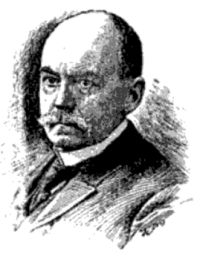
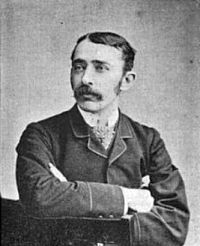
Portrait of John Ambrose Fleming John Ambrose Fleming,  1911 Encyclopædia Britannica (1911)

“ There is reason to believe that the international unit is smaller by about one part in a thousand, or perhaps by one part in 800, than the theoretical ampere defined as 1/10 part of the absolute electromagnetic unit. A periodic or alternating current is said to have a value of 1 ampere if when passed through a fine wire it produces in the same time the same heat as a unidirectional continuous current of 1 ampere as above electrochemically defined. ”
Source: Wikisource

Get perspective with Kwize: daily news enlightened by great literature