Ionization

Definition and stakes

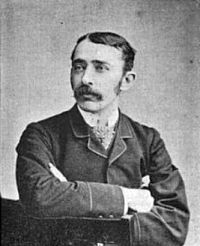
Portrait of Albert L. Latter Albert L. Latter,  Our Nuclear Future: Facts, Dangers and Opportunities

“ What one usually knows instead, is the roentgen dosage to a piece of tissue, which consists of many cells. If the charged particles inducing the ionization are electrons (as they are when the primary radiation is a beta ray or a gamma ray) , the ionization will be distributed more or less uniformly among the cells in the affected neighborhood. If the charged particle is heavy—a proton or an alpha ray—the density of ionization which it produces is much greater, so that some cells receive a good many more ion pairs, while others nearby may receive none. ”
Source: Gutenberg

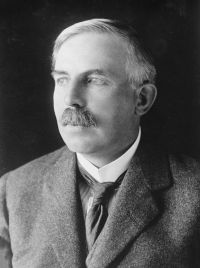
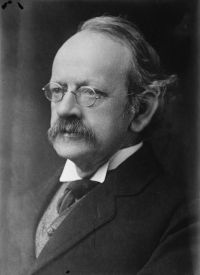
Portrait of Joseph John Thomson Joseph John Thomson,  1911 Encyclopædia Britannica, Volume 6… (1911)

“ Ionization by Collision.—When the ionization of the gas is produced by external agents such as Röntgen rays or ultra-violet light, the electric field produces a current by setting the positive ions moving in one direction, and the negative ones in the opposite; it makes use of ions already made and does not itself give rise to ionization. In many cases, however, such as in electric sparks, there are no external agents to produce ionization and the electric field has to produce the ions as well as set them in motion. ”
Source: Wikisource

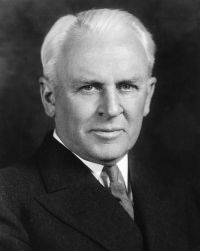
Portrait of Robert Andrews Millikan Robert Andrews Millikan,  The electron, its isolation and measurement and the determination of some of its properties (1924)

“ The act of ionization by ether waves, i.e., by X-rays or light, seems to consist in the hurling out with an energy which may be very large, but which depends upon the frequency of the incident ether wave, of one single electron from an occasional molecule over which this wave passes.
3. The act of ionization by rapidly moving -particles consists generally in the shaking loose of one single electron from the atom through which it passes, though in the case of helium, two electrons are certainly sometimes removed at once.
”
Source: Gutenberg

Get perspective with Kwize: daily news enlightened by great literature