Summary

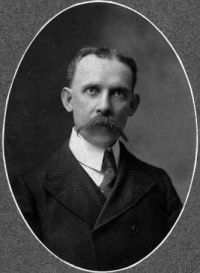
Portrait of F. P. Venable F. P. Venable A Brief Account of Radio-activity

All of the properties of the bodies which we call elements, and consequently of their compounds and hence of matter in general, seem to depend upon the balance maintained between the charges of negative and positive electricity which, according to Rutherford's theory, go to make up the atom.
It is evident that any study of chemical phenomena and chemical theory is quite incomplete without a study of radio-activity and the transformations which it produces.
Source: Gutenberg

Portrait of F. P. Venable F. P. Venable A Brief Account of Radio-activity

The evolution of heat from radium and the radio-active substances is, in a sense, a secondary effect, as it measures the radiant [Pg 35] energy transformed into heat energy by the active matter itself and whatever surrounds it. Let us repeat, therefore, that the total amount of energy pent up in a single atom of radium almost passes our powers of conception.
Source: Gutenberg

Portrait of F. P. Venable F. P. Venable A Brief Account of Radio-activity

The lead which is present in uranium and thorium minerals—apparently in fairly definite ratio to the amount of uranium and thorium—is found, on separation and purification, to possess radio-active properties. This activity is due to the presence of a very small proportion of an active constituent called radio-lead, which has chemical properties identical with those of ordinary lead. The bulk of the lead obtained from radio-active minerals differs in atomic weight from ordinary lead and appears also to be different according to whether its source is a thorium or a uranium mineral.
Source: Gutenberg

Get perspective with Kwize: daily news enlightened by great literature