Radioactivity

Definition and stakes

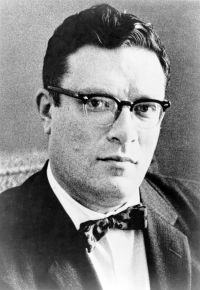
Portrait of Albert L. Latter Albert L. Latter,  Our Nuclear Future: Facts, Dangers and Opportunities

“ Radioactivity is characterized by the kind of particle emitted from the nucleus (our examples, so far, have been of beta and gamma particles) , by the energy possessed by this particle, and by the half-life in which the radioactive decay takes place.
The biological hazard from radioactivity depends on all three of these characteristics. No matter whether the radioactive nuclei are produced in an atomic explosion or in an atomic reactor, some time will in general elapse before a human population can become exposed.
”
Source: Gutenberg

Pierre Curie,  Recent research on radioactivity (1904)

“ Induced Radioactivity.—Radium, thorium, and actinium have the property of acting externally, apart from the Becquerel rays that they emit. They communicate little by little their radioactive properties to substances in their neighborhood, and the latter emit in turn Becquerel rays. The activity can be transmitted to gases, liquids, and solids. The phenomenon is known as induced radioactivity.
Induced radioactivity propagates itself in gases step by step by a sort of conduction, and is not at all due to direct radiation from the body which causes it.
”
Source: Gutenberg

Neal O. Hines,  Atoms, Nature, and Man: Man-made Radioactivity in the Environment

“ Other radionuclides [5] occur singly, rather than in families, and some of them, such as potassium-40 and carbon-14, are major contributors of natural radioactivity. Traces of natural radioactivity can be found, in fact, in all substances on earth.
When man began experimenting with atomic fusion and fission, he placed in his environment—across vast landscapes, in the oceans, and in the atmosphere—measurable additional amounts of radioactivity. These additions were composed of the longer-lived members of some 200 kinds of atomic radiation.
”
Source: Gutenberg

Get perspective with Kwize: daily news enlightened by great literature