Mutation

Definition and stakes

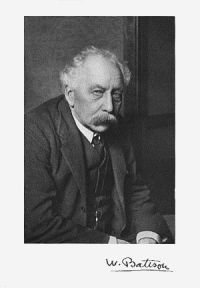
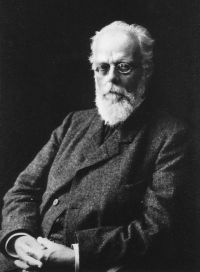
Portrait of August Weismann August Weismann,  The Evolution Theory, Vol. 2 of 2

“ In this book, and in this chapter itself, I have discussed adaptations and their origin so much already that I need only refer to these pages for convincing evidence that we cannot think of them as being brought about by the accumulation and augmentation of individually occurring saltatory 'mutations.' Not even if we assume that the leaps of mutation can be increased in the course of generations; in short, even if we say that mutations are all those variations which breed true and lead to the development of species, while variations are those which do not. ”
Source: Gutenberg

J. J Bull; Lauren Ancel Meyers; Michael Lachmann,  Quasispecies Made Simple — PLoS Computational Biology…

“ The concept of a mutation–selection balance is one of the oldest and most fundamental pillars of population genetics: natural selection increases the frequency of fit variants while mutations introduce unfit variants, giving rise to an equilibrium distribution balanced between these two effects. ”
Source: Wikisource

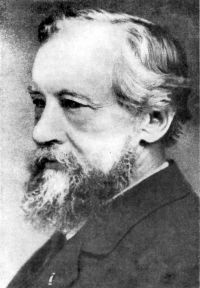
William A. Locy,  Biology and Its Makers

“ Mutation is not a substitute for natural selection, but a coöperating factor; and neither mutation nor natural selection is a substitute for the doctrine of the continuity of the germ-plasm. Thus we may look forward to a reconciliation between apparently conflicting views, when naturalists by sifting shall have determined the truth embodied in the various theories. ”
Source: Gutenberg

Get perspective with Kwize: daily news enlightened by great literature