Paleontology

Definition and stakes

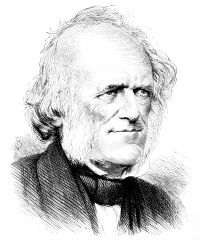
Portrait of Thomas Henry Huxley Thomas Henry Huxley Popular Science Monthly (1882)

I will now sum up the results of this sketch of the rise and progress of paleontology. The whole fabric of paleontology is based upon two propositions: the first is, that fossils are the remains of animals and plants; and the second is, that the stratified rocks in which they are found are sedimentary deposits; and each of these propositions is founded upon the same axiom that like effects imply like causes. If there is any cause competent to produce a fossil stem, or shell, or bone, except a living being, then paleontology has no foundation
Source: Wikisource

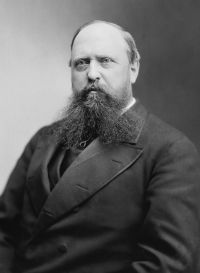
Portrait of Othniel Charles Marsh Othniel Charles Marsh Popular Science Monthly (1880)

In looking over the records of paleontology, its history may conveniently be divided into four periods, well marked by prominent features, but, like all stages of intellectual growth, without definite boundaries.
The first period, dating back to the time when men first noticed fossil remains in the rocks, and queried as to their nature, is of special historic interest.
Source: Wikisource

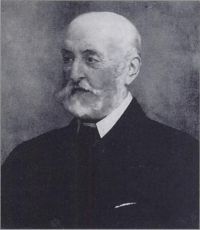
Portrait of Edward Salisbury Dana Edward Salisbury Dana A century of science in America (1918)

Vertebrate Paleontology in America. Early Writers.—Having thus summarized paleontological progress in the Old World, we can turn to a consideration of the work done in the New, especially in the United States, because while the Old World investigation has been invaluable, a science of vertebrate paleontology, very complete both as to its zoological and geological scope and in the extent and value of published results, could be built exclusively upon the discoveries and researches made by Americans.
Source: Gutenberg

Get perspective with Kwize: daily news enlightened by great literature