Foraminifer

Definition and stakes

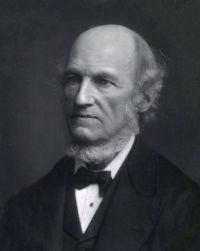
Portrait of Sir John William Dawson Sir John William Dawson,  Relics of Primeval Life: Beginning of Life in the Dawn of Geological Time (1897)

“ It is this composite sort of life which is connected with the main geological function of the Foraminifer. While active sensation, appetite, and enjoyment pervade the pseudopods and external sarcode of the mass, the hard skeleton common to the whole is growing within; and in this way the calcareous matter is gradually removed from the sea-water, and built up in solid reefs, or in piles of loose foraminiferal shells. Thus it is the aggregative or common life, alike in Foraminifers as in Corals, that tends most powerfully to the accumulation of calcareous matter ”
Source: Gutenberg

Portrait of Sir John William Dawson Sir John William Dawson,  Some Salient Points in the Science of the Earth

“ So, in the fitness of things, a gigantic Foraminifer is just what we need, and after it has spread itself over the mud and rock of the primeval seas, and built up extensive reefs therein, other animals may be introduced, capable of feeding on it, or of sheltering themselves in its stony masses, and thus we have the appropriate dawn of animal life. ”
Source: Gutenberg

Agnes Giberne,  The mighty deep (1902)

“ Where even whale-skeletons are mastered, small chance can remain for a human skeleton to stand out long against absorption.
The marvel is how tiny foraminifer shells can last as they do. The majority no doubt disappear. Unless they reach the bottom quickly, and are there covered up and protected, they must soon be dissolved.
Yet that vast numbers do thus escape we know by the masses of ooze found over the sea-bottom; by the fifty millions or more of square miles of the ocean-floor carpeted with coral muds and sands, and with oozes of foraminifera and kindred shells.
”
Source: Gutenberg

Get perspective with Kwize: daily news enlightened by great literature