Eozoon

Definition and stakes

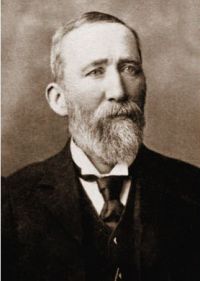
Portrait of Sir John William Dawson Sir John William Dawson,  Relics of Primeval Life: Beginning of Life in the Dawn of Geological Time (1897)

“ Remains of Eozoon.
2. Other calcareous bodies, probably organic.
3. Objects imbedded in the serpentine.
4. Carbonaceous matters.
" (1) The more perfect individuals of Eozoon do not constitute the mass of any of the larger specimens in our collections; but considerable portions of some of them are made up of material of similar minute structure, destitute of lamination, and irregularly arranged. Some of this material gives the impression that there may have been organisms similar to Eozoon, but growing in an irregular or acervuline manner without lamination.
”
Source: Gutenberg

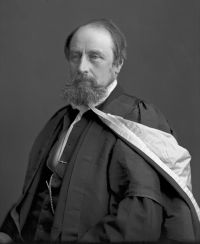
Portrait of Sir John William Dawson Sir John William Dawson,  Relics of Primeval Life: Beginning of Life in the Dawn of Geological Time (1897)

“ Let us then put Eozoon into the witness-box, and try to elicit its testimony as to the beginnings of life; supposing for the moment that it is really an animal, and not a mere pretender; though even in that case, it might serve to represent the first animal, whatever it may have been.
Looking down from the elevation of our physiological and mental superiority, it is difficult to realize the exact conditions in which life exists in creatures so simple as the Protozoa.
”
Source: Gutenberg

Portrait of Sir John William Dawson Sir John William Dawson,  Life's Dawn on Earth

“ Eozoon itself, however, bears some negative though damaging testimony against evolution, and its argument may be thus stated in what we may imagine to be its own expressions:—"I, Eozoon Canadense, being a creature of low organization and intelligence, and of practical turn, am no theorist, but have a lively appreciation of such facts as I am able to perceive. ”
Source: Gutenberg

Get perspective with Kwize: daily news enlightened by great literature