Foraminifera

Definition and stakes

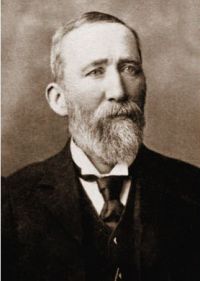
Portrait of Sir John William Dawson Sir John William Dawson,  Relics of Primeval Life: Beginning of Life in the Dawn of Geological Time (1897)

“ The Foraminifera are vastly numerous, both near the surface and at the bottom of the sea, and multiply rapidly; and as successive generations die, their shells accumulate on the ocean bed, or are swept by currents into banks, and thus in process of time constitute thick beds of white chalky material, which may eventually be hardened into limestone. This process is now depositing a great thickness of white ooze in the bottom of the ocean ”

Source: Gutenberg

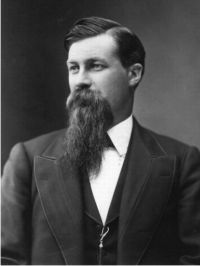
Portrait of D'Arcy Wentworth Thompson D'Arcy Wentworth Thompson,  On Growth and Form

“ It is obvious enough that the spiral shells of the Foraminifera closely resemble true logarithmic spirals. Indeed so precisely do the minute shells of many Foraminifera repeat or simulate the spiral shells of Nautilus and its allies that to the naturalists of the early nineteenth century they were known as the Céphalopodes microscopiques543, until Dujardin shewed that their little bodies comprised no complex anatomy of organs, but consisted merely of that slime-like organic matter which he taught us to call “sarcode,” and which we learned afterwards from Schwann to speak of as “protoplasm.” ”
Source: Gutenberg

Elisha Noyce,  Outlines of Creation

“ In like manner, when we meet with a limestone rock entirely composed of the calcareous shells of Foraminifera—some of them entire, others broken up into minute particles—we interpret the phenomenon by the fact that the dredgings obtained from certain parts of the ocean-bottom, consist almost entirely of remains of existing Foraminifera, in which entire shells—the animals of which may be yet alive—are mingled with the debris of others that have been reduced by the action of the waves to a fragmentary state. ”
Source: Gutenberg

Get perspective with Kwize: daily news enlightened by great literature