Dredging

Definition and stakes

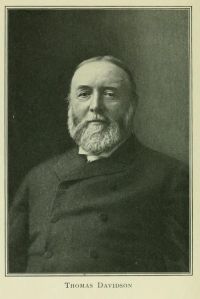
Portrait of Thomas Davidson Thomas Davidson,  Chambers's Twentieth Century Dictionary 1908… (1908)

“ Dredge, drej, n. an instrument for dragging: a drag-net for catching oysters, &c.: a machine for taking up mud or zoological specimens from the bottom of the sea: a floating machine for deepening a harbour or river by gathering up mud from the bottom by means of buckets on an endless chain—also Dredg′er, Dredg′ing-machine′.—v.t. Dredge, to gather with a dredge: to deepen with a dredge. [Conn. with drag.]
Dredge, drej, v.t. to sprinkle flour on meat while roasting.—ns. Dredg′er, Dredge′-box, Dredg′ing-box, a utensil for dredging.
”
Source: Wikisource

Portrait of Charles Kingsley Charles Kingsley,  Glaucus; Or, The Wonders of the Shore

“ As for a dredging ground, one may be found, I suppose, off every watering-place. The most fertile spots are in rough ground, in not less than five fathoms water. The deeper the water, the rarer and more interesting will the animals generally be: but a greater depth than fifteen fathoms is not easily reached on this side of Plymouth; and, on the whole, the beginner will find enough in seven or eight fathoms to stock an aquarium rivalling any of those in the “Tank-house” at the Zoological Gardens.
In general, the south coast of England, to the eastward of Portland, affords bad dredging ground.
”
Source: Gutenberg

Walter Hunter and John Oliver Borley,  1911 Encyclopædia Britannica, Volume 8… (1911)

“ A little of the dredge’s contents were then put in the top sieve, and the whole set moved gently up and down in a tub of sea water by handles attached to the bottom one. Objects of different sizes are thus left in different sieves. A simple but effective plan is to let the sieves of various sized mesh fit accurately on each other like lids, the coarsest on top, and to pour water upon material placed on the top one. ”
Source: Wikisource

Get perspective with Kwize: daily news enlightened by great literature