 George Eliot,
Middlemarch
(1872)
George Eliot,
Middlemarch
(1872)
“ But it is one thing to like defiance, and another thing to like its consequences. ”
Defiance, defined as the rejection or breaking of ties of obedience and duty, emerges as a complex literary theme, reflecting humanity's tension between authority and personal will. Authors such as George Eliot explore its dual nature, distinguishing between the appeal of resistance and its consequences, while F. B. Jevons examines its role in opposing oppression.
Adam Ferguson highlights its emotional power in times of trial, and John Niles Hubbard portrays it as a force capable of inspiring both bravery and dread. Hans Gross connects it to psychological opposition, and Henry Hunt frames it as a stand against social judgment. Through these varied perspectives, defiance appears as both a catalyst for transformation and a reflection of human vulnerability, revealing the intricate interplay between rebellion and its outcomes.
George Eliot,
Middlemarch
(1872)
“ But it is one thing to like defiance, and another thing to like its consequences. ”
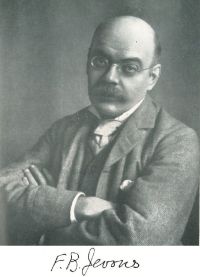 F. B. Jevons,
An Introduction to the Study of Comparative Religion
F. B. Jevons,
An Introduction to the Study of Comparative Religion
“ The fact that defiance is not ventured on is essential to the continuance of the tyranny; and what is necessary, if it is to be defied, is an actual concrete example of the fact that when defied it is futile. ”
Adam Ferguson, An Essay on the History of Civil Society…
“ With terms of defiance, the victim, in those solemn trials, commonly excites the animosities of his tormentors, as well as his own; and whilst we suffer for human nature, under the effect of its errors, we must admire its force. ”
John Niles Hubbard, An Account of Sa-Go-Ye-Wat-Ha, or Red Jacket…
“ Often the fierceness of his temper, the righteous indignation that swelled his bosom, impelled him to hurl defiance at his foes, and to use language, the possible consequences of which, caused the more timid and abject of his followers, to tremble with apprehension. ”
Hans Gross, Criminal Psychology: A Manual for Judges…
“ Then the bitterest defiance and almost childish spite takes possession of him against “persecuting” mankind, particularly if, for the nonce, he is innocent. Such persons turn their spite upon the judge as the representative of this injustice and believe they are doing their best by conducting themselves in an insulting manner and speaking only a few defiant words with the grimmest spite. ”
Henry Hunt, Memoirs of Henry Hunt, Esq. — Volume 2
“ I professed to set at defiance the malignant opinions of the envious and the ill-natured, and, as I was conscious of the purity and honour of my intentions, I was the last man living that would be likely to forego any pleasure, merely because the censorious world chose to make their remarks upon it. ”
Hans Gross, Criminal Psychology: A Manual for Judges…
“ Not far from scorn are defiance and spite. They are characterized by baring the canine teeth and drawing together the face in a frown when turning toward the person upon whom the defiance or spite is directed. I believe that this image has got to be variously filled out by the additional fact that the mouth is closed and the breath several times forced sharply through the nostrils. ”
 Benito Jerónimo Feijoo,
Essays, or discourses, vol. 2…
(1780)
Benito Jerónimo Feijoo,
Essays, or discourses, vol. 2…
(1780)
“ He who makes presents to a lady, or a minister of justice, attempts their corruption by the act, and in his imagination supposes he has effected it. You ought, therefore, [Pg 9] my Son, to consider every one who attempts to gain your favour by such means, as an enemy to your conscience, and as a person dangerous to, and one who would injure your honour; and you should look upon him as a man, more deserving of your contempt and indignation, than your courtesy. ”
 Lady Caroline Lamb,
Glenarvon, Volume 3 (of 3)
Lady Caroline Lamb,
Glenarvon, Volume 3 (of 3)
“ Hardened and impenitent sinner! the measure of your iniquity is full: the 321 price of crime has been paid: here shall your spirit dwell for ever, and for ever. You have dreamed away life’s joyous hour, nor made atonement for error, nor denied yourself aught that the fair earth presented you. ”
 Jonathan Swift,
The Works of the Rev. Jonathan Swift
(1801)
Jonathan Swift,
The Works of the Rev. Jonathan Swift
(1801)
“ Whence it comes to pass, that in their results we have sometimes found the same spirit of cruelty and revenge, of malice and pride, the same blindness and obstinacy and unsteadiness, the same ungovernable rage and anger, the same injustice, sophistry, and fraud, that ever lodged in the breast of any individual. ”
 Ivan Sergeevich Turgenev,
Dream Tales and Prose Poems
Ivan Sergeevich Turgenev,
Dream Tales and Prose Poems
“ A RULE OF LIFE ‘If you want to annoy an opponent thoroughly, and even to harm him,’ said a crafty old knave to me, ‘you reproach him with the very defect or vice you are conscious of in yourself. Be indignant ... and reproach him! ‘To begin with, it will set others thinking you have not that vice. ‘In the second place, your indignation may well be sincere.... You can turn to account the pricks of your own conscience. ”
 Jean-Baptiste Massillon,
Sermons
(1879)
Jean-Baptiste Massillon,
Sermons
(1879)
“ But what renders your injustice toward the pious still more cruel, is, that it is your own examples, your irregularities, and even your censures, which stagger, weaken, and force them sometimes to imitate you; it is the corruption of your manners which becomes the continual and the most dangerous snare to their innocence; it is those foolish derisions with which you continually assault virtue, that force them reluctantly to shelter themselves under the appearances of guilt. ”
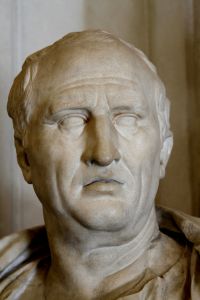 Marcus Tullius Cicero,
The Orations of Marcus Tullius Cicero…
Marcus Tullius Cicero,
The Orations of Marcus Tullius Cicero…
“ The common topics for the advocate for the defence to employ are, a complaint of that calamity which has taken place by no fault of his, but in consequence of some overruling power, and a complaint also of the power of fortune and the powerless state of men, and an entreaty that the judges should consider his intentions, and not the result. And in the employment of all these topics it will be desirable that there should be inserted a complaint of his own unhappy condition, and indignation at the cruelty of his adversaries. ”
 Fanny Burney,
Camilla; or, A Picture of Youth
Fanny Burney,
Camilla; or, A Picture of Youth
“ If they are offended, who has offended them? If thou art now abandoned, may it not be from necessity, or from accident? When thou hast inflicted upon them the severe pain of harbouring anger against what is so dear to them, wouldst thou load them with regret that they manifested any sensibility of thy errours? Hast thou plunged thy house in calamity, and will no worthier wish occur to thee, than to leave it to its sorrows and distress, with the aggravating pangs of causing thy afflicting, however blamable self-desertion? ”
Thomas Gordon, Cato's Letter No. 63 — Civil Liberty produces all Civil Blessings… (1722)
“ He must have established deceivers to mislead them with lies, to terrify them with the wrath of God, in case they stir hand or foot, or so much as a thought, to mend their doleful condition; as if the good God was the sanctifier of all villainy, the patron of the worst of all villains! ”
Jean-Baptiste Massillon,
Sermons
(1879)
“ Thus in a word, to avoid a long detail, those suspicious attachments, loose conversations, ridiculous compliances, and desires of pleasing, too much attended, have filled you with dispositions so nearly allied to guilt and debauchery, that you are no longer capable of resistance against any of their attacks; the corruption prepared by the whole train of your past actions, will be lighted up in an instant; your weakness will overcome your reflection; your heart will go against glory, duty, and yourself. ”
 Desiderius Erasmus,
The Praise of Folly
(1509)
Desiderius Erasmus,
The Praise of Folly
(1509)
“ To say nothing of those evils one man brings upon another, as poverty, imprisonment, infamy, dishonesty, racks, snares, treachery, reproaches, actions, deceits--but I'm got into as endless a work as numbering the sands--for what offenses mankind have deserved these things, or what angry god compelled them to be born into such miseries is not my present business. ”
 Miguel de Cervantes Saavedra,
The History of Don Quixote de la Mancha
Miguel de Cervantes Saavedra,
The History of Don Quixote de la Mancha
“ Now I leave you to judge whether I ought to be blamed for his sufferings. If I have deceived any one, let him complain; if I have broke my promise to any one, let him despair; if I encourage any one, let him presume; if I entertain any one, let him boast: but let no man call me cruel nor murderer until I either deceive, break my promise, encourage, or entertain him. ”
“ I announce that I am idle, in fact, to prevent the idea spreading that I am idle. The art of defence is attack. I defend myself by attacking myself, and claim a verdict of not guilty by the candour of my confession of guilt. ”
Matthew Henry, Commentary on the Whole Bible… (1700s)
“ Whereas it is said all malice, all guile, learn, That one sin, not laid aside, will hinder our spiritual profit and everlasting welfare. (4.) Malice, envy, hatred, hypocrisy, and evil-speaking, generally go together. Evil-speaking is a sign that malice and guile lie in the heart ”
Jean-Baptiste Massillon,
Sermons
(1879)
“ With a vindictive person we justify his resentment and anger; we justify his guilt in his mind, by countenancing the justice of his accusations; we spare his passion in exaggerating the injury and fault of his enemy. ”
 Frances Wright,
A few days in Athens
(1850)
Frances Wright,
A few days in Athens
(1850)
“ Trust me, none can drink of the cup of vice with impunity. But you will say, that there are qualities of so mean or so horrible a nature, as to place the man that is governed by 31them out of the pale of communion with the virtuous. Malice, cruelty, deceit, ingratitude—crimes such as these, should you think, draw down upon those convicted of them no feelings more mild than abhorrence, execration, and scorn. ”
Charlotte Biggs, A Residence in France During the Years 1792…
“ Whether you examine the conduct of the nation at large, or that of its chiefs and leaders, your feelings revolt at the one, and your integrity despises the other. You see the idols erected by Folly, degraded by Caprice;—the authority obtained by Intrigue, bartered by Profligacy;—and the perfidy and corruption of one side so balanced by the barbarity and levity of the other, that the mind, unable to decide on the preference of contending vices, is obliged to find repose, though with regret and disgust, in acknowledging the general depravity. ”
Charles Stuart, A memoir of Granville Sharp (1836)
“ How long will it take an individual or a nation to conquer prejudices, by continuing to practice and excuse them;—substituting general acknowledgements of their guilt, for immediately and thoroughly repudiating them? ”
“ Hence it necessarily follows that all accusations concern the State or the individual, the accused having acted either ignorantly and against his will, or voluntarily and with knowledge, and in the latter case with malice aforethought or from passion. We will speak of anger when we come to treat of the passions, and we have already stated in what circumstances and with what dispositions men act with deliberate purpose. ”
Marcus Tullius Cicero,
The Orations of Marcus Tullius Cicero…
“ But the things which are in the habit of being said, for the sake of amplification, or in the way of digression, or when men are summing up, are introduced either to excite hatred, or pity, or to work on the feelings of the judges by means of those arguments which have been already given; provided that the importance of the facts, or the envy of men, or the dignity of the parties, will allow of it. ”
 Lydia Sigourney,
Moral Pieces in Prose and Verse
(1815)
Lydia Sigourney,
Moral Pieces in Prose and Verse
(1815)
“ THERE are few constitutional misfortunes that lead to more unhappiness and disgrace than a wavering, unsettled disposition. In all its aspects of ambiguous expression, variable opinion, and contradictory behaviour, it is blameable and hideous. It is always open to censure, and is often the parent of deceit, dissimulation, and treachery. ”
 Friedrich Wilhelm Nietzsche,
Human, All-Too-Human: A Book for Free Spirits…
Friedrich Wilhelm Nietzsche,
Human, All-Too-Human: A Book for Free Spirits…
“ Revelling in Vengeance.—Coarser individuals who feel themselves insulted, make out the insult to be as great as possible, and relate the affair in greatly exaggerated language, in order to be able to revel thoroughly in the rarely awakened feelings of hatred and revenge. ”
William M. Leftwich, Martyrdom in Missouri, Volume 1… (1870)
“ He had seen similar evils to those which we have seen and suffered. “There is an evil which I have seen under the sun as an error which proceedeth from the ruler: folly is set in great dignity, and the rich sit in low place. I have seen servants upon horses, and princes walking as servants upon the earth.” ”
 Benjamin Fiske Barrett,
Beauty for Ashes
(1855)
Benjamin Fiske Barrett,
Beauty for Ashes
(1855)
“ All harshness and severity of judgment, all angry looks, resentful feelings, and evil speaking, all impatience, discontent, discord and moroseness, should be banished thence as so many malignant fiends. ”
Matthew Henry, Commentary on the Whole Bible… (1700s)
“ They testify against us, for our conviction, which tends to our present shame and confusion, and our future condemnation. They disprove and overthrow all our pleas for ourselves; and so not only accuse us, but answer against us. If we boast of our own excellencies, and trust to our own righteousness, our iniquities testify against us, and prove us perverse. ”
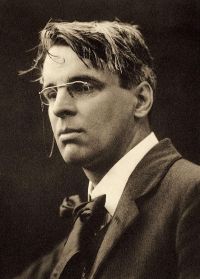 W. B. Yeats,
The Collected Works in Verse and Prose of William Butler Yeats…
W. B. Yeats,
The Collected Works in Verse and Prose of William Butler Yeats…
“ The Accusation of Sin produced its necessary fruit, hatred of all that was abundant, extravagant, exuberant, of all that sets a sail for shipwreck, and flattery of the commonplace emotions and conventional ideals of the mob, the chief Paymaster of accusation. ”
Lydia Sigourney,
Moral Pieces in Prose and Verse
(1815)
“ When we indulge anger at any provocation, we prepare work for repentance. When we practise deception, we renounce the inward support of rectitude. When we seek for the favour of the world, we encourage vanity. ”
 Robert Dodsley,
The Toy Shop (1735) The King and the Miller of Mansfield…
Robert Dodsley,
The Toy Shop (1735) The King and the Miller of Mansfield…
“ Do you think, my Lord, that Greatness gives a Sanction to Wickedness? Or that it is the Prerogative of Lords to be unjust and inhumane? You remember the Sentence which yourself pronounc'd upon this innocent Man; you cannot think it hard that it should pass on you who are guilty. ”
 Leslie Stephen,
Alexander Pope
Leslie Stephen,
Alexander Pope
“ And, indeed, with all his delinquencies, and with all his affectations, there are moments in which we forget to preserve the correct tone of moral indignation. Every now and then genuine feeling seems to come to the surface. For a time the superincumbent masses of hypocrisy vanish. ”
James Devon, The Criminal & the Community
“ Blame them by all means; but let us be just, and having settled how much they are to blame—not a very profitable task—let us set about to find how far we are to blame; having punished them, what about punishing ourselves? ”
A. G. K. L'Estrange, History of English Humour, Vol…
“ Let any impartial man in his senses be asked, for which of these two places a composition of cruelty, lust, avarice, rapine, insolence, hypocrisy, fraud, and treachery is best fitted? Surely his answer will be certain and immediate ”
 Edward B. Hall,
Memoir of Mary L. Ware, Wife of Henry Ware…
Edward B. Hall,
Memoir of Mary L. Ware, Wife of Henry Ware…
“ You remind me that I omitted one item in my defence, the mere mention of which will answer many of your queries. Who can tell how often a person, blamed for the disregard of many considerations which ought to influence the conduct, is inflamed by those very considerations, restrained by those very motives? ”
 Publius Terentius Afer,
Comedies of Publius Terentius Afer…
(1870)
Publius Terentius Afer,
Comedies of Publius Terentius Afer…
(1870)
“ Whom they accuse in thus accusing us, With so much senseless and censorious fuss. The author better loves their negligence, Than such obscure and diligent pretence. I warn them from henceforth to keep the peace, And let their railings and their murmurs cease. ”
 Thomas Moore,
Memoirs of the Life of the Rt. Hon…
Thomas Moore,
Memoirs of the Life of the Rt. Hon…
“ Their dereliction of their principles becomes manifest and indefensible, in proportion to the vehemence with which they have pledged themselves always to maintain them, and the contempt and indignation which accompanies their retreat is equivalent to the expectations excited by the boldness and determination of their advance. ”
Charles Gore, The Sermon on the Mount: A Practical Exposition
“ Well, there are occasions when it might be obeyed, if not literally—because people may seldom, or perhaps never, smite us on the right cheek—yet nearly literally; occasions when nothing is concerned but our own instinct of revenge or our own pride, and we had better simply take meekly some insult or wrong, and make no effort to defend ourselves. ”
Marcus Tullius Cicero,
Against Verres — Second pleading…
“ When I have been speaking for so many hours of one class of offenses, and of that man's nefarious cruelty,—when I have now expended nearly all my treasures of words of such a sort as are worthy of that man's wickedness on other matters, and have omitted to take precautions to keep your attention on the stretch by diversifying my accusations, how am I to deal with an affair of the' importance that this is ? ”
 Eugène Sue,
The Sword of Honor; or, The Foundation of the French Republic
Eugène Sue,
The Sword of Honor; or, The Foundation of the French Republic
“ Soon your chastisement will serve as a memorable example to posterity! That is how a man must speak to you in whom you at first inspired pity. Accuse no one of conspiracy against your infernal Constitution. ”
Jonathan Swift,
The Works of the Rev. Jonathan Swift
(1801)
“ Does any man think I shall suffer my pen to inveigh against vices, only because they are charged upon persons who are no longer in power? Every body knows, that certain vices are more or less pernicious, according to the stations of those who possess them. ”
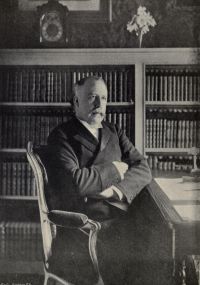 George William Erskine Russell,
Sydney Smith
George William Erskine Russell,
Sydney Smith
“ You may practise this wickedness secretly, as you may any other wickedness; you may suppress a topic of defence, or soften an attack upon opponents, or weaken your own argument and sacrifice the man who has put his trust in you, rather than provoke the powerful by the triumphant establishment of unwelcome innocence: but if you do this, you are a guilty man before God. ”
Matthew Henry, Commentary on the Whole Bible… (1700s)
“ If a servant be thus provoked, perhaps he will curse thee, will accuse thee and bring thee into trouble, or give thee an ill word and blemish thy reputation, or appeal to God against thee, and imprecate his wrath upon thee, who is the patron and protector of oppressed innocency." II. An account, upon occasion of this caution, of some wicked generations of men, that are justly abominable to all that are virtuous and good. 1. Such as are abusive to their parents, give them bad language and wish them ill, call them bad names and actually injure them. ”

