 Thomas Hardy,
Tess of the d'Urbervilles
(1891)
Thomas Hardy,
Tess of the d'Urbervilles
(1891)
“ If an offense come out of the truth, better it is that the offense come than that the truth be concealed. ”
The concept of "offense" primarily refers to the strategic act of attacking or engaging an opposing team in sports, with the goal of scoring points, as seen in baseball, football, and hockey. However, the term also holds a distinct legal and ethical meaning, relating to breaches of rules or moral violations. Philosophers such as Jeremy Bentham examined this latter aspect, focusing on the proportionality of punishments to wrongdoing and the moral reasoning behind human behavior.
Thomas Hardy, on the other hand, emphasized the conflict between truth and offense, while Bentham’s work highlighted the influence of pain and pleasure on human conduct. These viewpoints illustrate offense as both a tactical move and a moral transgression, underscoring its dual importance across different contexts.
Thomas Hardy,
Tess of the d'Urbervilles
(1891)
“ If an offense come out of the truth, better it is that the offense come than that the truth be concealed. ”
J. N. Larned, History for ready reference, Volume 3… (1895)
“ Whenever an offense was found to be increasing, some busy senator called for new rigor, until murder became in the eye of the law no greater crime than picking a pocket, purloining a ribbon from a shop, or pilfering a pewter-pot. ”
Henry Frederick Cope, Religious Education in the Family
“ Punishment by the blow or the immediate sentence will be futile. The offender must know he has trespassed in a realm beyond your administration and rule; he has done more than commit an offense against you. ”
 Jeremy Bentham,
An Introduction to the Principles of Morals and Legislation…
(1780)
Jeremy Bentham,
An Introduction to the Principles of Morals and Legislation…
(1780)
“ When a man has resolved upon a particular offense, the next object is to dispose him to do no more mischief than is necessary to his purpose: in other words, to do as little mischief as is consistent with the benefit he has in view. ”
Jeremy Bentham,
An Introduction to the Principles of Morals and Legislation…
(1780)
“ But if a man must needs commit an offense of some kind or other, the next object is to induce him to commit an offense less mischievous, rather than one more mischievous: in other words, to choose always the least mischievous, of two offenses that will either of them suit his purpose. ”
Charles Lee Lewis, Matthew Fontaine Maury, the Pathfinder of the Seas
“ Make it a rule never to offend, nor to seek cause of offense in the conduct of others. Be polite to all, familiar with but few. Do not be quick to take offense; you will never find a gentleman who will willfully and without any cause, real or imaginary, offend another. Therefore whenever you imagine yourself aggrieved either by an equal or a superior officer—when you are134 in doubt as to whether the offense were intended or not, go straight up to him, state the case, and ask the meaning of the intention. ”
Jeremy Bentham,
An Introduction to the Principles of Morals and Legislation…
(1780)
“ It is the prospect of some of these pleasures, or of security from some of these pains, that constitutes the motive or temptation, it is the attainment of them that constitutes the profit of the offense. Is the offender to be punished? It can be only by the production of one or more of these pains, that the punishment can be inflicted. ”
Jeremy Bentham,
An Introduction to the Principles of Morals and Legislation…
(1780)
“ An act of some sort or other is necessarily included in the notion of every offense. Together with this act, under the notion of the same offense, are included certain circumstances: which circumstances enter into the essence of the offense, contribute by their conjunct influence to the production of its consequences, and in conjunction with the act are brought into view by the name by which it stands distinguished. ”
“ It may often be made the subject of a plain talk to all of the men, explaining what such an offense means to the success of the undertaking and put so strongly that a better result may be thus obtained without giving any punishment at all. ”
 Henry David Thoreau,
Winter: From the Journal of Henry D. Thoreau…
(1888)
Henry David Thoreau,
Winter: From the Journal of Henry D. Thoreau…
(1888)
“ One cannot too soon forget his errors and misdemeanors. To dwell long upon them is to add to the offense. Repentance and sorrow can only be displaced by something better, which is as free and original as if they had not been. ”
Henry Boyer Brumbaugh, The Church Manual (1916)
“ When an offence is given to a member, in language or conduct, if the offense relates only to himself, the offended shall, without consulting any one, go to the offender with an honest purpose to be reconciled, if possible. If satisfaction is given, he shall forgive and no more be said about it. ”
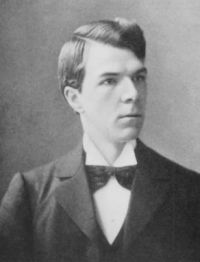 Albert Beebe White,
Source Problems in English History
(1915)
Albert Beebe White,
Source Problems in English History
(1915)
“ A freeman shall not be amerced for a slight offense, except in accordance with the degree of the offense; and for a grave offense he shall be amerced in accordance with the gravity of the offense, yet saving always his "contenement" ”
Adam Clarke, Commentary and critical notes on the Bible… (1800s)
“ It is my opinion, that, let a man search ever so accurately, he will not find that he has received, during the whole course of his life, four hundred and ninety such offenses. If the man who receives the offense has given any cause for it, in that case, the half of the offense, at least, towards his brother, ceases. ”
 Philip Schaff,
Nicene and Post-Nicene Fathers…
(1885)
Philip Schaff,
Nicene and Post-Nicene Fathers…
(1885)
“ The offenses against us here are a hundred pence, but those from us against God are ten thousand talents. But you know that offenses are also judged by the quality of the persons: for instance, he who has insulted a private person has done wrong, but not so much as he who has insulted a magistrate, and he who has offended a greater magistrate offends in a higher degree, and he who offends an inferior one in a lower degree ”
Matthew Henry, Commentary on the Whole Bible… (1700s)
“ Those who thus set up for judges and censurers shall receive the greater condemnation. Our judging others will but make our own judgment the more strict and severe, Matt. vii. 1, 2. Those who are curious to spy out the faults of others, and arrogant in passing censures upon them, may expect that God will be as extreme in marking what they say and do amiss. 2. Another reason given against such acting the master is because we are all sinners: In many things we offend all, v. 2. Were we to think more of our own mistakes and offenses, we should be less apt to judge other people. ”
Mary Tenney Healy, Pathology of Lying, Accusation…
“ The tendencies soon carry the person over to the production of other delinquencies, and if these do not come in the category of punishable offenses, at least, through the trouble and suffering caused others, they are to be regarded essentially as misconduct. ”
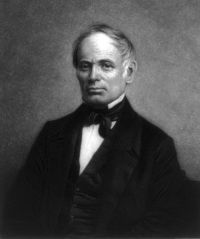 Adin Ballou,
Christian Non-Resistance — Chapter 2…
Adin Ballou,
Christian Non-Resistance — Chapter 2…
“ It is for him to say whether the wrongs done him are of sufficient moment to justify litigation, retaliation, or personal resistance; and the consequence is, that small offenses, insults and injuries, are rare. Nearly all are too great to be endured. ”
Alexander Andrew Knox, Once a Week (1860)
“ He knows that he is playing for his life, and plays the game out with his wits about him. Impress, therefore, upon this class of offenders that the crime with which they stand charged is so heinous in the eyes of their fellow-creatures that every effort will be made to bring them to punishment, if their guilt is established, and you at once deprive them of one strong incentive to crime in this particular form—namely, the strong probability of impunity. ”
William Douglass, Sermons Preached in the African Protestant Episcopal Church of St… (1854)
“ As we are apt to be mistaken in our judgment with regard to the general character of persons, so are we equally so with regard to their evil intentions. An offence is taken from something that has been said or done to us. Now what has been said or done, may not have been the result of either ill-will or malice. It may have been the result of a wrong judgment they had hastily formed, or from some excited state of mind they may have been led to say, or act as they did. ”
Lady Constance Lytton, Prisons & Prisoners: Some Personal Experiences
“ Does a woman offend? Punish her! Does a man offend? Punish him! Does a group offend? Punish them! ‘What for?’ someone suddenly asks. ‘To make them stop doing it!’ ‘But they have done it.’ ‘To make them not do it again, then.’ ‘But they do it again and worse.’ ‘To prevent other people’s doing it, then.’ But it does not prevent them—the crime keeps on. ”
Matthew Henry, Matthew Henry's Commentary on the Whole Bible… (1700s)
“ To seducers, who corrupt the truths of Christ and his ordinances, and so trouble the minds of the disciples; for they are those by whom offences come. 3. To those who, under the profession of the Christian name, live scandalously, and thereby weaken the bands and sadden the hearts of God's people; for by them the offence comes, and it is no abatement of their guilt, nor will be any of their punishment, that it is impossible but offences will come. II. That the forgiving of offences is a great duty, and that which we should every one of us make conscience of (v. 3) : Take heed to yourselves. ”
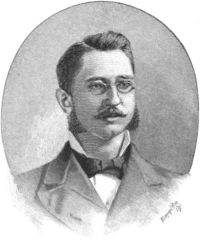 G. Frank Lydston,
Poker Jim, Gentleman, and Other Tales and Sketches
G. Frank Lydston,
Poker Jim, Gentleman, and Other Tales and Sketches
“ I have not come to offer any arguments in defense of any act I may have committed, nor do I intend to beg for mercy at the hands of the only person who, thus far, is in a position to accuse me of a crime. ”
Camden Pelham, The Chronicles of Crime or The New Newgate Calendar…
“ I will not otherwise extenuate my offence than by declaring, what I hope will appear to many, and what many circumstances make probable, that I did not intend finally to defraud: nor will it become me to apportion my own punishment, by alleging that my sufferings have been not much less than my guilt; I have fallen from reputation which ought to have made me cautious, and from a fortune which ought to have given me content. I am sunk at once into poverty and scorn; my name and my crime fill the ballads in the streets; the sport of the thoughtless, and the triumph of the wicked! ”
 Thomas Jefferson,
Notes on the State of Virginia
(1853)
Thomas Jefferson,
Notes on the State of Virginia
(1853)
“ Their only controls are their manners, and that moral sense of right and wrong which, like the sense of tasting and feeling, in every man makes a part of his nature. An offence against these is punished by contempt, by exclusion from society, or, where the case is serious, as that of murder, by the individuals whom it concerns. ”
 Samuel Johnson,
The Works of Samuel Johnson, LL.D. Volume 10
Samuel Johnson,
The Works of Samuel Johnson, LL.D. Volume 10
“ The motion, therefore, my lords, appears to me neither founded on facts, nor law, nor reason, nor any better grounds than popular caprice, and private malevolence. If it is contrary to law to punish without proof; if it is not agreeable to reason that one should be censured for the offences of another; if it is necessary that some crime should be proved before any man can suffer as a criminal, then, my lords, I am convinced that your lordships will be unanimous in rejecting the motion. ”
 Margaret Fuller,
Life Without and Life Within; or…
Margaret Fuller,
Life Without and Life Within; or…
“ A celebrated writer has added a little book, to be used while looking at the picture, and drawn inferences of universal interest.Such would we draw; such as this! Let no one dare to call another mad who is not himself willing to rank in the same class for every perversion and fault of judgment. Let no one dare aid in punishing another as criminal who is not willing to suffer the penalty due to his own offences. ”
 Theodore Dreiser,
An American Tragedy, v. 2
(1925)
Theodore Dreiser,
An American Tragedy, v. 2
(1925)
“ Oh, be very sure that no such mistaken judgment based on any local or religious or moral theory of conduct or bias, because of presumed irrefutable evidence, is permitted to prejudice you, so that without meaning to, and with the best and highest-minded intentions, you yourselves see a crime, or the intention to commit a crime, when no such crime or any such intention ever truly or legally existed or lodged in the mind or acts of this defendant. ”
Alexander Kuprin, Best Russian Short Stories (1917)
“ I know well that in the eye of the law we are offenders and enemies of society. But imagine only for a moment, gentlemen, the situation of this enemy of society when he is accused wholesale of an offence which he not only never committed, but which he is ready to resist with the whole strength of his soul. ”
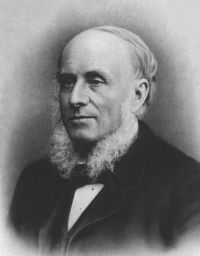 Alexander Bain,
Popular Science Monthly
(1878)
Alexander Bain,
Popular Science Monthly
(1878)
“ One chief outlet for the malevolent impulses is the avenging of wrong, whether private or public. A convicted wrong-doer is punished by the law, and the indignation roused by the crime turns to gratification at the punishment. ”
 Coningsby Dawson,
The Test of Scarlet: A Romance of Reality
Coningsby Dawson,
The Test of Scarlet: A Romance of Reality
“ In the alloting of punishment the age, former social status or mental qualities of the offender are rarely taken into account. There are no excuses, no explanations. Take the gravest crime of all—cowardice. ”
Frank Frost Abbott, The Common People of Ancient Rome
“ You shall be punished, then, they say, 'since you dare to disapprove of our deed.' Unheard of arrogance, that some men glory in their crime, that others may not even sorrow over it without punishment! ”
Matthew Henry, Matthew Henry's Commentary on the Whole Bible… (1700s)
“ If the accused were found guilty, judgment must be given against him: "Thou shalt condemn the wicked;" for to justify the wicked is as much an abomination to the Lord as it is to condemn the righteous, Prov. xvii. 15. 4. If the crime were not made capital by the law, then the criminal must be beaten. ”
Frederick Pollock, Encyclopædia Britannica, Ninth Edition (1888)
“ For the practical purposes of modern law we may divide torts into three groups, wrongs of a personal character, wrongs affecting property, and wrongs affecting person and property, either or both. Under the first group come the wrongs of physical violence and restraint, namely, assault and false imprisonment; then the wrong done to men's good name by libel and slander, in which kind there are sundry curious and not wholly rational distinctions ”
Samuel Johnson,
The Works of Samuel Johnson, LL.D. Volume 10
“ And yet less, my lords, can I suspect, that those by whom he is accused, act from any motive that may influence them to desire a sentence not supported by evidence, or conformable to truth; or that they can wish the ruin of any man whose crimes are not notorious and flagrant, that they persecute from private malice, or endeavour to exalt themselves by the fall of another. ”
Samuel Johnson,
The Works of Samuel Johnson, LL.D. Volume 11
“ Thus, my lords, an inquiry appears, upon every supposition, useful and necessary; but I cannot comprehend how it can be prosecuted by any other method, than that of proposing an indemnity to those who shall make discoveries. Every wicked measure, my lords, must involve in guilt all who are engaged in it; and how easily it may be concealed from every other person, may be shown by an example of a crime, which no man will deny to have sometimes existed, and which, in the opinion of most, is not very uncommon in this age. ”
 William Blackstone,
Commentaries on the Laws of England
(1770)
William Blackstone,
Commentaries on the Laws of England
(1770)
“ A crime, which ought to be strictly and impartially proved, and then as strictly and impartially punished. But it is an offence of so dark a nature, so easily charged, and the negative so difficult to be proved, that the accusation should be clearly made out: for, if false, it deserves a punishment inferior only to that of the crime itself. ”
 Theodore Parker,
The Trial of Theodore Parker
Theodore Parker,
The Trial of Theodore Parker
“ My instruction to you is, that language addressed to persons who immediately afterwards commit an offence, actually intended by the speaker to incite those addressed to commit it, and adapted thus to incite them, is such a counselling or advising to the crime as the law contemplates, and the person so inciting others is liable to be indicted as a principal. ”
James Leslie Allan Kayll, A Plea for the Criminal
“ The various punishments which are inflicted upon our law breakers are fines, imprisonment, flogging, and death.Fines produce a very useful means of dealing with persons whose offences show a tendency to crime rather than to actual criminality. In many cases the self-respect of the offender has not been sacrificed, and while under arrest the sense of shame is deeply aroused. ”
Baron Edward Bulwer Lytton Lytton, A Strange Story — Complete
“ If your object be, as you have intimated, to aid you in exposing and disabling man whose antecedents have been those of guilt, and who threatens with danger the society which receives him, you must give me proofs that are not reducible to magic; and you must prepossess me against the person you accuse, not by powders and fumes that disorder the brain, but by substantial statements, such as justify one man in condemning another. ”
 Adam Smith,
The Essays of Adam Smith
Adam Smith,
The Essays of Adam Smith
“ Deliberate actions, of a pernicious tendency to those we live with, have, besides their impropriety, a peculiar quality of their own by which they appear to deserve, not only disapprobation, but punishment; and to be the objects, not of dislike merely, but of resentment and revenge: and none of those systems easily and sufficiently account for that superior degree of detestation which we feel for such actions. ”
 Jean Ingelow,
Fated to Be Free: A Novel
Jean Ingelow,
Fated to Be Free: A Novel
“ Now which of these, looked at by the judge, is the great offender? Is the one lie he repents of the most wicked, or are those that with small temptation he flung about daily, and so made that one notable lie easy? ”
 Anthony Trollope,
The Life of Cicero, Volume One
Anthony Trollope,
The Life of Cicero, Volume One
“ Would you charge any one as a thief? you must be clear from any suspicion of even desiring another man's property. Have you brought a man up for malice or cruelty? take care that you be not found hard-hearted. Have you called a man a seducer or an adulterer? be sure that your own life shows no trace of such vices. Whatever you would punish in another, that you must avoid yourself. A public accuser would be intolerable, or even a caviller, who should inveigh against sins for which he himself is called in question. ”
Camden Pelham, The Chronicles of Crime or The New Newgate Calendar…
“ You appear to entertain a very proper{283} sense of the enormity of the offence which you have committed; you appear, too, in a state of contrition of mind, and, I doubt not, have duly reflected how far the dangerous tendency of the offence you have been guilty of is increased by the influence of example, in being committed by a person of your character, and of the sacred function of which you are a member. ”
International extradition law is governed by four core principles—treaty necessity, dual criminality, the specialty rule, and the political offense exception—balancing the need for transnational justice against fundamental state sovereignty and the right to asylum.
Drawing on Hobbes, Beccaria, and Brennan, a legal analysis reveals how the trauma of state prosecution—the 'cruel and superfluous torment of uncertainty'—is intentionally deployed to suppress lawful action and dismantle fundamental rights through fear, regardless of the eventual verdict.
