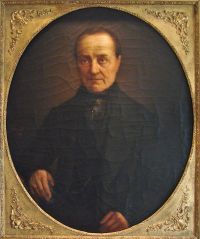
 Auguste Comte,
A General View of Positivism
Auguste Comte,
A General View of Positivism
“ There are three successive states of morality answering to the three principal stages of human life; the personal, the domestic, and the social stage. ”
The concept of "principal" denotes a primary or fundamental element within a given context, serving as a cornerstone for understanding broader frameworks. From Auguste Comte’s tripartite stages of morality—personal, domestic, and social—to Henry James’s reflections on intellectual promise, the theme underscores core values and guiding principles.
John Ruskin emphasizes a unifying virtue across imagination, art, and science, while Ralph Waldo Emerson portrays truth and beauty as divine callings. These varied perspectives, spanning philosophy, literature, and ethics, collectively illustrate "principal" as a lens through which human endeavors are directed toward moral, intellectual, and existential purpose.
Auguste Comte,
A General View of Positivism
“ There are three successive states of morality answering to the three principal stages of human life; the personal, the domestic, and the social stage. ”
Henry James, The American scene (1907)
“ What are the signs of intellectual promise, poetic, prosaic, philosophic, in the current generations, those actually learning their principal lesson, as one assumes, from the great University hard by? ”
Various, Popular Science Monthly (1914)
“ One of the principal elements in human happiness is the realization of beauty in nature, whether it be in the exquisite form and color of the petal of a rose, the glowing green of the beetle's armor, the flight of the swallow, the moonlight serenade of the mocking bird, the iridescent green and bronze ocelli of the peacock's tail-coverts, the mountains veiled in opalescent mists, the abysmal blue of the ocean, the glory of red and gold in the sunset, or the shimmer of the myriad stars. ”
Alexander F. Mitchell, The Scottish Reformation
“ All other things touching the books to be read in ilk classe, and all such like particular affaires, we referre to the discretion of the masters, principals, and regents, with their well-advised counsel; not doubting but if God shall grant quietnesse, and give your wisedomes grace to set forward letters in the sort prescribed, ye shall leave wisdome and learning to your posterity—a treasure more to be esteemed than any earthly treasure ye are able to amasse for them, which without wisdome are more able to be their ruin and confusion than their help and comfort. ”
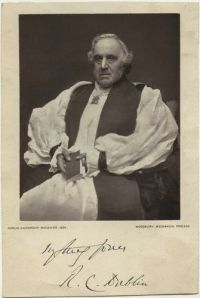 Richard Chenevix Trench,
On the Study of Words
Richard Chenevix Trench,
On the Study of Words
“ I will not urge more than one; but that one, because in it is a lesson more for ourselves than for others, and with such I would fain bring these lectures to a close. How solemn a truth we express when we name our work in this world our 'vocation,' or, which is the same in homelier Anglo-Saxon, our 'calling.' What a calming, elevating, ennobling view of the tasks appointed us in this world, this word gives us. ”
 Ralph Waldo Emerson,
Literary Ethics
(1838)
Ralph Waldo Emerson,
Literary Ethics
(1838)
“ You will hear, that the first duty is to get land and money, place and name. 'What is this Truth you seek? what is this Beauty?' men will ask, with derision. If, nevertheless, God have called any of you to explore truth and beauty, be bold, be firm, be true. ”
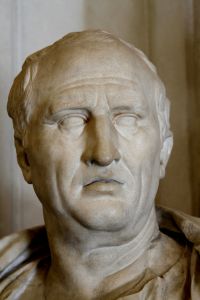 Marcus Tullius Cicero,
The Academic Questions, Treatise De Finibus…
(1891)
Marcus Tullius Cicero,
The Academic Questions, Treatise De Finibus…
(1891)
“ One kind which exists in those things in which that chief good is brought to perfection: and they are qualities of either the mind or body. But these things which are external, that is to say, which are in neither mind nor body, such as friends, parents, children, relations, or one's country, are indeed dear to me for their own sake, but still are not of the same class as the other kind. Nor, indeed, could any one ever arrive at the chief good, if all those things which are external, although desirable, were contained in the chief good. ”
“ In circles highly civilised the great things, the real things, the hard, the cruel and even the tender things, the true elements of any tension and true facts of any crisis, have ever, for the outsider’s, for the critic’s use, to be translated into terms—terms in the distinguished name of which, terms for the right employment of which, more than one situation of the type I glance at had struck me as all irresistibly appealing. ”
J. Macbride Sterrett, The Philosophical Review (1892)
“ Our First Principle interprets it as the reason of humanity organizing and instituting its needs and ideals in its onward stumbling to and fro between its own true character and its passing caricature. ”
“ Then the second thing I have to show you is that over these three kingdoms of imagination, art, and science, there reigns a virtue or faculty, which from all time, and by all great people, has been recognised as the appointed ruler and guide of every method of labour, or passion of soul ”
 Edwin Abbott Abbott,
Onesimus: Memoirs of a Disciple of St…
Edwin Abbott Abbott,
Onesimus: Memoirs of a Disciple of St…
“ What therefore is the foundation of your philosophy?”“The foundation,” replied my friend, “consists in the distinguishing of things in our power from things not in our power. The things that are needful are in our power, viz. justice, temperance, truthfulness, courage and the like; but the things that are not in our power are not needful, such as wealth, beauty, reputation, health, pleasure, life and the rest. ”
 David Hume,
A Treatise of Human Nature
(1738)
David Hume,
A Treatise of Human Nature
(1738)
“ I have observed in considering the nature of ambition, that the great feel a double pleasure in authority from the comparison of their own condition with that of their slaves; and that this comparison has a double influence, because it is natural, and presented by the subject. ”
 Plato,
The Republic of Plato
(1901)
Plato,
The Republic of Plato
(1901)
“ What classes of things have a greater share of pure existence, in your judgment—those of which food and drink and condiments and all kinds of sustenance are examples, or the class which contains true opinion and knowledge and mind and all the different kinds of virtue? ”
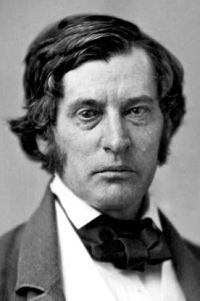 Charles Sumner,
Charles Sumner: his complete works…
Charles Sumner,
Charles Sumner: his complete works…
“ When I speak of all the faculties, I mean all those which enter into and form the character created in the image of God, not merely those which minister to the selfish ends of life. There are faculties for business; there are others which open to us the avenues of knowledge,—others which connect us by chains soft as silk, but strong as iron, to the social and domestic circle,—others still which reveal to us, in vistas of infinite variety and inconceivable extension, our duties to God and man. ”
William Winter, Shadows of the Stage
“ The element of power, in all the expressions of such a mind, will fluctuate; but every one of its expressions will be sincere and in a greater or less degree will be vital with a universal and permanent significance. ”
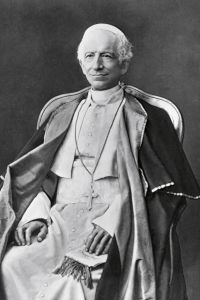 Leo XIII,
The Great Encyclical Letters of Pope Leo XIII
(1903)
Leo XIII,
The Great Encyclical Letters of Pope Leo XIII
(1903)
“ The nature and scope of that connection can be determined only, as We have laid down, by having regard to the nature of each power, and by taking account of the relative excellence and nobleness of their purpose. ”
 John Ruskin,
Time and Tide by Weare and Tyne
John Ruskin,
Time and Tide by Weare and Tyne
“ Under the term 'skill' I mean to include the united force of experience, intellect, and passion, in their operation on manual labor, and under the term 'passion' to include the entire range of the moral feelings. ”
 ʻAbdu'l-Bahá,
Selections from the writings of ‘Abdu'l-Bahá
ʻAbdu'l-Bahá,
Selections from the writings of ‘Abdu'l-Bahá
“ In like manner, when divers shades of thought, temperament and character, are brought together under the power and influence of one central agency, the beauty and glory of human perfection will be revealed and made manifest. ”
Archibald B. D. Alexander, Christianity and Ethics: A Handbook of Christian Ethics
“ There must be therefore a unity of character underlying the multiplicity of characteristics, one single and commanding principle at work in the formation of life of which every possible virtue is the expression. ”
The King's Mirror (Speculum regale-Konungs skuggsjá…
“ The virtues that I have just enumerated grow especially on the boughs of wisdom, but they ramify into a great many good branches and twigs. Now these are the branches which are most useful: a rational outlook, a temperate mind, and the capacity to determine judiciously what one owes to every other man. ”
 Walter Pater,
Plato and Platonism
Walter Pater,
Plato and Platonism
“ That they may be one!—If, like an individual soul, the state has attained its normal differentiation of parts, as with that also its vitality and effectiveness will be proportionate to the unity of those parts in their various single operations. The productive, the executive, the contemplative orders, respectively, like their psychological analogues, the senses, the will, and the intelligence, will be susceptible each of its own proper virtue or excellence, temperance, bravery, spiritual illumination. ”
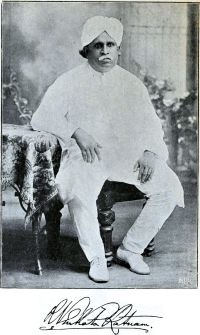 Raghupathi Venkataratnam Naidu,
The Message and Ministrations of Dewan Bahadur R. Venkata Ratnam
(1923)
Raghupathi Venkataratnam Naidu,
The Message and Ministrations of Dewan Bahadur R. Venkata Ratnam
(1923)
“ Thy humble children, thus to feel confident, certain, absolutely and thoroughly convinced, that Thou art the supreme Reality, the eternal Verity—the Knower, the Ordainer, the Controller, the Sustainer, the Sanctifier. ”
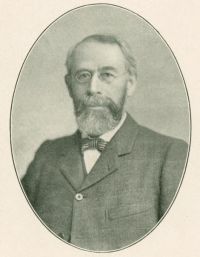 Josephus Nelson Larned,
Popular Science Monthly
(1877)
Josephus Nelson Larned,
Popular Science Monthly
(1877)
“ It is upon that discipline chiefly that those qualities which I have called the moral qualities of the personal order, and which have their root in truthfulness and courage, depend for their evolution. ”
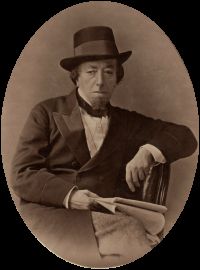 Benjamin Disraeli,
Sybil — Book 2/Chapter 2
Benjamin Disraeli,
Sybil — Book 2/Chapter 2
“ "principle is ever my motto —no expediency. ”
 Woodrow Wilson,
President Wilson's Addresses
Woodrow Wilson,
President Wilson's Addresses
“ There is, moreover, a voice calling for these definitions of principle and of purpose which is, it seems to me, more thrilling and more compelling than any of the many moving voices with which the troubled air of the world is filled. ”
 Josiah Royce,
The World and the Individual, First Series
(1899)
Josiah Royce,
The World and the Individual, First Series
(1899)
“ Our very theory insists that your internal meanings, your ideas viewed as internally significant, your selections and expressions, are typical instances of facts, and of precisely the facts of whose unity the world consists. ”
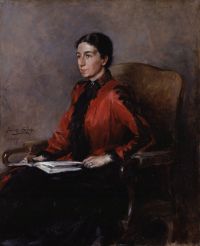 Mrs. Humphry Ward,
The History of David Grieve
Mrs. Humphry Ward,
The History of David Grieve
“ Around thee are the institutions, the ideals, the knowledge and beliefs, ethical or intellectual, in which that work, that life, have been so far fragmentarily and partially realised. Submit thyself and press forward. Thou knowest well what it means to be better: more pure, more loving, more self-denying. ”
 William Edward Hartpole Lecky,
Historical and Political Essays
William Edward Hartpole Lecky,
Historical and Political Essays
“ If you would form a wise judgment of the future of a nation, observe carefully whether these qualities are increasing or decaying. Observe especially what qualities [42] count for most in public life. Is character becoming of greater or less importance? ”
 George Edward Moore,
Principia Ethica — Chapter V
(1903)
George Edward Moore,
Principia Ethica — Chapter V
(1903)
“ And in the second division we may distinguish between the habitual tendency to be actuated by one motive, namely, the desire to do duty for duty’s sake, and all other motives, such as love, benevolence, etc. ”
Various, Blackwood's Edinburgh Magazine…
“ Taking, as our limits necessarily oblige us to take, a broad survey of the principle, and the results of the principle disclosed by experience, we cheerfully pronounce both to be positively and undeniably good. ”
 Ralph Barton Perry,
The Moral Economy
Ralph Barton Perry,
The Moral Economy
“ Steadiness of purpose under adverse or confusing circumstances is called persistence, courage, loyalty, or zeal, with {96} differences of meaning that reflect the nature either of the purpose or the circumstances. ”
Samuel Finley Breese Morse, Samuel F. B. Morse, His Letters and Journals
“ I concede to you conscientious motives in what you do. You are sustained by those around you, men of intellect, men of character. I respect them while I differ from them. I appeal, however, to a higher law, and that, I think, sustains me. ”
Plato,
The Republic of Plato
(1901)
“ Since, then, the pleasures of each class and the life of each are in dispute, and the question is not which life is more or less honorable, or better or worse, but which is the more pleasant or painless—how shall we know who speaks truly? ”
Thomas Frederick Tout , Dictionary of National Biography… (1912)
“ Though necessarily dealing with great masses of detail, general principles are wisely and impressively emphasised ; though constantly concerned with abstractions and tendencies, it has rightly been pronounced to be ’marvellously concrete.' Self-suppression, impartiality, accuracy, sympathy, sobriety of judgment, and sense of proportion stand out in every part of the great book. ”
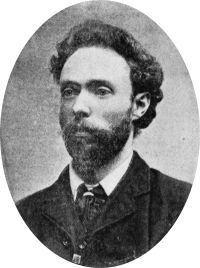 John Bruce Glasier,
William Morris and the Early Days of the Socialist Movement
(1921)
John Bruce Glasier,
William Morris and the Early Days of the Socialist Movement
(1921)
“ So far as I commonly think and act, I do so precisely as do most other fairly sensible folk—that is to say, I think and act in accordance with the thoughts, traditions, and habits of my day and generation. ”
Ralph Waldo Emerson,
Miscellanies
(1878)
“ In Lectures and Biographical Sketches, in the essay on Aristocracy, and also in that on The Man of Letters, the duty of loyalty to his thought and his order is urged as a trait of the gentleman and the scholar, and in the latter essay, the scholar’s duty to stand for what is generous and free. ”
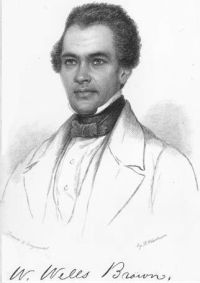 William Wells Brown,
The Black Man
(1863)
William Wells Brown,
The Black Man
(1863)
“ This training will give breadth of view, develop strength of character and a comprehensive spirit, by which the ever-living expressions of truth and principle in the past may be connected with those of a like character in the present. ”
Ralph Waldo Emerson,
Spiritual Laws
(1841)
“ What we call obscure condition or vulgar society is that condition and society whose poetry is not yet written, but which you shall presently make as enviable and renowned as any. In our estimates, let us take a lesson from kings. The parts of hospitality, the connection of families, the impressiveness of death, and a thousand other things, royalty makes its own estimate of, and a royal mind will. To make habitually a new estimate, — that is elevation. What a man does, that he has. ”
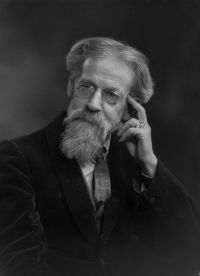 Patrick Geddes,
Civics: as Applied Sociology
(1905)
Patrick Geddes,
Civics: as Applied Sociology
(1905)
“ Having taken full note of places as they were and are, of things as they have come about, and of people as they are—of their occupations, families, and institutions, their ideas and ideals—may we not to some extent discern, then patiently plan out, at length boldly suggest, something of their actual or potential development? ”
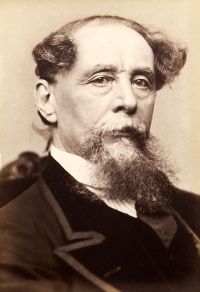 Charles Dickens,
Our Honourable Friend
Charles Dickens,
Our Honourable Friend
“ His principles were, these, - with the addition of his colours nailed to the mast, every man's heart in the right place, every man's eye open, every man's hand ready, every man's mind on the alert. His principles were these, concurrently with a general revision of something - speaking generally - and a possible readjustment of something else, not to be mentioned more particularly. ”
Charles Gore, The Sermon on the Mount: A Practical Exposition
“ But each of the maxims can be taken to the heart and conscience of the individual, to become a principle of each man’s own character and conduct, and then to reappear, retranslated into social action, according to the wisdom of the time or the wisdom of the man or the wisdom of the Church. ”
 James Hutchins Baker,
Education and life
(1900)
James Hutchins Baker,
Education and life
(1900)
“ Personal distinction, success, depend, not on the average bulk of knowledge, power, and skill, but on that margin that extends a little beyond the reach of one’s fellows, a margin gained by some extra devotion, by sacrifice and work, by ideals a little more advanced or more clearly seen. ”
Charles Gore, The Sermon on the Mount: A Practical Exposition
“ He fixes our attention, we may say, on three great principles: the character of God our Father, and His impartial, individual, disciplinary love: the final and universal victory of His kingdom over all resisting forces within and without: the critical character of our present life with its capacities for good or for evil, and the limitless consequences for good or evil which flow from the present attitude of each individual towards his personal responsibilities. ”
Henry James, The Two Magics (1898)
“ I do really delight in your society, and I only want to show you that I contended for a principle.” It may be imagined whether I resisted this appeal or failed to accompany him again, hand in hand, to the schoolroom. ”
 Arvède Barine,
La Grande Mademoiselle, 1627-1652
Arvède Barine,
La Grande Mademoiselle, 1627-1652
“ I speak not only of the virtues that are in some sort the essence of the profession made by their united representative types,—Pity, Wisdom, Prudence, Moderation, Eloquence, Erudition, and like attributes,—I speak of other virtues, the characteristic qualities of another and separate order, like those composing the perfections of a chief of war ... ”
James Ward, The Realm of Ends or Pluralism and Theism (1911)
“ On the contrary, the higher, over-individual ends, as they are sometimes called, — politics, industry, science, literature, art — imply a differentiation among men that in spite of its significance would defy classification. ”
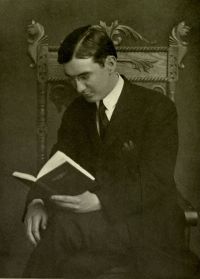 John Wilson Townsend,
Kentucky in American Letters, 1784-1912…
John Wilson Townsend,
Kentucky in American Letters, 1784-1912…
“ The ideals developed by a fierce struggle for great principles are lofty, sublime in their conception and intent. The higher the ideals, the greater the progress; the more eminent the achievement, the more marked the individuality, the stronger the characteristics of the people. ”
 George Henry Calvert,
Essays Æsthetical
George Henry Calvert,
Essays Æsthetical
“ Our birth, growth, and continued weal, depending on large, deep principles—principles deliberately elaborated and adopted by reason, and generously embracing the whole—our life must be interpenetrated by principle, and thence our literature must embrace the widest and most human wants and aspirations of man. ”
