Osculum

Definition and stakes

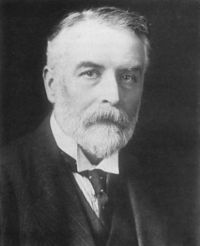
Portrait of Ernst Haeckel Ernst Haeckel,  Report on the Radiolaria Collected by H.M.S. Challenger During the Years 1873-1876…

“ Osculosa or Merotrypasta.—The subclass Osculosa or Merotrypasta includes the two legions Monopylea or Nassellaria, and Cannopylea or Phæodaria, which agree in the following constant and important characters:— (1) The Central Capsule is originally monaxon (ovoid or spheroidal) and retains this ground-form in most of the species. (2) The Membrane of the central capsule possesses a single large principal aperture (osculum) at the basal pole of the vertical main axis. ”
Source: Gutenberg

Marcus Hartog,  The Cambridge natural history, Vol… (1906)

“ If the formation of a new osculum is accompanied by fission of the sac, and the branching of the latter is slight, there arises an adult formed of a number of erect, well separated main tubes, each with one osculum and lateral branches. Such is the case in the Leucosoleniidae. In the Clathrinidae, on the other hand, branching of the Olynthus is complicated, giving rise to what is termed reticulate body form, that is, a sponge body consisting of a network of tubules with several oscula, but with no external indication of the limits between the portions drained by each osculum. ”
Source: Gutenberg

Marcus Hartog,  The Cambridge natural history, Vol… (1906)

“ The body is a sac, branched in the adult, but simple in the young; its continuous cavity is everywhere lined with choanocytes, its wall is traversed by inhalant pores, and its cavity opens to the exterior at the distal end by an osculum. The simple sac-like young is the well-known Olynthus of Haeckel—the starting-point from which all sponges seem to have set out. Two processes are involved in the passage from the young to the adult, namely, multiplication of oscula and branching of the original Olynthus tube or sac. ”
Source: Gutenberg

Get perspective with Kwize: daily news enlightened by great literature