Operculum

Definition and stakes

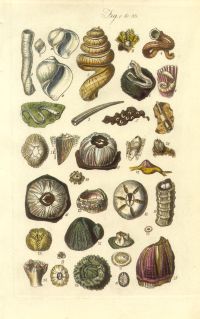
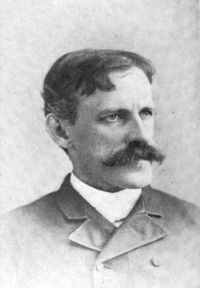
Portrait of G. B. Sowerby G. B. Sowerby,  A conchological manual

“ On examining this piece, it will be observed that it is not formed in regular layers like the rest of the shell; while the true operculum is of a regularly laminated structure, having a nucleus and receiving obliquely deposited additions, either in a lateral spiral or concentric direction. It is attached to the posterior part of the foot on the upper surface; and when the animal retires within its shell, that part of the foot enters last, drawing the operculum after it, and thus closing the aperture. ”
Source: Gutenberg

Walter Holbrook Gaskell,  The Origin of Vertebrates

“ In the one animal (Palæostraca) the foremost pair of mesosomatic appendages forms the operculum, which always bears the terminal generative organs and is fused in the middle line. In many forms, essentially in Eurypterus and the ancient sea-scorpions, the operculum was composed of two segments fused together: an anterior one which carried the uterus, and a posterior one which carried the first pair of branchiæ. ”
Source: Gutenberg

Linda Trueb,  Cranial Osteology of the Hylid Frog…

“ The operculum expands medially to merge with the main part of the otic capsule (Fig. 20g) . The lateral edge of the operculum expands ventrally and then dorsomedially to form a complete tube. Slightly more posteriorly the cartilaginous lateral edge of the otic capsule, lateral to the operculum, dissipates into connective tissue and finally disappears, leaving the posterior end of the operculum as the most distal element of the otic capsule (Fig. 20h) .
[Pg 31]
Fig.
”
Source: Gutenberg

Get perspective with Kwize: daily news enlightened by great literature