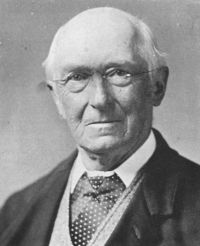
Albert C. L. G. Günther

Albert C. L. G. Günther

Summary

Portrait of Albert C. L. G. Günther Albert C. L. G. Günther An Introduction to the Study of Fishes (1880)

In the body of a fish four parts are distinguished: the head, trunk, tail, and the fins; the boundary between the first and second being generally indicated by the gill-opening, and that between the second and third by the vent. Form of the body. The form of the body and the relative proportions of those principal parts are subject to much variation, such as is not found in any other class of Vertebrates. In fishes which are endowed with the power of steady and more or less rapid locomotion, a deviation from that form of body, which we observe in a perch, carp, or mackerel, is never excessive.
Source: Wikisource

Portrait of Albert C. L. G. Günther Albert C. L. G. Günther An Introduction to the Study of Fishes (1880)

Many of the species are described in so masterly a manner that a greater excellency of method can hardly be conceived. The history of the literature of these species is entered into with minuteness and critical discernment; but in the later volumes, numerous species are introduced into the system without any description, or with a few words only, comparing a species with one or more of its congeners.
Source: Wikisource

Portrait of Albert C. L. G. Günther Albert C. L. G. Günther An Introduction to the Study of Fishes (1880)

The Mouth is formed by the intermaxillary and maxillary bones, or by the intermaxillary only in the upper jaw, and by the mandibulary bone in the lower. These bones are either bare or covered by integument, to which frequently labial folds or lips are added. As regards form, the mouth offers as many variations as the body itself, in accordance with the nature of the food, and the mode of feeding.
Source: Wikisource

Get perspective with Kwize: daily news enlightened by great literature