Notochord

Definition and stakes

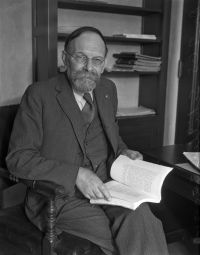
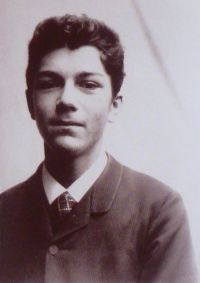
Portrait of William Mackintire Salter William Mackintire Salter,  Nietzsche the thinker (1917)

“ SOME CHARACTERISTICS OF HIS THINKING
I
Nietzsche's life was practically one of thought. Of outer events, "experiences" in the ordinary sense, there were few: "we have not our heart there," he confesses, "and not even our ear." [1] But to the great problems of life he stood in a very personal relation. He philosophized not primarily for others' sake, but for his own, from a sense of intimate need. Body and mind co-operated. "I have written all my books with my whole body and life; I do not know what purely spiritual problems are.""May I say it?
”
Source: Wikisource

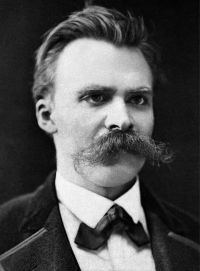
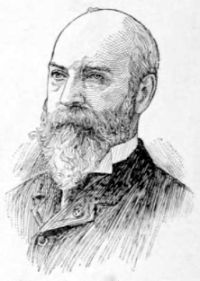
Portrait of Friedrich Nietzsche Friedrich Nietzsche,  Thus Spoke Zarathustra (1891)

“ But if one ask oneself what the conditions to such an attitude are, one will realise immediately how utterly different Nietzsche was from his ideal. The man who insatiably cries da capo to himself and to the whole of his mise-en-scene, must be in a position to desire every incident in his life to be repeated, not once, but again and again eternally. Now, Nietzsche’s life had been too full of disappointments, illness, unsuccessful struggles, and snubs, to allow of his thinking of the Eternal Recurrence without loathing—hence probably the words of the last verse. ”
Source: Gutenberg

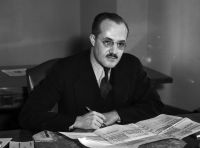
Horace Barnett Samuel,  Modernities

“ With the same exalted spirit in which Jesus preached the kingdom of heaven, so did Nietzsche preach the kingdom of this earth, while it may be noted incidentally that both kingdoms were the perquisites of a select few; and as the spurned god of Israel taught self-abasement to the weak with an intensity that, rightly or wrongly, seems a little extravagant to our modern taste, so does Nietzsche, and with every whit as honest a fanaticism, thunder forth to the strong the sublime dogma of self-expression and self-glorification. ”
Source: Gutenberg

Get perspective with Kwize: daily news enlightened by great literature