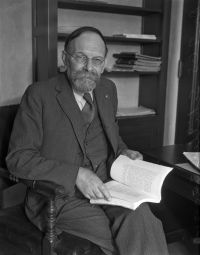
Ferdinand Canning Scott Schiller

Biographical details

Portrait of Ferdinand Canning Scott Schiller Ferdinand Canning Scott Schiller,  The Philosophical Review (1892)

“ But does not our waking life lie under the same suspicion on the same grounds? If it is permissible for once to appeal from the "plain man" to the man of genius, is it not "a mad, mad world, my masters"? Have not seers, prophets, and philosophers in all ages testified that our earthly life was but a dream? And if to these divinely-inspired 'dreamers' we owe all the religions that have swayed the lives of men, must not dreams and hallucinations be accounted most real — in Mr. Ritchie's "ethical" sense? ”
Source: Wikisource

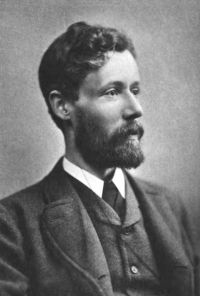
Portrait of Ferdinand Canning Scott Schiller Ferdinand Canning Scott Schiller,  1911 Encyclopædia Britannica, Volume 19… (1911)

“ Indeed, his very love of life may itself be regarded as an indignant revolt against the toils that were inexorably closing in around him. He directs this spirit of revolt also against the sources of his own inspiration; he turns bitterly against Wagner, whose intimate friend and enthusiastic admirer he had been, and denounces him as the musician of decadent emotionalism; he rejects his “educator” Schopenhauer’s pessimism, and transforms his will to live into a “Will to Power.” ”
Source: Wikisource

Portrait of Ferdinand Canning Scott Schiller Ferdinand Canning Scott Schiller,  The Philosophical Review (1892)

“ There is no royal road to omniscience any more than to omnipotence, even though we do not hold with Mr. Ritchie that the two coincide. The cognition of reality is a slow and arduous process, and of its possession we cannot be sure until we possess it whole. The only certain and ultimate test of reality is the absence of internal friction, is its undisputed occupation of the field of consciousness, in a word, its self-evidence. It is because reality does not display this character that thought has to be called in to interpret it. ”
Source: Wikisource

Get perspective with Kwize: daily news enlightened by great literature