Summary

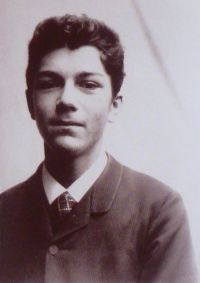
Portrait of Daniel Halévy Daniel Halévy The life of Friedrich Nietzsche

Friedrich Nietzsche looked for no joy in the work which he was about to undertake. To attack is to recognise, to condescend, to lower oneself. He would have preferred to have had no traffic with base humanity. But here was Richard Wagner; was it to be borne that he should be tormented and trammelled? that the Germans should sadden him as they saddened Goethe, and break him, as they broke Schiller? To-morrow other men of genius would be born: was it not necessary to fight from to-day to assure them their liberty and the freedom of their lives?
Source: Gutenberg

Portrait of Daniel Halévy Daniel Halévy The life of Friedrich Nietzsche

He grasped at this sudden exaltation and cultivated it.
Indeed, his is a changed soul. He is no longer the "loyal Swiss" of another time; he is a man among men, a German proud of his Germany. A war has transformed him; he glorifies war. War awakes the energy of men; it even troubles their spirits. It obliges them to seek in an ideal order, an order of beauty and duty, the ends of a life which is too cruel. The lyric poet, the sage, misunderstood in ages of peace, are heard with respect in ages of war. Then men have need of them, and are conscious of their need.
Source: Gutenberg

Portrait of Daniel Halévy Daniel Halévy The life of Friedrich Nietzsche

Perhaps the most adequate answer to Nietzsche, on the plane of his own ideas, is that of Guyau. Both were poets, strayed into philosophy, both seize upon life as the key to all reality. But Guyau finds in the spontaneous outflow of individual life, itself the spring of sociability, fraternity, love. An organism is more perfect as it is more sociable, there can be no full intensity without wide expansion. "There is a certain generosity inseparable from existence, without which one withers up interiorly and dies. The mind must flower; morality, altruism are the flower of human life."
Source: Gutenberg

Get perspective with Kwize: daily news enlightened by great literature