David Sharp

Biographical details

David Sharp,  The Cambridge Natural History, Vol… (1899)

“ We must add a word of qualification; the competence of the ant is not like that of man. It is devoted to the welfare of the species rather than to that of the individual, which is, as it were, sacrificed or specialised for the benefit of the community. The distinctions between the sexes in their powers or capacities are astonishing, and those between the various forms of one sex are also great. The difference between different species is extreme; we have, in fact, the most imperfect forms of social evolution coexisting, even locally, with the most evolute. ”
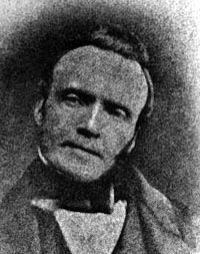
Source: Gutenberg

David Sharp,  The Cambridge Natural History, Vol… (1899)

“ If the Andrena found in the pollen the egg of a parasitic Nomada, it could of course easily remove the egg; but the Andrena has no conception that the presence of the egg ensures the death of its own offspring and though the egg be that of an enemy to its race, why should it resent the fact? Is it not clear that the race has always maintained itself notwithstanding the enemy? Nature has brought about that both host and parasite should successfully co-exist; and each individual of each species lives, not for itself, but for the continuance of the species ”
Source: Gutenberg

David Sharp,  1911 Encyclopædia Britannica (1911)

“ Very little is known as to how long a colony endures, and, as there is great variety in the social conditions of different kinds of termites, it is probable that there is considerable difference as to the point in question. As a rule a family or colony has only a single termitarium, but there are cases in which a single family has several separate abodes, though usually only one of them is a real home containing reproductive individuals. The social life in termites, as well as in all other social insects, is clearly a development of the family life. ”
Source: Wikisource

Get perspective with Kwize: daily news enlightened by great literature