Seta

Definition and stakes

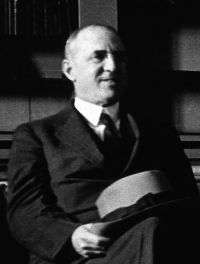
Portrait of Thomas Henry Huxley Thomas Henry Huxley,  The Crayfish: An Introduction to the Study of Zoology

“ A seta almost always takes its origin from the bottom of a depression or pit of the layer of cuticle, from which it is developed, and at its junction with the latter it is generally thin and flexible, so that the seta moves easily in its socket. Each seta contains a cavity, the boundaries of which generally follow the outer contours of the seta. In a good many of the setæ, however, the parietes, near the base of the seta, are thickened in such a manner as almost, or completely, to obliterate the central cavity. ”
Source: Gutenberg

Various,  Journal of Entomology and Zoology…

“ Setae all simple, limbate, in a single series of mostly six in the middle region of the body. Setae with the usual double or sigmoidal curve over the limbate part, the first bend or geniculation unusually strong, angular; tip becoming fine and hair-like. Body tapering caudad, pointed at the posterior end, ending in two blunt lobes. Number of segments in the type one hundred and ninety-one.
Length, 46 mm.; width, exclusive of parapodia, 2 mm.
”
Source: Gutenberg

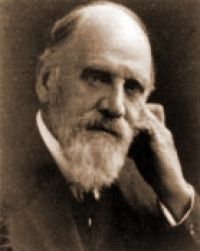
Portrait of Sir Francis Darwin Sir Francis Darwin,  Rustic Sounds, and Other Studies in Literature and Natural History

“ The plant in question is a grass, Setaria, which has a p. 46remarkable form of seedling. When the grain germinates it does not send up a simple cylindrical sprout like an oat, but a delicate stem terminating in a pointed swollen part which looks like a little spear-head. When a group of Setarias is illuminated from one side they bend strongly over, with their spearheads all pointing straight at the light. The spearheads do not bend; the whole movement is carried out by the stalk on which the head is supported. ”
Source: Gutenberg

Get perspective with Kwize: daily news enlightened by great literature