the Younger Pliny, Letters of Pliny
“ I returned, "is to give all my visitors the same reception; for when I give an invitation, it is to entertain, not distinguish, my company: I place every man upon my own level whom I admit to my table." ”
An invitation, as a more casual expression of hospitality, functions as a social link between individuals, reflecting cultural values and personal bonds. From Pliny’s focus on equal treatment in hosting to Clark’s strict rules on etiquette, writers have examined its subtleties, whether through Du Maurier’s humorous sequence of social events or Mukhopadhyay’s sardonic observations on formalities.
Ashmore and Harland emphasize its mutual obligations, while Edwards views it as a spiritual call. These diverse viewpoints illustrate invitation as both a functional practice and a means of connection, balancing formality with the warmth of shared moments.
the Younger Pliny, Letters of Pliny
“ I returned, "is to give all my visitors the same reception; for when I give an invitation, it is to entertain, not distinguish, my company: I place every man upon my own level whom I admit to my table." ”
 George Du Maurier,
A Legend of Camelot, Pictures and Poems…
(1898)
George Du Maurier,
A Legend of Camelot, Pictures and Poems…
(1898)
“ One invitation leads to another, when the invited are as beautiful as Mrs. Spratt, and as clever and modest as her husband, and especially when they possess such unhackneyed social accomplishments; soon she could scarcely see her lovely face in the Chippendale mirror over the front parlour mantelpiece, for the coroneted notes and cards of invitation she was able to stick there. ”
Jean Wilde Clark, A Desk Book on the Etiquette of Social Stationery (1910)
“ Invitation An invitation, no matter how informal, must be answered within a week and with certainty. Any delay, or doubtful expression that you think you can come, or will come if in town, is the height of ill breeding. Your hostess wishes to know exactly how many guests to expect, and your answer must be a positive one. The wording of acceptance or regret follows exactly that of the invitation and is addressed to the person who invites you. Invitations to informal affairs—small dinner, luncheon, or a week's end—may be written on note sheets and couched in the first person. ”
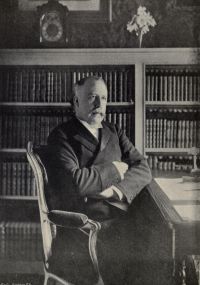 George William Erskine Russell,
Sydney Smith
George William Erskine Russell,
Sydney Smith
“ I accept your obliging invitation conditionally. If I am invited by any man of greater genius than yourself, or one by whose works I have been more completely interested, I will repudiate you, and dine with the more splendid phenomenon of the two. ”
Prabhat Kumar Mukhopadhyay, Stories of Bengalee Life (1912)
“ She only said, 'If you come." "Exactly; that was an invitation. Must one present oneself at your door with the garment round one's neck, as invitations are prescribed in the Shastras? What an old fogey you are." ”
Ruth Ashmore, Side Talks with Girls (1895)
“ AM sure with the pleasant summer days that many an invitation comes to my girls to go a-visiting. I hope that each one may be able to accept, and that her visit may be a succession of bright and happy days worthy to be put down on the book of life as among the golden ones. This result, of course, depends largely on the girl herself. I can see her look at me with doubt as I say this, and yet it is certainly true. People invite others to have a good time, and surely it becomes the duty of the visitor to meet this desire half way and achieve what is wished. Your invitation has come. ”
 Marion Harland,
Marion Harland's Complete Etiquette
Marion Harland,
Marion Harland's Complete Etiquette
“ THE VISITOR AN invitation to visit a friend in her home must always be answered promptly. The invited person should think seriously before accepting such an invitation, and, unfortunately, one of the things she has to consider is her wardrobe. If the hostess has a superb house, and the guest is to be one of many, all wealthy except herself, all handsomely gowned except herself, and if she will feel like an English sparrow in a flock of birds of paradise, she would better acknowledge the invitation, with gratitude, and stay at home. ”
 Jonathan Edwards,
The Excellency of Christ
Jonathan Edwards,
The Excellency of Christ
“ And how does he condescend to declare to you not only his own invitation, but the invitation of the Spirit and the bride, if by any means he might encourage you to come! And how does he invite every one that will, that they may "take of the water of life freely," that they may take it as a free gift, however precious it be, and though it be the Water of life. ”
Mrs. Beeton, The Book of Household Management
“ Short or verbal invitations, except where persons are exceedingly intimate, or are very near relations, are very far from proper, although, of course, in this respect and in many other respects, very much always depends on the manner in which the invitation is given. ”
 Alexander Maclaren,
Expositions of Holy Scripture: St…
Alexander Maclaren,
Expositions of Holy Scripture: St…
“ When a man pleads a previous engagement as a reason for not accepting an invitation, nine times out of ten it is a polite way of saying, 'I do not want to go.' It was so in this case. How all these absolute impossibilities, which made it perfectly out of the question that the three recreants should sit down at the table, would have melted into thin air if, by any chance, there had come into their minds a wish to be there! ”
 Eliza Leslie,
The behaviour book
Eliza Leslie,
The behaviour book
“ If you invite a friend to tea, in whose own family there is no gentlemen, or no man-servant, it is your duty previously to ascertain that you can provide her on that evening with an escort home; and in giving the invitation, you should tell her so, that she may know on what to depend. ”
Cecil B. Hartley, The Gentlemen's Book of Etiquette and Manual of Politeness
“ When you wish to invite a lady to accompany you to the theatre, opera, a concert, or any other public place of amusement, send the invitation the day previous to the one selected for taking her, and write it in the third person. ”
Marion Harland,
Marion Harland's Complete Etiquette
“ Perhaps lack of breeding shows in nothing more than in the manner of receiving an invitation. Should a man say, patronizingly, “Oh, perhaps I can arrange to come,”—when you invite him to some function, write him down as unworthy of another invitation. He is lacking in respect to you and in appreciation of the honor you confer on him in asking him to partake of the hospitality you have devised. ”
Various, Harper's Round Table, March 23…
“ Our cards of invitation were decorated, some with hour-glasses, others with clocks or watches, and all stating the day the receiver was to represent. Example: Costume, May Day. Those who didn't understand asked me what was meant; others again told each other, and some did not need any information, as the invitation was called 'A Charles Lamb [Pg 505] Party.' From what I have read, you will understand that no masks were worn."Oh, it was so unique and so pretty, and mamma and I had lots of fun selecting the days for each guest! ”
T. De Witt Talmage, New Tabernacle Sermons
“ You in the course of twenty years give twenty banquets, and the same man is invited to them all, and treats them all in the same obnoxious way. After awhile you remove to another house, larger and better, and you again invite your friends, but send no invitation to the man who declined or neglected the other invitations. Are you to blame? Has he a right to expect to be invited after all the indignities he has done you? God in this world has invited us all to the banquet of His grace. ”
 Lillian Eichler,
Book of Etiquette, Volume 1, Part 2…
(1921)
Lillian Eichler,
Book of Etiquette, Volume 1, Part 2…
(1921)
“ Taft Hotel and homes of the Patronesses REQUESTING AN INVITATION When one is invited to an entertainment and finds it impossible to attend without a visiting guest or relative, an invitation may be requested. But a great deal of tact and good judgment must be exerted. ”
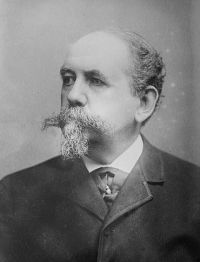 Ward McAllister,
Society as I Have Found It
Ward McAllister,
Society as I Have Found It
“ A dinner invitation, once accepted, is a sacred obligation. If you die before the dinner takes place, your executor must attend the dinner. ”
Lillian Eichler,
Book of Etiquette, Volume 1, Part 2…
(1921)
“ Whether the garden party invitation bears a request for a reply or not, the courteous thing to do is send an acceptance or regret at once. This is especially true when the invitation is engraved, for then one may assume that the affair is to be a large and elaborate one. The reply to an engraved invitation follows: Mr. ”
Arthur Martine, Martine's Hand-book of Etiquette…
“ The answer to invitations to dine, accepting or declining, should be sent immediately, and are always addressed to the lady. If, after you have accepted an invitation, anything occurs to render it impossible for you to go, the lady should be informed of it immediately. It is a great breach of etiquette not to answer an invitation as soon after it is received as possible, and it is an insult to disappoint when we have promised. ”
Cora C. Klein, Practical Etiquette
“ A formal invitation to a house wedding demands the same acknowledgment as an invitation to a church wedding.In acknowledging an invitation to a wedding, a single woman sends one of her visiting cards in an envelope addressed to the mother and father of the bride on the day of the wedding. A single man sends two of his cards, and a married couple send one of the wife’s and two of the husband’s cards. To the bride on her “At Home” day, cards should be sent in exactly the same way. A wedding reception, if it takes place in the evening, demands full dress. ”
Cora C. Klein, Practical Etiquette
“ In making formal visits, and subsequent calls after the first formal visit has been made, a married woman need leave only one of her husband’s cards with her own; and in making a call in acknowledgment of an invitation to an entertainment to which she alone was invited,—such as a woman’s luncheon,—she should leave only one of her own. ”
Maud C. Cooke, Twentieth Century Culture and Deportment
“ Paul Potter for dinner on Tuesday, December fifteenth, at eight o’clock. Union League Club. Wednesday.To answer a formal invitation carelessly and familiarly is to show a degree of disrespect to the sender, but, if the invitation be in note form, first person, answer in same fashion, it being usually safe to follow the style of invitation in either accepting or refusing the proffered pleasure.Never “present one’s compliments” in response to an invitation. It is entirely out of date; neither should one say “the polite invitation of Mr. John Jones.” ”
Maud C. Cooke, Social Life; or, The Manners and Customs of Polite Society
“ In case of an informal dinner, a verbal invitation is sometimes sent, one or two days beforehand, by a servant, and a verbal answer is given at the time. The principal objection against this method is that the-89- date, having no written reminder, may be confounded with some other engagement. Where the affair is not too stately, an informal invitation, written in the first person, may be pleasantly exchanged between friend and friend. For instance ”
Walter Cox Green, The Book of Good Manners; a Guide to Polite Usage for All Social Functions
“ Friends of the groom who have no acquaintance with the bride's family should send their cards to those inviting them. Those who do not receive wedding invitations, announcement, or "At Home" cards should not call on the married couple, but consider themselves as dropped from their circle of acquaintance. WOMEN RECEIVING AND INVITING MEN. The invitation to call should be extended by the woman, and if she does not specify the time, will naturally be considered as an act of courtesy, but not as an invitation. ”
 E. Lynn Linton,
The Girl of the Period, and Other Social Essays…
E. Lynn Linton,
The Girl of the Period, and Other Social Essays…
“ Enlighten these worthy people's minds on the unwritten laws of invitation, and show them that—thoroughly honest souls and to be trusted with untold gold or with their neighbour's pretty wife, which is perhaps a harder test, as they may be—they are by no means to be trusted with the amusement of a couple of companions at a dinner-table. ”
Lillian Eichler,
Book of Etiquette
(1921)
“ If one is invited to a dance or party and does not wish to attend without an out-of-town friend who happens to be stopping with him or her at the time—a friend who certainly cannot be deserted on the afternoon or evening of the occasion—it is permissible to write a cordial note to the hostess explaining the situation and requesting that an invitation be extended to the friend. ”
Hamilton W. Pierson, In the brush (1881)
“ The Bible and hymn-book are brought forward by the host, and laid upon the table or stand, when he turns to the preacher and says, "Will you take the books, sir?"That is the invitation to lead the devotions of the family in singing and prayer. It has been my happy lot to receive and respond to that invitation—as I did that night—in many hundreds of families and in some of the wildest portions of our land.The method of extending an invitation to "ask a [Pg 55] blessing" before a meal is quite as peculiar. ”
Samuel R. Wells, How to Behave: A Pocket Manual of Republican Etiquette…
“ Their object is or should be social enjoyment, and the manners of the company ought to be such as will best promote it. A few hints, therefore, in addition to the general maxims of good behavior already laid down, will suffice. [Pg 90] 1. Invitations.Having accepted an invitation to a party, never fail to keep your promise, and especially do not allow bad weather, of any ordinary character, to prevent your attendance. A married man should never accept an invitation from a lady in which his wife is not included. ”
Robert Chambers, Spirit of Chambers's Journal (1834)
“ If people will have their friends beside them, let them, for the sake of all that is comfortable, give them a definite invitation at once; a general invitation is much worse than no invitation at all; it is little else than an insult, however unintentional; for it is as much as to say that the person is not worth inviting in a regular manner. In “good” society, a conventional understanding obtains in the delicate point of invitations ”
Robert Chambers, Spirit of Chambers's Journal (1834)
“ Such is the kind of invitation one is apt to get from considerably intimate acquaintances, who, equally resolved against the formality and the expense of a particular entertainment on your account, hope to avoid both evils by making your visit a matter of accident. If you be a man of some experience, you will know that all such attempts to make bread and cheese do that which is more properly the business of a pair of fowls, end in disappointment ”
Florence Hartley, The Ladies' Book of Etiquette, and Manual of Politeness
“ Self-proposed visits are still worse. You, in a manner, force an invitation from your friend when you tell her that you can come at a certain time, unless you have previously arranged to let her know when you can be her guest. ”
“ The one receiving it either invites you to dine, or to meet others, or to a drive, or to visit some place of amusement. Too great caution cannot be exercised in giving a letter which makes such demands upon an acquaintance.When the letter of introduction is left with a card, if there is a gentleman in the family, he may call upon the stranger the next day, unless some engagement prevents, when he should send his card with an invitation. If the letter introduces a gentleman to a lady, she may write a note of invitation in answer, appointing a time for him to call. ”
Henry Digby Beste, Four Years in France
“ An invitation to dinner is always taken au pied de la lettre; it never trenches on the evening parties;—all retire immediately after coffee.Nothing can be more easy than the entrance into society in a provincial town in France: you have only to send billets of invitation, taking care first to make a general visit to all whom you invite; which visit is returned by those who mean to accept that or any future invitation. In the second winter of my residence, we took an evening for weekly reception, beginning by an invitation to a ball. ”
Anonymous, True Politeness: A Hand-book of Etiquette for Ladies
“ If your guests express an intention of leaving you, affectionately endeavor to detain them; if not successful, renew your invitation for another visit, and express your regret at parting so soon.LXXXIX.The art of receiving company can only be acquired by education, experience, or close observation. Have a determination to act naturally, not hurried, and let a desire to please be a ruling principle; you will then generally act correctly. ”
“ Upon entering the parlor each guest is greeted by the hostess, who stands near the door, surrounded by her aids. If her husband's name appears on the card of invitation, he, also, is in the receiving group, contributing, in so far as a man humbly may, to the success of the occasion. The aids, besides assisting in receiving the guests, are attentive to entertaining; and they see that no shy person is overlooked in the invitation to partake of refreshments. ”
Mrs. Herbert B. Linscott, Bright Ideas for Entertaining
“ VALENTINE ENTERTAINMENTTwo dozen couples make a very goodly company of young folks for a pleasant little evening; therefore, send out invitations to that number. The cards of invitation might have on them, either in India ink or water-colors, an arrow-pierced heart, a whole heart or a broken one; even a cluster of them, like fishes on a string, according to the pleasure of the hostess. For each of the twelve young ladies invited, select a rôle that she will impersonate ”
Lillian Eichler,
Book of Etiquette, Volume 1, Part 2…
(1921)
“ Blank, she sends her acknowledgment to Mrs. Blank alone. An invitation may never be acknowledged on any kind of a visiting card, although a visiting card may be used in an invitation. For very large, formal social functions, invitations are always engraved. A young girl does not issue invitations to men in her own name, but in that of her mother or guardian. ”
Lillian EichlerFlorence HartleyWalter Cox GreenCora C. KleinJohn H. YoungAgnes H. MortonMary Owens Crowther Lillian Eichler Watson
 Emily PostGeorge H. SandisonMrs. HumphryMrs. Herbert B. Linscott
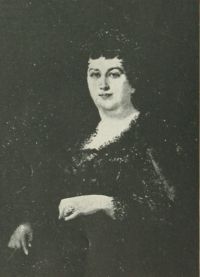 M. E. W. SherwoodArthur MartineRuth AshmoreVariousThomas Jefferson RitterAnonymous