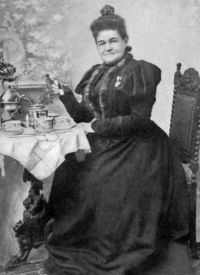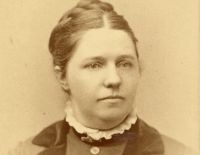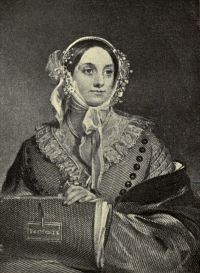
Eliza Leslie

Biographical details

Portrait of Eliza Leslie Eliza Leslie The behaviour book

Flattery is praise without foundation. To tell a person with heavy, dull gray eyes, that her eyes are of a bright and beautiful blue; to talk of her golden locks to a woman with positive red hair of the tint called carroty; to tell a long, thin, stoop-shouldered girl, that she possesses the light and airy form of a sylph; or a short-necked, fat one that her figure has the dignity of an empress; to assure a faded matron that she looks like a young girl; to fall into raptures on listening to bad music, or when viewing a drawing that depicts nothing intelligible
Source: Gutenberg

Portrait of Eliza Leslie Eliza Leslie Pencil Sketches; or, Outlines of Character and Manners

Why borrow from art a term, or terms, that so imperfectly defines the beauty of nature? When we look at a living face, with features more lovely than the imagination of an artist has ever conceived, or at a complexion blooming with health, and eyes sparkling with intelligence, why should our delight and our admiration be disturbed, by admitting any idea connected with a block of marble and the instruments that form it into shape?"
"But you must allow," said Rainsford, "that Miss Mandeville has a fine classic head."
Source: Gutenberg

Portrait of Eliza Leslie Eliza Leslie Stories for Helen

I hate hypocrisy. Why should I pretend to grieve for aunt Medford when I have never seen her since I was six years old?
Juliet. But sympathy for your father—
Madeline. Why, where is the use of sympathy? When people are in grief, sympathy only makes them worse.
Juliet. If you yourself were in affliction, Madeline, you would find the sympathy of your family and friends very gratifying.
Madeline. Wait till I am in affliction and then I will tell you. "Toujours gai," is my motto, and "vive la bagatelle" for ever.
Source: Gutenberg

Get perspective with Kwize: daily news enlightened by great literature