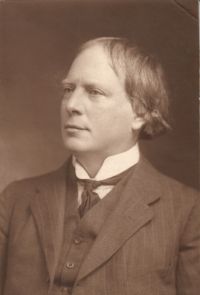
 Arthur Machen,
The Angels of Mons: The Bowmen and Other Legends of the War
Arthur Machen,
The Angels of Mons: The Bowmen and Other Legends of the War
“ For, usually and fitly, the presence of an introduction is held to imply that there is something of consequence and importance to be introduced. ”
The introduction, a preliminary section of a written work, establishes its purpose, scope, and thematic focus, serving as a gateway to the content that follows. While its structure varies—ranging from concise summaries to philosophical reflections—its core function remains to orient the reader. Authors like Arthur Machen emphasize its role in signaling the significance of what is to come, while G.
W. F. Hegel employs it to frame the dialectical investigation of consciousness. James Gray defines it as a repository of maxims and instructive narratives, and Annie Wood Besant uses it to outline the mind’s progression from perception to reasoning. Though styles differ, the introduction consistently sets the intellectual or thematic foundation, guiding the reader through the unfolding discourse.
Arthur Machen,
The Angels of Mons: The Bowmen and Other Legends of the War
“ For, usually and fitly, the presence of an introduction is held to imply that there is something of consequence and importance to be introduced. ”
G. W. F. Hegel, The Phenomenology of Mind — Introduction
“ This dialectic process which consciousness executes on itself—on its knowledge as well as on its object—in the sense that out of it the new and true object arises, is precisely what is termed Experience. ”
James Gray, Ancient Proverbs and Maxims From Burmese Sources…
“ As applied to books, it is a general term for a treatise which includes maxims, pithy sayings, and didactic stories, intended as a guide to such matters of everyday life as form the character of an individual and influence him in his relations to his fellow-men. ”
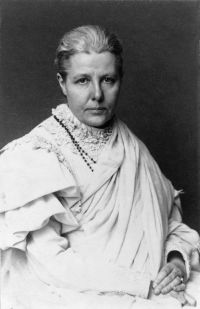 Annie Wood Besant,
An Introduction to Yoga
Annie Wood Besant,
An Introduction to Yoga
“ Now having established that relation between yourself and objects outside, what is the next process of the mind? Reasoning: that is, the establishing of relations between different objects, as perception is the establishment of your relation with a single object. When you have perceived many objects, then you begin to reason in order to establish relations between them. Reasoning is the establishment of a new relation, which comes out from the comparison of the different objects that by perception you have established in relation with yourself, and the result is a concept. ”
G. W. F. Hegel, The Phenomenology of Mind — Introduction
“ Now because this exposition has for its object only phenomenal knowledge, the exposition itself seems not to be science, free, self-moving in the shape proper to itself, but may, from this point of view, be taken as the pathway of the natural consciousness which is pressing forward to true knowledge. ”
 George Stuart Fullerton,
An Introduction to Philosophy
George Stuart Fullerton,
An Introduction to Philosophy
“ Why certain subjects of investigation have come to be grouped together and to be regarded as falling within the province of the philosopher, rather than certain other subjects, will, I hope, be made clear in the body of the work. ”
G. A. Johnston, An Introduction to Ethics, for Training Colleges… (1915)
“ On the whole, it is generally agreed that if we survey the history of the world as a whole, it is possible to trace a general movement, which, in spite of many reactions and retrogressions, has been one of moral advance. ”
George Stuart Fullerton,
An Introduction to Philosophy
“ Our observation, employed either about external sensible objects, or about the internal operations of our minds, perceived and reflected on by ourselves, is that which supplies our understandings with all the materials of thinking. These two are the fountains of knowledge, from whence all the ideas we have, or can naturally have, do spring. ”
 Jeremy Bentham,
An Introduction to the Principles of Morals and Legislation…
(1780)
Jeremy Bentham,
An Introduction to the Principles of Morals and Legislation…
(1780)
“ Those which concern his mind, again, concern either his understanding or his affections. To the former head belong the circumstances of quantity and quality of knowledge, strength of understanding, and insanity. ”
G. A. Johnston, An Introduction to Ethics, for Training Colleges… (1915)
“ Most important of all, we inherit capacities, and our capacities include all that we are capable of becoming in intellect, in morality, in art, and in religion. What we inherit is not specific ability but general capacity. ”
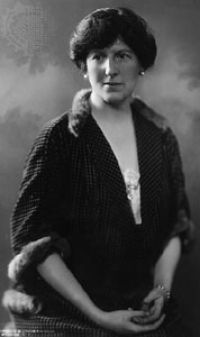 Alice Duer Miller,
Without Introduction
(1912)
Alice Duer Miller,
Without Introduction
(1912)
“ It is immensely difficult, isn't it, to give in that first moment the impression that I recognize all your standards—and that that is why I speak to you, just as I should speak if we met in somebody's drawing-room." "You seem to forget," said Miss Littel, "that in such a case we should at least have been properly introduced." "But what," he returned, "is an introduction? One's hostess often knows nothing but one's name, and sometimes not even that. ”
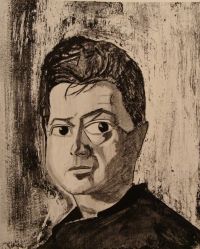 Francis Bacon,
The Essays of Francis Bacon
(1908)
Francis Bacon,
The Essays of Francis Bacon
(1908)
“ Studies serve for delight, for ornament, and for ability. Their chief use for delight, is in privateness and retiring; for ornament, is in discourse; and for ability, is in the judgment and disposition of business. ”
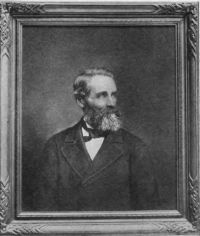 William Parsons Atkinson,
Popular Science Monthly
(1874)
William Parsons Atkinson,
Popular Science Monthly
(1874)
“ Let me, for the purposes of this discussion, make a triple division of knowledge into physical, ethical, and æsthetical, according as our thought is concerned with the world of matter, the world of mind, and the world of art or beauty. ”
 Herbert Spencer,
First Principles
Herbert Spencer,
First Principles
“ When, again, we speak of moral or intellectual progress, we refer to the state of the individual or people exhibiting it; while, when the progress of Knowledge, of Science, of Art, is commented upon, we have in view certain abstract results of human thought and action. ”
Parke Godwin, Aesthetic Papers (1849)
“ There is great talk, too, everywhere, of the progress of the human species; of the improvement of society; of the gradual advancement of man to a more elevated existence. What does such language mean? ”
 Josiah Royce,
The Sources of Religious Insight
Josiah Royce,
The Sources of Religious Insight
“ My thesis is essentially this, that you cannot rationally conceive what human experience is, and means, except by regarding it as the fragment of an experience that is infinitely richer than ours, and that possesses a world-embracing unity and completeness of constitution. My argument for this thesis has been dependent on an assertion about the sense in which any opinion whatever can be either true or false, and upon a doctrine regarding that insight to which we appeal whenever we make any significant assertion. ”
J. Marshall, A Short History of Greek Philosophy
“ And therefore all the manifold relations of life,—the home, the market, the city, the state; all the multiform activities of life,—labour and speech and art and literature and {114} law; all the sentiments of life,—friendship and love and reverence and courage and hope,—all these are parts of a knowable whole; they are expressions of law; they are Reason realising itself through individuals, and in the same process realising them. ”
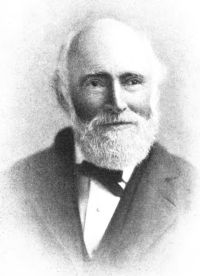 John Sullivan Dwight,
Aesthetic Papers
(1849)
John Sullivan Dwight,
Aesthetic Papers
(1849)
“ To the three spheres of sentiment, of science, and of practice, conform three classes of character, in whom each respectively predominates. We feel the spirit of the first; we admire the intellect of the second; we deal only with the actions of the third. We turn to the first for inspiration and for influence ”
Henry Davenport Northrop, New Century Speaker and Writer… (1901)
“ And the range of topics is very wide; it embraces science and art, history and philosophy; above all, the knowledge of human nature that teaches how the mind he addresses is to be convinced and persuaded, and how a willing ear is to be won to his discourse. ”
 James Frederick Ferrier,
Lecture on Imagination, 1848
(1883)
James Frederick Ferrier,
Lecture on Imagination, 1848
(1883)
“ I am convinced that such among you as may intend to hereafter prosecute your speculative researches in a profound and zealous spirit, and to study philosophy both in itself and in its history,—I am convinced that you must build your labours upon the distinction now brought before you. ”
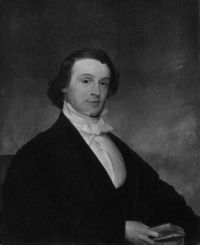 George E. Ellis,
The Red Man and the White Man in North America
(1882)
George E. Ellis,
The Red Man and the White Man in North America
(1882)
“ In this general survey of the chief subjects which will come before us for fuller observation as we open them for relation or discussion in dealing with our large theme, we have glanced at topics several of which might well, for their interest and importance, form the matter of many separate volumes, — as indeed they have done. ”
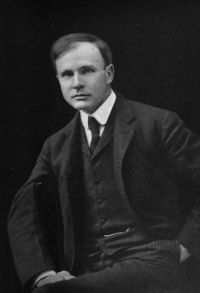 Bliss Perry,
The Harvard Classics Vol. 51
(1914)
Bliss Perry,
The Harvard Classics Vol. 51
(1914)
“ Expansion and contraction, the study of mankind followed by the study of individual men and women; then a new series of generalizations followed by another series of concrete applications of ideas to life—that is the history of culture. ”
Josiah Royce,
The Sources of Religious Insight
“ These friends and servants of mankind have used, in fact, that source of insight which I mentioned in the closing words of the last lecture, a source by means of which the results and the moving principles of individual experience, of social experience, of reason, and of will are brought into a certain creative unity to which the noblest spiritual attainments of our world are due. ”
Max Farrand, The Records of the Federal Convention of 1787 (1911)
“ To a mind naturally strong and capacious, enriched by much reading and the experience of many years, he added a manner of communicating his thoughts peculiarly his own—in which simplicity, beauty, and strength were equally conspicuous. ”
Boyd Henry Bode, Creative Intelligence: Essays in the Pragmatic Attitude
“ We get a picture not of any definite standard but of such a process as we have described in our analysis, namely, a process into which the existing social tradition, the mutual adjustments of a changing society and the intelligent consideration of all facts, enter. ”
William M. Leftwich, Martyrdom in Missouri, Volume 1… (1870)
“ Each reader will judge for himself, and each will find something to interest and instruct. The facts developed are exceedingly suggestive, and suggestive, too, in regard to all the interests of society. ”
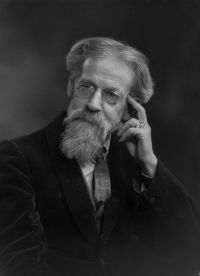 Patrick Geddes,
Civics: as Applied Sociology
(1905)
Patrick Geddes,
Civics: as Applied Sociology
(1905)
“ Having taken full note of places as they were and are, of things as they have come about, and of people as they are—of their occupations, families, and institutions, their ideas and ideals—may we not to some extent discern, then patiently plan out, at length boldly suggest, something of their actual or potential development? ”
“ In circles highly civilised the great things, the real things, the hard, the cruel and even the tender things, the true elements of any tension and true facts of any crisis, have ever, for the outsider’s, for the critic’s use, to be translated into terms—terms in the distinguished name of which, terms for the right employment of which, more than one situation of the type I glance at had struck me as all irresistibly appealing. ”
 A. A. Milne,
Punch, Volume 147, Issue 3830…
(19th and 20th century)
A. A. Milne,
Punch, Volume 147, Issue 3830…
(19th and 20th century)
“ I had already grasped the fact that the title of my discourse was the important thing. In the list of the Society's lectures sent to me there was hardly one whose title did not impress the imagination in advance. I must be equally impressive... ”
Mary G. Ware, The elements of character
“ It is to study the succession of events, not as separate units, but as links of one vast chain, on every one of which is inscribed a phrase discoursing of the progress of the human race, and showing the growth of man in the complex, from infancy to adolescence. ”
 Plato,
The Republic of Plato
(1901)
Plato,
The Republic of Plato
(1901)
“ What classes of things have a greater share of pure existence, in your judgment—those of which food and drink and condiments and all kinds of sustenance are examples, or the class which contains true opinion and knowledge and mind and all the different kinds of virtue? ”
 Hiram Corson,
The Voice and Spiritual Education
Hiram Corson,
The Voice and Spiritual Education
“ A true perspective demands, on the part of the reader, the nicest sense of the relative values of successive and involved groups or sections of thought—those belonging to the main current of thought being brought to the front with a fulness of expression, and the subordinate groups or sections according to their several degrees of subordination, being thrown back with a corresponding reduction of expression. ”
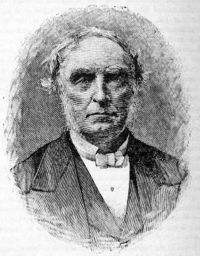 James Legge,
Sacred Books of the East
(1882)
James Legge,
Sacred Books of the East
(1882)
“ We go on to the third Appendix in two sections, being the fifth and sixth 'wings,' and forming what is called 'The Great Treatise.' It will appear singular to the reader, as it has always done to myself, that neither in the Text, nor in the first two Appendixes, does the character called Yî, which gives its name to the classic, once appear. ”
Josiah Parsons Cooke Jr., Popular Science Monthly (1874)
“ Nor is it the extent of the knowledge, alone, which ennobles, but much more the spirit and aim with which it is cultivated, and that spirit and aim you may carry into any occupation however engrossing, and into any condition of life however obscure. ”
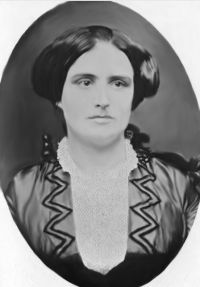 Harriet Jane Hanson Robinson,
Loom and spindle
(1898)
Harriet Jane Hanson Robinson,
Loom and spindle
(1898)
“ The contributions to The Offering were on a great variety of subjects. There were allegories, poems, conversations on physiology, astronomy, and other scientific subjects, dissertations on poetry, and on the beauties of nature, didactic [115] pieces on highly moral and religious subjects, translations from French and Latin, stories of factory and other life, sketches of local New England history, and sometimes the chapters of a novel. ”
Joseph M. Bachelor, The Century Vocabulary Builder
“ Now when we engage in explanations and discussions of principles, theories, broad social topics, and the like—when we expound, moralize, or philosophize,—our subject matter is general. We approach our readers or hearers on the thinking, the rational side of their natures. ”
“ The most profound analogies are called up to prove the simplest fact, not only in the realm of poetry, or description, but in scientific or business matters at times, and whether he is writing upon some deep social problem or reporting upon the condition of the parish pump he will preface his account with an essay! ”
W. Y. Sellar, The Roman Poets of the Republic…
“ But even amid the mass of unwarranted assumptions and erroneous explanations contained in the later books, the topics discussed—such as the relation of the mind to the body, the mode by which sensible impressions are conveyed to the mind, the processes by which our globe assumed its present form, the origin of life, the evolution of humanity from its lowest to its higher stages of development, the origin of spiritual beliefs, of the humaner sentiments, of language, etc.—possess the interest of being kindred to those on which speculative activity is most employed in the present day. ”
Josiah Royce,
The World and the Individual, First Series
(1899)
“ Our very theory insists that your internal meanings, your ideas viewed as internally significant, your selections and expressions, are typical instances of facts, and of precisely the facts of whose unity the world consists. ”
 John of the Cross,
Ascent of Mount Carmel
John of the Cross,
Ascent of Mount Carmel
“ And so we will pass to the third book.’ The edition of 1630 follows A, B and e.p., and adds further: ‘I therefore beg the discreet reader to read these things in a benevolent and simple spirit; for, when this spirit is not present, however sublime and perfect be the instruction, it will not yield the profit that it contains, nor will it earn the esteem that it merits. ”
Various, Graham's Magazine, Vol. XXXIV, No…
“ And here we reach a point toward which we have attempted to steer; we mean the fullness of character, the entire inward person—the meeting—the combination—the fusion, indeed, of all those properties and qualities of the mind, by a well-directed education; the balancing of the various propensities and gifts by the skillful hand of instruction, so that no appetite, natural or acquired, shall have an undue predominancy, or serve to constitute the distinguishing characteristic of the possessor. ”
 William Whewell,
Novum organon renovatum
(1858)
William Whewell,
Novum organon renovatum
(1858)
“ We may further observe, that this arrangement of Sciences according to the Fundamental Ideas which they involve, points out the transition from those parts of human knowledge which have been included in our History and Philosophy, to other regions of speculation into which we have not entered. We have repeatedly found ourselves upon the borders of inquiries of a psychological, or moral, or theological nature. ”
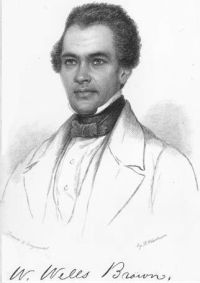 William Wells Brown,
The Black Man
(1863)
William Wells Brown,
The Black Man
(1863)
“ This training will give breadth of view, develop strength of character and a comprehensive spirit, by which the ever-living expressions of truth and principle in the past may be connected with those of a like character in the present. ”
 Franklin Henry Giddings,
Popular Science Monthly
(1909)
Franklin Henry Giddings,
Popular Science Monthly
(1909)
“ Sympathy and understanding, supplemented by communication, and backed up by the enormous mass of common feelings and ideas, find expression in those common and usual ways of doing things, those norms and elements of custom which Professor Sumner has so admirably named "the folkways." ”
Napier Malcolm, Five Years in a Persian Town
“ So when we pass from country to character, from character to opportunity, and from opportunity to suggestion, we pass from subjects with which it is comparatively easy to become familiar to subjects which need life-long and careful study. ”
 William Graham Sumner,
Folkways
William Graham Sumner,
Folkways
“ The justification of them is that when we wake to consciousness of life we find them facts which already hold us in the bonds of tradition, custom, and habit. The mores contain embodied in them notions, doctrines, and maxims, but they are facts. ”
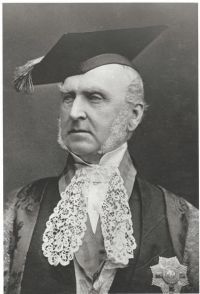 Redmond Barry,
Inaugural address, delivered before the members of the Victorian Institute…
(1854 | noyear)
Redmond Barry,
Inaugural address, delivered before the members of the Victorian Institute…
(1854 | noyear)
“ In the elaboration of each separate idea, a compensating mutual relation with some other cognate idea is found, which brings a fresh agency to bear upon, assimilate or clash with it; such attrition, different from that which wastes and diminishes physical bodies, serving to sharpen and refine the mind, correct, enlarge or perfect the idea. ”
 John Locke,
An Essay Concerning Human Understanding…
John Locke,
An Essay Concerning Human Understanding…
“ First, Because several of these faculties being exercised at first principally about simple ideas, we might, by following nature in its ordinary method, trace and discover them, in their rise, progress, and gradual improvements. ”
 Woodrow Wilson,
The Meaning of a Liberal Education
(1909)
Woodrow Wilson,
The Meaning of a Liberal Education
(1909)
“ The bases of our lives and of our understanding of life is the interpretation which our own experiences put upon it, and the interpretation which the experiences of others put upon it, and the experiences of others as contained in literature. ”
