Bliss Perry

Bliss Perry

Summary

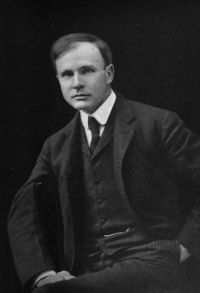
Portrait of Bliss Perry Bliss Perry,  The Harvard Classics Vol. 51 (1914)

“ But no one can read many pages of the masters of modern criticism without becoming aware that all three tendencies frequently reveal themselves in the same man, and even in the same essay. Some of the famous "impressionists," like Lamb, Stevenson, Lemaître, and Anatole France, know a great deal more about the "canons" than they wish at the moment to confess. They play so skillfully with the overtones of criticism because they know the fundamental tones so well. ”
Source: Wikisource

Portrait of Bliss Perry Bliss Perry,  The Harvard Classics Vol. 51 (1914)

“ And while "the essay" has from time to time asserted the claims of liberty in all matters of the mind, "the critical essay" has with equal persistence recognized and maintained the claims of authority. One generation needs, no doubt, that its literary skirmishes should fight mainly on the side of freedom, and another generation will need no less that they should rally to the defense of law. There can be little doubt of the primary need of our own generation in America. We shall find most profit in reading those essayists who have a respect for literary standards, who are on the side of law. ”
Source: Wikisource

Portrait of Bliss Perry Bliss Perry,  The Harvard Classics Vol. 51 (1914)

“ The mere essayist, as we have seen, can sail in a circle, starting and ending with his own fancies; but the man who uses the essay as the vehicle of criticism must use chart and compass; must proceed from a given starting point to a definite point of arrival. And he cannot do this if he is ignorant of the efforts of his predecessors, and unaware of the general aims and methods of critical procedure. If he is writing, for instance, on the theory of poetry, he does not wish to leave the matter where he found it: he desires to make, if he can, a contribution to that branch of human knowledge. ”
Source: Wikisource

Get perspective with Kwize: daily news enlightened by great literature