 F. Scott Fitzgerald,
The Beautiful and Damned
(1922)
F. Scott Fitzgerald,
The Beautiful and Damned
(1922)
“ I learned a little of beauty—enough to know that it had nothing to do with truth—and I found, moreover, that there was no great literary tradition; ”
F. Scott Fitzgerald,
The Beautiful and Damned
(1922)
“ I learned a little of beauty—enough to know that it had nothing to do with truth—and I found, moreover, that there was no great literary tradition; ”
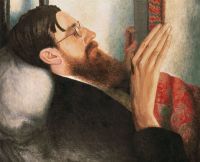 Lytton Strachey,
Books and Characters, French & English
Lytton Strachey,
Books and Characters, French & English
“ Thus, to the historian of letters, the Lives have a special interest, for they afford a standing example of a great dead tradition—a tradition whose characteristics throw more than one curious light upon the literary feelings and ways which have become habitual to ourselves. ”
Stith Thompson, Motif-Index of Folk-Literature (1955)
“ The purpose of the present study, then, has been to arrange in a single logical classification the elements which make up traditional narrative literature. Stories that have formed part of a tradition, whether oral or literary, find a place here. The folktale, the myth, the ballad, the fable, the mediaeval romance, the fabliau, the jest, the exemplum, and the local tradition have all been included, though some of these divisions have been inadequately recorded. ”
active 12th century de France Marie, Guingamor, Lanval, Tyolet, Bisclaveret…
“ That a large and important body of genuine existing tradition should be, not merely superseded, but practically beaten out of the field and destroyed by the power of mere literary invention, would be a curious phenomenon at any date ”
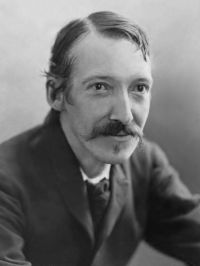 Robert Louis Stevenson,
Essays in the Art of Writing
(1905)
Robert Louis Stevenson,
Essays in the Art of Writing
(1905)
“ Yet truth to the conditions of man's nature and the conditions of man's life, the truth of literary art, is free of the ages. It may be told us in a carpet comedy, in a novel of adventure, or a fairy tale. ”
Baron Edward Bulwer Lytton Lytton, Lucretia — Complete
“ No light literature,—that grace and flower of human culture, that best philosophy of all, humanizing us with gentle art, making us wise through the humours, elevated through the passions, tender in the affections of our kind. ”
A. R. Orage, Readers and Writers (1917-1921… (1922)
“ The cardinal virtue of poetry, he says, is love, while the cardinal virtue of prose is justice. May we not rather say that the difference is one of plane of consciousness, prose being at the highest level of the rational mind, and poetry at the highest level of the spiritual mind? Yes, but then, in all probability, The Times would regard us as fanciful, for note, anything exact about spiritual things is likely to be dismissed by the Literary Supplement as fanciful and dangerous. ”
Harry A. Spurr, The Life and Writings of Alexandre Dumas (1902)
“ What novel has more good sense, and gaiety, and wit, and unflagging, admirable literary skill? And once more, to make an end of commendations, what novel is inspired with a more unstrained or a more wholesome morality? There is no quite good book without a good morality; but the world is wide, and so are morals.... ”
Reidar Thoralf Christiansen, Folklore Fellows’ Communications… (1916)
“ Here the primitive has vanished, we treat certain poetical motives, motives which the teller hardly belives in, but which, after traditional custom must be used in this kind of a tale, for the tales are after all poetical compositions too, and in their lives, in a rich popular tradition, we have so to say an equivalent to the written sources with which the history of litterature deals even if the material as a link in a verbal tradition conforms to other laws than those reigning in the world of litterature. ”
Benj. N. Martin, Choice Specimens of American Literature…
“ Under their authority we see introduced into literary work an habitual grace and perfection, a clearness and directness, a light and pliable strength, and a fine shading of expression, such as no other tongue can even define. We see the same high standard in their criticism, in their works of research, in the Revue des Deux Mondes, and in short throughout literature. ”
 Henry Osborn Taylor,
The Mediaeval Mind
(1911)
Henry Osborn Taylor,
The Mediaeval Mind
(1911)
“ This literature proper was likely to take the form of verse in the eleventh century. A practical matter would be put in prose; but the effervescence of the soul, or the intended literary effort, would fall into rhyme or resort to metre. ”
Various, The Southern Literary Messenger…
“ Add to these, the wild traditions of a people unknown to former minds: traditions, over which curiosity loves to linger, and philosophy to speculate; traditions, which, imbodying the terrific, the romantic, and the ennobling of the savage state, throw over the page of fiction a charm and an interest, enchanting and enchaining. ”
Frederik Winkel Horn, History of the Literature of the Scandinavian North (1884)
“ Like the poetry, these materials were handed down from generation to generation by word of mouth, and when at length the conditions for a real literary activity were at hand a most remarkable literature was produced out of these traditions. ”
 Frank W. Blackmar,
History of Human Society
Frank W. Blackmar,
History of Human Society
“ The drama and the choicest forms of prose and poetry in their literary aspects furnish means of presenting great thoughts and high ideals, and, thus combined with the beauty of expression, not only furnish the best evidence of moral and intellectual progress but make a perennial source of information in modern social life. ”
 Walter Pater,
Appreciations, with an Essay on Style
Walter Pater,
Appreciations, with an Essay on Style
“ A high way of feeling developed largely by constant intercourse with the great things of literature, and extended in its turn to those matters greater still, this religion lives, in the main retrospectively, in a system of received sentiments and beliefs; received, like those great things of literature and art, in the first instance, on the authority of a long tradition, in the course of which they have linked themselves in a thousand complex ways to the conditions of human life, and no more questioned now than the feeling one keeps by one of the greatness—say! of Shakespeare. ”
 Charles Dudley Warner,
The Works of Charles Dudley Warner
Charles Dudley Warner,
The Works of Charles Dudley Warner
“ Others say that the highly developed critical judgment of a few persons, from time to time, has established forever what we agree to call masterpieces. But this discussion is immaterial, since these supreme examples of literary excellence exist in all kinds of composition,—poetry, fable, romance, ethical teaching, prophecy, interpretation, history, humor, satire, devotional flight into the spiritual and supernatural, everything in which the human mind has exercised itself,—from the days of the Egyptian moralist and the Old Testament annalist and poet down to our scientific age. ”
 Earl Lind,
The Female-Impersonators — Part 8
(1922)
Earl Lind,
The Female-Impersonators — Part 8
(1922)
“ In the book, you have claimed culture, but when your readers come to this verse, they will say that no one with the culture of a longshoreman would try to pass off such stuff as verse even in fun, and that if you had the slightest tincture of literary taste, you would realize this. You will go down to posterity in ridicule, and destroy all the good your books might otherwise do. ”
L. Dougall, The Summit House Mystery; Or, The Earthly Purgatory
“ Art, literary style, study of character, and other of the higher, subtler elements of fiction, good as they are acknowledged to be, must yield first place to "the story," and afterwards shift for themselves the best way they may. ”
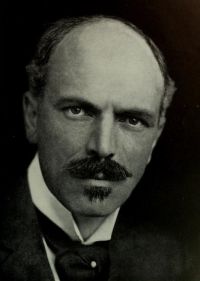 Maurice Hewlett,
In a Green Shade: A Country Commentary
Maurice Hewlett,
In a Green Shade: A Country Commentary
“ Neither a quick-witted nor an imaginative race are we; but we have the roots of poetry in us, and the roots of other arts, for we have reverence for what is above and beyond us. Custom, too, we worship, and decency and order. ”
Walton Burgess, Five Hundred Mistakes of Daily Occurrence in Speaking…
“ The dignity and objects of literature are distinctly brought to view, whether in the form of prose to persuade and instruct—in that of poetry, to please the fancy—or in that of the drama, to move the passions. ”
 Havelock Ellis,
The Dance of Life
Havelock Ellis,
The Dance of Life
“ It is the crude amorphous material of art, of music and poetry. But on its formal side, whatever its supreme significance as the instrument and medium of expression, speech is a natural convention, an accumulated tradition.Even tradition, however, is often simply the corporeal embodiment, as it were, of heredity. Behind many a great writer’s personality there stands tradition, and behind tradition the race. ”
 Samuel Johnson,
Lives of the English Poets : Waller…
Samuel Johnson,
Lives of the English Poets : Waller…
“ History must supply the writer with the rudiments of narration, which he must improve and exalt by a nobler art, must animate by dramatic energy, and diversify by retrospection and anticipation; morality must teach him the exact bounds, and different shades, of vice and virtue; from policy, and the practice of life, he has to learn the discriminations of character, and the tendency of the passions, either single or combined; and physiology must supply him with illustrations and images. ”
Charles Dudley Warner,
Fashions in Literature
“ It seems incredible, as we look back over the literary history of the past three centuries only, what prevailing styles and moods of expression, affectations, and prettinesses, each in turn, have pleased reasonably cultivated people. ”
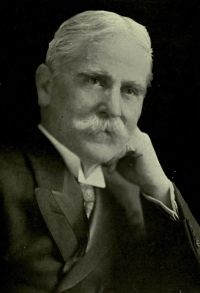 Henry Van Dyke,
The Spirit of America
Henry Van Dyke,
The Spirit of America
“ The art of literature which weaves these living threads into its fabric lies closer to the common life and rises higher into the ideal life than any other art. In the lyric, the drama, the epic, the romance, the fable, the conte, the essay, the history, the biography, it not only speaks to the present hour, but also leaves its record for the future. ”
Joseph Cross, Old Wine and New: Occasional Discourses
“ Upon a thorough mental culture sit gracefully, and quite at home, philosophy, history, poetry, eloquence, music, painting—all in literature and the arts that can refine the taste, refresh the heart, and lead the fancy captive. ”
F. V. N. Painter, Elementary Guide to Literary Criticism
“ A book exhibits not only the attainments, culture, and literary art of the writer but also his intellectual force, emotional nature, and moral character. Wide attainments are revealed in breadth of view and in mastery of large resources. Culture is exhibited in a general delicacy of thought, feeling, and expression. Literary art is shown in the choice of words and in their arrangement in sentences and paragraphs. The artistic sense, without which a finished excellence is not attainable, reveals itself in the proportion, symmetry, and completeness of a work. ”
Walter Pater,
Appreciations, with an Essay on Style
“ It will be good literary art not because it is brilliant or sober, or rich, or impulsive, or severe, but just in proportion as its representation of that sense, that soul-fact, is true, verse being only one department of such literature, and imaginative prose, it may be thought, being the special art of the modern world. ”
Edwin Sidney Hartland, The Science of Fairy Tales
“ By Tradition I mean the entire circle of thought and practice, custom as well as belief, ceremonies, tales, music, songs, dances and other amusements, the philosophy and the superstitions and the institutions, delivered by word of mouth and by example from generation to generation through unremembered ages: in a word, the sum total of the psychological phenomena of uncivilized man. Every people has its own body of Tradition, its own Folklore, which comprises a slowly diminishing part, or the whole, of its mental furniture, according as the art of writing is, or is not, known. ”
William Radcliffe, Fishing from the Earliest Times
“ Each action, each event might be given by tradition, or might be the product of the poet’s imagination, but the details which show the customs of the age, and which furnish the colours of the picture, are taken from the life of the poet’s time. ”
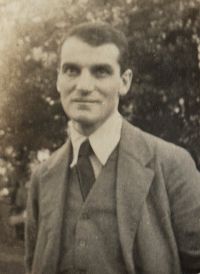 John Middleton Murry,
Aspects of Literature
John Middleton Murry,
Aspects of Literature
“ There are, he says, three kinds of criticism—the historical, the philosophic, and the purely literary. 'Every form of genuine criticism is directed towards creation. The historical or philosophic critic of poetry is criticising poetry in order to create a history or a philosophy ”
 James Anthony Froude,
Short Studies on Great Subjects
James Anthony Froude,
Short Studies on Great Subjects
“ The flow is easy, the style graceful and natural; but the step from poetry to prose is substantial as well as formal; the imagination is ossified, and we exchange the exuberance of legendary creativeness for the dogmatic record of fact without reality, and fiction without grace. ”
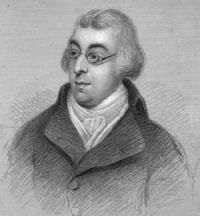 Isaac Disraeli,
Amenities of Literature
Isaac Disraeli,
Amenities of Literature
“ Romance, from the light fabliau to the voluminous fiction, has admitted, in the luxury of our knowledge and curiosity, not only of critical investigation, but of its invention, by tracing it to a single source. ”
 W. P. Ker,
Epic and Romance: Essays on Medieval Literature
W. P. Ker,
Epic and Romance: Essays on Medieval Literature
“ It is exposed to the attractions of all kinds of subordinate and partial literature,—the fairy story, the conventional romance, the pathetic legend,—and it escapes them all by taking them all up as moments, as episodes and points of view, governed by the conception, or the comprehension, of some of the possibilities of human character in a certain form of society. ”
 George Edward Woodberry,
Studies in letters and life
(1890)
George Edward Woodberry,
Studies in letters and life
(1890)
“ This historic value of the tales, however, great as it is to the student of manners, is secondary to their poetic value, which lies in the sentiment, feeling, and pathos with which the experience of life embodied in them, the workings of simple human nature, in however debased surroundings, is set forth. ”
graf Leo Tolstoy, "The Kingdom of God Is Within You"
“ All modern literature—philosophical, political, and artistic—is striking in this respect. What wealth of idea, of form, of color, what erudition, what art, but what a lack of serious matter, what dread of any exactitude of thought or expression! ”
J. N. Larned, History for ready reference, Volume 1…
“ Through writing, most things in life, and those the most useful, are accomplished--as ballots, epistles, laws, covenants. Who can sufficiently praise the learning of letters? ... Writing alone preserves the most brilliant utterances of wise men and the oracles of gods, nay philosophy and all culture. All these things it alone hands down to all future generations. Wherefore nature should be viewed as the source of life, but the source of living well we should consider the culture derived from writing. ”
 Edmund Gosse,
The Future of English Poetry
Edmund Gosse,
The Future of English Poetry
“ Your chairman has admirably said, in one of his charming essays, that ‘History may be abstract, science may be frankly inhuman, even art may be purely formal; but poetry must be full of human life’. This consideration, I think, may make us feel perfectly secure as to the ultimate maintenance of poetic expression. ”
 Frederic Harrison,
Studies in Early Victorian Literature
Frederic Harrison,
Studies in Early Victorian Literature
“ Criticism fell into the prevailing theory: so did history, and even romance. Philosophy and Science are not the best foster-mothers of Poetry and Romance. Philosophy and Science grew more solemn than ever; and Poetry and Romance lost something of their wilder fancy and their light heart. Literature grew less spontaneous, more correct, more learned, and, it may be, more absorbed in its practical purpose of modifying social life. ”
Anne C. Lynch Botta, Handbook of Universal Literature…
“ To supply these in the picture of humanity is the distinct office of fiction, which, while free in many respects, should still be essentially true. The poetry and fiction of a country should be the worthy companion to its history. The true poet should be the interpreter and illustrator of life. ”
Edward Forbes, The Palace and Park
“ All beauties of language, all flights of poetry, all particular scenes and speeches, powerful and impressive as they may be, are merely subordinate. No character, how exquisitely or elaborately soever conceived and finished, is drawn for itself ”
David Masson, The Three Devils: Luther's, Milton's…
“ Not slowly to build up a grand poem of continuous ideal action, not quietly and at leisure to weave forth tissues of fantastic imagery, not perseveringly and laboriously to prosecute one track of speculation and bring it to a close, not earnestly and courageously to throw one’s whole soul into a work of moral agitation and reform, was now what was regarded as natural in literature. ”
Benjamin Boyce, Prefaces to Fiction
“ Perhaps there is as much need for Wit, an Acquaintance with Mankind, and the Knowledge of the Passions, to compose a Romance as to write a History. The only Qualification to paint Manners and Customs, is a long Experience ”
 William J. Long,
English Literature
William J. Long,
English Literature
“ So the novel was born, expressing, though in a different way, exactly the same ideals of personality and of the dignity of common life which were later proclaimed in the American and in the French Revolution, and were welcomed with rejoicing by the poets of the romantic revival. To tell men, not about knights or kings or types of heroes, but about themselves in the guise of plain men and women, about their own thoughts and motives and struggles, and the results of actions upon their own characters,--this was the purpose of our first novelists. ”
 George Saintsbury,
The English Novel
George Saintsbury,
The English Novel
“ A crowd of fantastic imaginings or additions, to supply the main substance, and a certain common-sense grasp of actual conditions and circumstances to set them upon, and contrast them with—these are the great requirements of Fiction in life and character. You must mix prose and poetry to get a good romance or even novel. The consciences of the ancients revolted from this mixture of kinds; but there was no such revolt in the earlier moderns, and least of all in our own mediæval forefathers. ”
Charles Dudley WarnerHavelock EllisWalter PaterRobert Louis Stevensonactive 12th century de France MarieF. Scott FitzgeraldA. R. OrageHarry A. SpurrStith ThompsonLytton StracheyHenry Osborn TaylorBenj. N. MartinFrank W. BlackmarEarl LindL. DougallVariousF. V. N. Painter