Narration

Definition and stakes

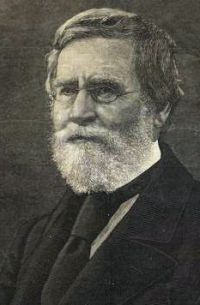
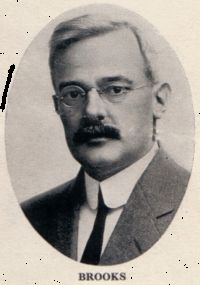
Portrait of Stratton D. Brooks Stratton D. Brooks,  Composition-Rhetoric

“ Kinds of Narration.+—Narration consists of an account of happenings, and, for this reason, it is, without doubt, the most interesting of all forms of discourse. It is natural for us all to be interested in life, movement, action; hence we enjoy reading and talking about them. To be convinced that there is everywhere a great interest in narration we need only to listen to conversations, notice what constitutes the subject-matter of letters of friendship, read newspapers and magazines, and observe what classes of books are most frequently drawn from our libraries. ”
Source: Gutenberg

F. V. N. Painter,  Elementary Guide to Literary Criticism

“ The one is used to aid or supplement the other. Like description, narration has its place in nearly every form of composition; and in history, fiction, and epic poetry it constitutes, perhaps, the body of discourse. The incidents narrated should be selected according to their interest and importance; they should usually be presented in their chronological order, and there should be a perceptible and often a rapid movement toward a definite end. In all artistic narration we find unity, proportion, and completeness. ”
Source: Gutenberg

Clayton Meeker Hamilton,  A Manual of the Art of Fiction

“ Narration, the Natural Mood of Fiction.––Since, then, the natural mood, or method, of fiction is narration, it is necessary that we should devote especial study to the nature of narrative. And in a study frankly technical we may be aided at the outset by a definition, which may subsequently be explained in all its bearings.
A narrative is a representation of a series of events.
”
Source: Gutenberg

Get perspective with Kwize: daily news enlightened by great literature