Summary

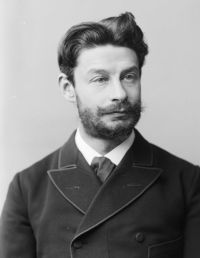
Portrait of Georg Brandes Georg Brandes Main Currents in Nineteenth Century Literature - 2…

Although Florentin is an Italian, he feels himself strongly attracted by German art and German artists. He teaches himself to draw and paint, and makes his living, now as the gifted Romantic dilettante artist, now as the no less Romantic musician, roaming from village to village. His birth is wrapt in mystery. He is, as he himself says, "the solitary, the outcast, the child of chance. Something indescribable, which I can only call my destiny, drives me on." He avoids all ties of affection: "Alone will I bear the curse which has been laid upon me."
Source: Gutenberg

Portrait of Georg Brandes Georg Brandes Main Currents in Nineteenth Century Literature - 2…

Alexander von Humboldt has pointed out how the ancients really only saw beauty in nature when she was smiling, friendly, and useful to man. With the Romanticists it is the reverse. To them nature is unbeautiful in proportion as she is useful, and most beautiful in her wildness, or when she awakens a feeling of vague fear. They rejoice in the darkness of night and of deep ravines, in the utter loneliness which produces a shudder of terror; and Tieck's full moon shines as unchangeably over the landscape as though it were a theatrical one of oiled paper with a lamp behind it.
Source: Gutenberg

Portrait of Georg Brandes Georg Brandes Main Currents in Nineteenth Century Literature - 2…

Between the ideal life and human life there lay a yawning abyss, which only the heavenly rainbow of love and poetry could bridge over.... I wrote myself into a fairy labyrinth, in which love was my Ariadne-thread, and in which I hoped, with the great harp of the poetry of life, the strings of which are strung by genius from rock to rock over black abysses, to lull the monsters of existence to sleep, resolve the dissonances in the great world-harmony, and solve the world-mystery.
Source: Gutenberg

Get perspective with Kwize: daily news enlightened by great literature