Setting
Definition and stakes
Setting, in literary terms, refers to the environmental and temporal context that frames a narrative, influencing both plot and character development. Authors such as Henry Wadsworth Longfellow likened a great hope’s background to the setting sun, emphasizing its role in shaping life’s brightness, while Algernon Blackwood highlighted how physical environments—like houses—can alter human behavior by providing new "frameworks" for identity.
Blanche Colton Williams questioned whether a story’s locale must hold intrinsic significance, suggesting that setting’s value lies in its impact on character destinies. From vivid descriptions of Havana’s landscapes to philosophical reflections on narrative structure, the theme underscores how setting transcends mere backdrop, acting as a dynamic force that molds human experience and storytelling itself.
Quotes about “setting”
Studying the short-story (1918)
“ To be classified properly as a story of setting, a narrative must be more than merely rich in local-color—as the characteristic environment of a certain district, as set forth in fiction, is often called. The true story of setting is one in which the setting has a vital bearing on the natures or the destinies of the characters. ”
 Algernon Blackwood,
Ten minute stories
(1914)
Algernon Blackwood,
Ten minute stories
(1914)
“ A note of explanation followed readily enough, half explanation at any rate—that houses alter people because, like dressing-up with women and children, they furnish a new setting to the general appearance, and the points one is accustomed to undergo a readjustment. ”
 John Henry Newman,
The Idea of a University Defined and Illustrated
John Henry Newman,
The Idea of a University Defined and Illustrated
“ The world is content with setting right the surface of things; ”
 Blanche Colton Williams,
How to study "The best short stories"
Blanche Colton Williams,
How to study "The best short stories"
“ On the part of the narrator. What shall she do about it? In each case, the outcome arrives with celerity, and love is the ruling motive in each struggle. The decision, as affected by love, testifies to the character of each person.Characterization. Is each character so described, and does he show such action and interaction as to make logical the behavior in the particular struggle? Must the reader accept any one of the decisions on faith alone?Setting. What is it? Has it particular contributory value, or might the locale have been, say, New York? ”
“ But we are spaciously rewarded, for there lies Havana in its whole extent before us; the level line of sea behind it; the Morro guarding it; the Principe fort threatening it; the bay reflecting it and the setting sun gilding it; palms on every hand outline their greens against the intensely azure sky behind, and white walls glance out of the luxuriant foliage, proud that humanity has a home within them. ”
 Hugh Miller,
The Testimony of the Rocks
Hugh Miller,
The Testimony of the Rocks
“ With how much of wonder, as scene succeeded scene, and creation followed creation,—as life sprang out of death, and death out of life,—must not that acute Intelligence have watched the course of the Divine Worker,—scornful of spirit and full of enmity, and yet aware, in the inner depths of his intellect, that what he dared insultingly to depreciate, he yet failed, in its ultimate end and purpose, adequately to comprehend! ”
G. W. F. Hegel, The Phenomenology of Mind — Introduction
“ This dialectic process which consciousness executes on itself—on its knowledge as well as on its object—in the sense that out of it the new and true object arises, is precisely what is termed Experience. ”
Helen C. Black, Mrs. Hungerford
“ An idea comes to me, or I to it', she says, airily, 'a scene—a situation—a young man, a young woman, and on that mental hint I begin to build', but the question naturally arises, she must make a beginning? ”
David Masson, The Three Devils: Luther's, Milton's…
“ Soul, mind, spirit, these old and simple words are the strongest, the profoundest, the surest; age cannot antiquate them, nor science undo them; they last with the rocks, and still go beyond. But, having in view rather the operation than the cause, we find a use also in such alternative phrases as “mode of thinking,” “mode of feeling and thinking,” “habit of thought,” “moral and intellectual character or constitution,” and the like. ”
 John Cassell,
Cassell's Illustrated History of England
(1865)
John Cassell,
Cassell's Illustrated History of England
(1865)
“ Outward nature, inner life and passion, town and country, all the features of human nature, as exhibited in every grade of life—from the cottage to the throne—are in him expressed with a truth and a natural strength, that awake in us precisely the same sensations as nature itself. ”
William Young Martin, The East
“ I mean the moral and spiritual, reaching beyond the visible—although suggested by, and continually arising out of it—a region in which “the mind that can wander through eternity” may roam at large, calling up historical personages and events long ago forgotten; revelling and luxuriating undisturbed amidst thoughts, feelings, and speculation of other days—holding converse with one’s own heart, and rehearsing scenes long since covered over with the mental dust of our working everyday life. ”
William James, Essays in Radical Empiricism
“ Spread on a canvas, with other paints around it, it represents, on the contrary, a feature in a picture and performs a spiritual function. Just so, I maintain, does a given undivided portion of experience, taken in one context of associates, play the part of a knower, of a state of mind, of ‘consciousness’; while in a different context the same undivided bit of experience plays the part of a thing known, of [Pg 10] an objective ‘content.’ In a word, in one group it figures as a thought, in another group as a thing. ”
 Friedrich Wilhelm Nietzsche,
The Dawn of Day
Friedrich Wilhelm Nietzsche,
The Dawn of Day
“ Centre.—The feeling, “I am the centre of the world,” forcibly comes to us when we are unexpectedly overtaken by disgrace: we then feel as if we were standing dazed in the midst of a surge, and dazzled by the glance of one enormous eye which gazes down upon us from all sides and looks us through and through. ”
 Thomas Henry Huxley,
Lectures and Essays
Thomas Henry Huxley,
Lectures and Essays
“ Experience speedily taught them that the shifting scenes of the world's stage have a permanent background; that there is order amidst the seeming contusion, and that many events take place according to unchanging rules. To this region of familiar steadiness and customary regularity they gave the name of Nature. ”
 W. H. Hudson,
Far Away and Long Ago: A History of My Early Life
W. H. Hudson,
Far Away and Long Ago: A History of My Early Life
“ The scenes, people, events we are able by an effort to call up do not present themselves in order; there is no order, no sequence or regular progression—nothing, in fact, but isolated spots or patches, brightly illumined and vividly seen, in the midst of a wide shrouded mental landscape. ”
Ward Muir, Observations of an Orderly
“ Could one sketch a sounder scaffolding on which to build all the odd divergencies—crankinesses and heroisms, stupidities and engagingnesses—which may go to make the edifice of an average decent soul's material, mental and spiritual habitation? ”
Various, Harper's New Monthly Magazine, No…
“ The scene is laid in the interior world—the world of consciousness, of reflection, of passion. In this twilight region, so often peopled with monstrous shapes, and spectral phantasms, the author treads with great firmness of step. ”
 F. H. Bradley,
Ethical Studies — Essay V.
(1876)
F. H. Bradley,
Ethical Studies — Essay V.
(1876)
“ He grows up in an atmosphere of example and general custom, his life widens out from one little world to other and higher worlds, and he apprehends through successive stations the whole in which he lives, and in which he has lived. ”
Baron Edward Bulwer Lytton Lytton, Devereux — Complete
“ We survey the scene that moves around, with a gaze no longer distracted by every hope that flutters by; and it is therefore that we find ourselves more calculated than before for the graver occupations of our race. ”
 Herbert Butterfield,
The historical novel
(1924)
Herbert Butterfield,
The historical novel
(1924)
“ These various areas of life—ages of history, localities and circles of activity—may be viewed as being worlds in themselves and as having a life of their own; but that life only shows itself in its results, as for instance, in the prejudices and turns of thought and habits and peculiarities of speech of the members who make up the world. ”
Roy Wood Sellars, The Next Step in Religion: An Essay toward the Coming Renaissance
“ A vivid imagination, a relatively complex society with different traditions, a diversified landscape, an inviting climate, and a leisurely, yet vigorous life were necessary to the highest efflorescence of this poetic power to weave human motives into nature and into the conduct of supernatural powers conceived after the manner of men. ”
“ There are two atmospheres, the atmosphere of good and the atmosphere of evil, and both are created by thought, whether thought in the concrete form of an act or thought in its purest form—an aspiration. ”
 William Isaac Thomas,
The Unadjusted Girl, With Cases and Standpoint for Behavior Analysis
William Isaac Thomas,
The Unadjusted Girl, With Cases and Standpoint for Behavior Analysis
“ We may therefore define character as an expression of the organization of the wishes resulting from temperament and experience, understanding by “organization” the general pattern which the wishes as a whole tend to assume among themselves. ”
Reidar Thoralf Christiansen, Folklore Fellows’ Communications… (1916)
“ What is of interest here is not such a motive as possible expression for a view of the world belonging to a more primitive stage in the phase of development, but it is this episode as one of the poetical motives of a novel. ”
 Robert Rainy,
The Expositor's Bible: The Epistle to the Philippians
Robert Rainy,
The Expositor's Bible: The Epistle to the Philippians
“ What is life, if it is not a scene of inquiry and of search set in motion by the objects around us, a scene in which we like and dislike, hope and fear, desire and think? The answer is, Yes, we are to be keenly interested in the experiences of life, and in the possibilities it opens. ”
 William A. Williams,
The Evolution of Man Scientifically Disproved in 50 Arguments
William A. Williams,
The Evolution of Man Scientifically Disproved in 50 Arguments
“ There is a settlement, every instant, and all deeds, wishes, desires, purposes, and affections go into the character, and affect it in precise proportion to their weight. Who but an infinite God, can keep all accounts of his innumerable creatures instantaneously, and have them complete, exact and unerring? ”
William Henry Pyle, The Science of Human Nature: A Psychology for Beginners
“ As I sit here and write, there surge up out of my past, ideas of creeks and rivers and hills, horses and cows and dogs, boys and girls, men and women, work and play, school days, friends,—an endless chain of ideas. This “flow” of ideas is often started by a perception. ”
 Leigh Hunt,
A Jar of Honey from Mount Hybla
Leigh Hunt,
A Jar of Honey from Mount Hybla
“ The names of the persons hum in our ears, and we have some conception of two or three of the incidents; [Pg 164] but the scenes in which they take place, the landscapes, the pastoral images, the idealised country manners, these are what we are thinking of while the story is going on; just as a man should be hearing some local history while going over meadows and stiles, and glancing all the while about him instead of paying it attention. ”
William James, The Varieties of Religious Experience…
“ For them the soul is only a succession of fields of consciousness: yet there is found in each field a part, or sub-field, which figures as focal and contains the excitement, and from which, as from a centre, the aim seems to be taken. ”
 Wilkie Collins,
Antonina; Or, The Fall of Rome
Wilkie Collins,
Antonina; Or, The Fall of Rome
“ It is, however, necessary that the sphere in which the personages of our story are about to act should be in some measure indicated, in order to facilitate the comprehension of their respective movements. ”
 Anthony Hope,
Love's Logic and Other Stories…
(1908)
Anthony Hope,
Love's Logic and Other Stories…
(1908)
“ It is within the bounds of the same occupation that the greatest contrasts, the greatest distance, the greatest gulfs of feeling are to be found. I value an otherwise painful experience because it exhibited that philosophic truth in so vivid and striking a manner. ”
Dugald Stewart, The Collected Works of Dugald Stewart (1854)
“ Is not the one the appropriate field and province of observation,—a power habitually awake to all the perceptions and impressions of the bodily organs? and does not the other fall exclusively under the cognizance of reflection,—an operation which inverts all the ordinary habits of the understanding, abstracting the thoughts from every sensible object, and even striving to abstract them from every sensible image? ”
Emanuel Swedenborg, The Swedenborg Library Vol 1 (1875)
“ When the first state is passed through, which is the state of the exteriors treated of in the preceding chapter, the man-spirit is let into the state of his interiors, or into the state of his interior will and the thought thence proceeding, in which he had been in the world, when, being left to himself, he thought freely and without restraint. ”
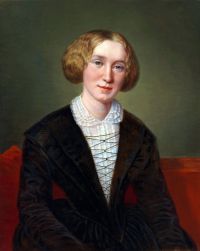 George Eliot,
Scenes of Clerical Life
(1858)
George Eliot,
Scenes of Clerical Life
(1858)
“ A very commonplace scene, indeed. But what scene was ever commonplace in the descending sunlight, when colour has awakened from its noonday sleep, and the long shadows awe us like a disclosed presence? ”
William James, The Varieties of Religious Experience (1902)
“ The objective part is the sum total of whatsoever at any given time we may be thinking of, the subjective part is the inner 'state' in which the thinking comes to pass. What we think of may be enormous,—the cosmic times and spaces, for example,—whereas the inner state may be the most fugitive and paltry activity of mind. ”
Freiherr von Friedrich Hügel, The Mystical Element of Religion…
“ Mark, we shall still come continually upon a rich multiplicity, variety, and play of different exterior and interior apprehensions and activities, emotions and sufferings, all profoundly permeated by one great end and aim, yet each differing from the other, and contributing a different share to the one great result. ”
Sarah Pratt McLean Greene, Cape Cod Folks
“ No doubt we are both familiar with the small conventionalities of life, but on such a day as this, and with such a glorious air outside, and such a unique framework of society—everything delightfully pagan—scruples worthy only of small consideration at any time should be thrown aside. ”
 Geraldine Bonner,
Rich men's children
(1906)
Geraldine Bonner,
Rich men's children
(1906)
“ Now in this mystic, beautifying luminosity, the acquired point of view, the regard for the accepted conventions of every-day seemed to have receded to a great distance, to be thin, forgotten things that had nothing to do with real life. ”
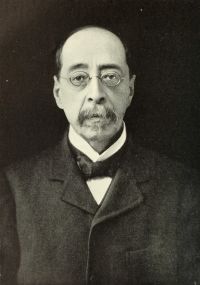 John La Farge,
An Artist's Letters from Japan
John La Farge,
An Artist's Letters from Japan
“ In these pantheistic sympathies I dimly recall that another sect finds three great mysteries in its esoteric view of the world. The wind whistling through the trees, the river breaking over its rocks, the movements of man and his voice,—or, indeed, his silence,—are the expression of the great mysteries of body, of word, and of thought. ”
Alexander Campbell Fraser, Thomas Reid (1898)
“ What need, it may be asked, for a prolonged endeavour to justify belief in the existence of the house in which we live, the planet on which it stands, or the human beings among whom we seem to play our parts? ”
 Alexander Maclaren,
The Expositor's Bible: The Psalms…
Alexander Maclaren,
The Expositor's Bible: The Psalms…
“ All the external is left behind, and much of the inward too—such as habits, desires, ways of thinking, and acquirements which have been directed to and bounded by the seen and temporal. What is not left behind is character and desert. ”
 Rudolf Hermann Lotze,
Outlines of Metaphysic — Third Principal DivisionPhenomenology
(1883)
Rudolf Hermann Lotze,
Outlines of Metaphysic — Third Principal DivisionPhenomenology
(1883)
“ Herein lies the truth, that the essence and Being of Things cannot be opposed to the essence and Being of Spirit, as though the former were a second principal division of the world and a perfect stranger to the latter. ”
 George William Russell,
AE in the Irish Theosophist
George William Russell,
AE in the Irish Theosophist
“ We should draw them in from the region of things felt to the region of things understood; in a focus burning with beauty and pure with truth we should bind them, for from the thoughts thus gathered in something accrues to the consciousness; on the morrow a change impalpable but real has taken place in our being, we see beauty and truth through everything. ”
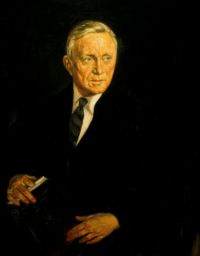 William O. Douglas,
Memoirs v. Massachusetts — Concurrence
William O. Douglas,
Memoirs v. Massachusetts — Concurrence
“ In contrast to this view, there is the allocentric outlook which is marked by an 'open encounter of the total person with the world.' Growth, spontaneity and expression are the goals of such an existence. ”
William James, Psychology: Briefer Course
“ In each kind of Me, material, social, and spiritual, men distinguish between the immediate and actual, and the remote and potential, between the narrower and the wider view, to the detriment of the former and the advantage of the latter. ”
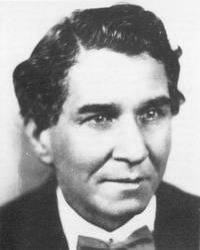
“ But what sometimes strikes me with some surprise is, not that the present condition of the world, with one sole master, should seem the common-place and natural condition, but that it should have come to seem so common-place and natural—in nine months. ”
 William Allen White,
In the Heart of a Fool
William Allen White,
In the Heart of a Fool
“ They take their character largely from their experiences, laid layer upon layer in their consciousnesses, as time moves, and though the experiences are seemingly forgotten, the results of those experiences are ineffaceably written into the towns. ”
Freiherr von Friedrich Hügel, The Mystical Element of Religion…
“ Certain interior experiences, certain deep-seated spiritual pleasures and pains, weaknesses and powers, helps and hindrances, are increasingly known and felt in and through interior and exterior action, and interior suffering, effort, and growth. ”
