Summary

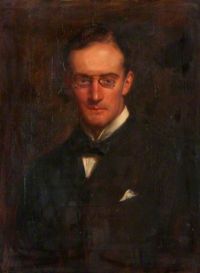
Portrait of W. P. Ker W. P. Ker Epic and Romance: Essays on Medieval Literature

The best of them have that sort of unity which can hardly be described, except as a unity of life—the organic unity that is felt in every particular detail. It is absurd to take separately the details of a great work like Njála, or of less magnificent but not less perfect achievements such as the story of Hrafnkel. There is no story in the world that can surpass the Bandamanna Saga in the liveliness with which each particular reveals itself as a moment in the whole story, inseparable from the whole, and yet in its own proper space appearing to resume and absorb the life of the whole.
Source: Gutenberg

Portrait of W. P. Ker W. P. Ker Epic and Romance: Essays on Medieval Literature

Between the dramatic qualities of epic poetry and the myths and fancies of popular tradition there must inevitably be a conflict and a discrepancy. The greatest scenes of the Iliad and the Odyssey have little to do with myth. Where the characters are most vividly realised there is no room for the lighter kinds of fable; the epic "machines" are superfluous. Where all the character of Achilles is displayed in the interview with Priam, all his generosity, all his passion and unreason, the imagination refuses to be led away by anything else from looking on and listening.
Source: Gutenberg

Portrait of W. P. Ker W. P. Ker Epic and Romance: Essays on Medieval Literature

The weather of the whole story is just enough to play into the human life—the quiet night, the north wind, and the frosty, sunless morning. The snow is not all one surface; the drifts on the hill-sides, the hanging cornice over a gully, these have their place in the story, just enough to make the movements clear and intelligible. This is the way history was written when the themes were later by two centuries than those of the heroic Sagas.
Source: Gutenberg

Get perspective with Kwize: daily news enlightened by great literature