Summary

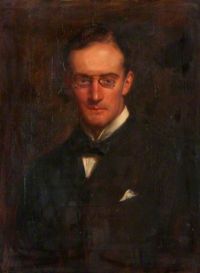
Portrait of W. P. Ker W. P. Ker Medieval English Literature

How is it that an English ballad poet sees the death of Parcy Reed in a certain manner, while a Danish poet far off will see the same poetical meaning in a Danish adventure, and will turn it into the common ballad form? In both cases it is the death of a hero that the poet renders in verse; deaths of heroes are a subject for poetry, it may be said, all over the world.
Source: Gutenberg

Portrait of W. P. Ker W. P. Ker Medieval English Literature

It is necessary to judge England in comparison with France, if the history of medieval poetry is to be written and studied at all. But the comparison ought not to be pressed so far as to obliterate all the genuine virtues of the English writers because they are not the same as the French. There is another consideration also which ought not to be left out. It is true that the most remarkable thing in the French romances was their ‘language of the heart’, their skill in rendering passion and emotion—their ‘sensibility’, to use an eighteenth-century name for the same sort of disposition.
Source: Gutenberg

Portrait of W. P. Ker W. P. Ker Medieval English Literature

Without Troilus and Criseyde the works of Chaucer would be an immense variety—romance and sentiment, humour and observation, expressed in poetical language that has never been equalled for truth and liveliness. But it is only in Troilus that Chaucer uses his full powers together in harmony. All the world, it might be said, is reflected in the various poems of Chaucer; Troilus is the one poem which brings it all into a single picture. In the history of English poetry it is the close of the Middle Ages.
Source: Gutenberg

Get perspective with Kwize: daily news enlightened by great literature