Summary

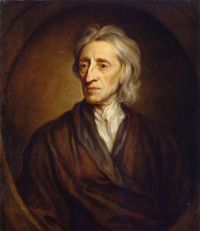
Portrait of John Locke John Locke An Essay Concerning Human Understanding…

In this also, I suppose, brutes come far short of man. For, though they take in, and retain together, several combinations of simple ideas, as possibly the shape, smell, and voice of his master make up the complex idea a dog has of him, or rather are so many distinct marks whereby he knows him ; yet I do not think they do of themselves ever compound them and make complex ideas. And perhaps even where we think they have complex ideas, it is only one simple one that directs them in the knowledge of several things, which possibly they distinguish less by their sight than we imagine.
Source: Wikisource

Portrait of John Locke John Locke An Essay Concerning Human Understanding…

For, methinks, the understanding is not much unlike a closet wholly shut from light, with only some little openings left, to let in external visible resemblances, or ideas of things without : would the pictures coming into such a dark room but stay there, and lie so orderly as to be found upon occasion, it would very much resemble the understanding of a man, in reference to all objects of sight, and the ideas of them.
Source: Wikisource

Portrait of John Locke John Locke An Essay Concerning Human Understanding…

For, though a man in a fever should from sugar have a bitter taste, which at another time would produce a sweet one, yet the idea of bitter in that man’s mind would be as clear and distinct from the idea of sweet as if he had tasted only gall. Nor does it make any more confusion between the two ideas of sweet and bitter, that the same sort of body produces at one time one, and at another time another idea by the taste, than it makes a confusion in two ideas of white and sweet, or white and round, that the same piece of sugar produces them both in the mind at the same time.
Source: Wikisource

Get perspective with Kwize: daily news enlightened by great literature