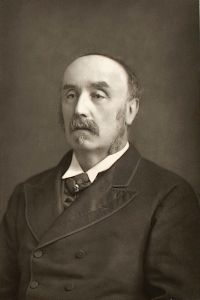
Tom Hall, When hearts are trumps
“ Would you were bride, and ah, would I were groom!On all the seashore none fairer than you;What but adore you could any one do?Cheeks like the pink of an evening sky,Eyes that might bid a man laughingly die. ”
The concept of a groom—a man preparing for or taking part in a wedding—encompasses both social ritual and literary symbolism. From the romantic idealization in Tom Hall’s verse to the ironic critique of marriage in J. Howard Moore’s The Universal Kinship, writers have examined the groom’s role as both a symbol of aspiration and a figure under cultural scrutiny.
Whether portraying the groom’s anxiety, as in William Allen White’s In the Heart of a Fool, or the ceremonial customs described by Leo Wiener, these works highlight the theme’s adaptability. The groom’s journey, from engagement to marriage, continues to serve as a lens for exploring tradition, longing, and societal norms.
Tom Hall, When hearts are trumps
“ Would you were bride, and ah, would I were groom!On all the seashore none fairer than you;What but adore you could any one do?Cheeks like the pink of an evening sky,Eyes that might bid a man laughingly die. ”
The Book of the Thousand Nights and One Night…
“ It was the hunchbacked groom that lay with thee." "For God's sake," replied the Lady of Beauty, "do not mention him to me, may God curse his father! And mock me not, for the groom was only hired for ten dinars to conjure the evil eye from us, and he took his hire and departed. As for me, I entered the bridal chamber, where I found my true husband sitting in the alcove, him before whom the singers had unveiled me and who flung them the red gold by handsful, till he made all the poor there rich; and I passed the night in the arms of my sprightly husband, with the black eyes and joined eyebrows." ”
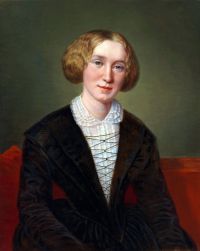
 Martha Finley,
Mildred's New Daughter
Martha Finley,
Mildred's New Daughter
“ There was scarcely time to think of the pain of the coming partings from brother, uncles, and other relatives; pain it would be, yet not to be compared with that of many a young bride who must leave father, mother, home, and more than one loved brother and sister.The wedding was a pronounced success; brides and bridesmaids looking their best—groom and groomsmen also—and each going through his or her part of the ceremony in an altogether creditable manner. ”
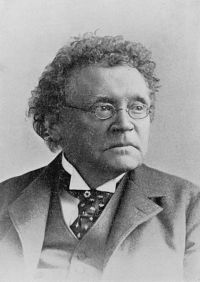 Francis James Child,
The English and Scottish Popular Ballads…
Francis James Child,
The English and Scottish Popular Ballads…
“ Till the bride and the groom were a-bed. And what they did there must be counsel to me, Because they lay long the next day, And I had haste home, but I got a good piece Of the bride-cake, and so came away. ”
 William Allen White,
In the Heart of a Fool
William Allen White,
In the Heart of a Fool
“ Even the eyes of the groom, as he stood beside the bride, tall, youthful, strong, and handsome as a man may dare to be and earn an honest living, even his eyes sometimes found themselves straying toward the figure and face of the beautiful girl whom he had scarcely noticed while she worked in the court house. ”
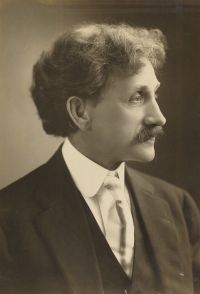 J. Howard Moore,
The Universal Kinship
J. Howard Moore,
The Universal Kinship
“ The wedding-ring is the old token accepted by the woman when she gave her pledge of bondage. The coming of the groom with his aids to the marriage is a figurative marauding expedition. The honeymoon is the abduction. ”
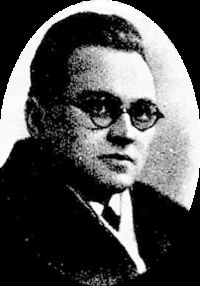 Leo Wiener,
Anthology of Russian literature from the earliest period to the present time…
(1902)
Leo Wiener,
Anthology of Russian literature from the earliest period to the present time…
(1902)
“ On the appointed day the groom puts on his best clothes, and drives with his father, or near relatives, or friends whom he loves best to the bride’s parents. Upon arrival, the bride’s parents and her near relatives meet them with due honour, after which they go into the house and seat themselves according to rank. Having sat a while, the groom’s father or other relative remarks that they have come for the good work, as he has bid them; the host answers that he is glad to see them, and that he is ready to take up the matter. ”
K. J. Erben, A Book of Czech Verse — "The Unknown Guest" and "Ave Maria" (1958)
“ The ever-smiling, happy bride. “Up and help yourselves, good people,” Cries the bridegroom joyously. “Open every room and cellar, Take whate’er your fancy be.” Music plays, they dance; then sudden Stands a stranger by the groom. ”
C. M. Westmacott, The English Spy: An Original Work Characteristic…
“ Two grooms are no longer his Grace's and my Lord's attendants, but each is followed by one groom in plain clothes, not very dissimilar from the man he serves. Do we ever see the star of nobility in the morning, to guard him who has a right to it from popular rudeness and a confusion of rank? ”
Edward B. Pollard, Oriental Women
“ Music and dancing, jesting and telling happy tales, with eating and drinking, make up the round of merriment. At length the time comes for the bridal party to make its way to the home of the groom's parents. All along the way are signs of rejoicing, in which all are expected to join. The groom's house is reached, and here the festivities are resumed and carried on for several days, till all are fatigued and sated with mirth and quite ready to see the young couple settle down to their new life as home makers. ”
Walter Cox Green, The Book of Good Manners; a Guide to Polite Usage for All Social Functions
“ GROOM. The groom selects his best man, usually an unmarried intimate friend, though a married man or widower is permissible. After consultation with the bride he calls upon the clergyman, the organist, the sexton, and invites the ushers. ”
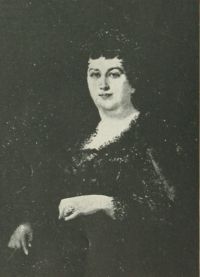 M. E. W. Sherwood,
Manners and Social Usages
M. E. W. Sherwood,
Manners and Social Usages
“ Her sister, or one bridesmaid, stands near her at the altar rail, and kneels with her and the bridegroom, as does the best man. The groom takes his bride from the hand of her father or nearest friend, who then retires and stands a little behind the bridal pair. He must be near enough to respond quickly when he hears the words, "Who giveth this woman to be married to this man?" The bride and groom walk out together after the ceremony, followed by the nearest relatives, and proceed to the home where the wedding breakfast is served. ”
S. Annie Frost, Frost's Laws and By-Laws of American Society
“ A gentleman or lady who is acquainted with both bride and groom must speak first to the bride; but if a stranger to either, may first speak to the one with whom he is already acquainted, who will then introduce the other. If a stranger to both bride and groom, the first groomsman must make the introduction. ”
“ With the bride's and groom's luggage properly bestowed, the ring and fee in his pocket, the groom's traveling clothes at the bride's house, the groom in complete wedding attire, and himself also ready, the best man has nothing further to do but be gentleman-in-waiting to the groom until it is time to escort him to the church, where he becomes chief of staff. ”
John Guy Vassar, Twenty years around the world (1861)
“ A large wedding procession attracted my attention from the great quantity of presents therein. I counted fifty coolies with loaded hand-barrows, filled with fruit, flowers, confectioneries, cakes, nuts, robes, &c., in rich profusion, preceding the bride, who was conducted to the house of the groom veiled, in a sedan chair, as the tiny feet of the ladies are seldom seen in the streets. They are affianced early by their parents without ever having seen their lovers; and when their intended husbands gaze upon them, if acceptable, they are supported by women across a pan of coals into the house. ”
Anonymous, The Life and Transactions of Mrs… (1816)
“ The wedding being over, and the bridegroom having enjoyed his charming bride, grew exceedingly fond of her, even to dottage, which sickened and palled her love toward him, and he perceiving it, strove to wind himself the more into her affections ”
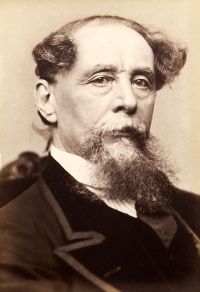 Charles Dickens,
Sketches of Young Couples
Charles Dickens,
Sketches of Young Couples
“ Of these, one is a little fellow of six or eight years old, brother to the bride,—and the other a girl of the same age, or something younger, whom he calls ‘his wife.’ The real bride and bridegroom are not more devoted than they: he all love and attention, and she all blushes and fondness, toying with a little bouquet which he gave her this morning, and placing the scattered rose-leaves in her bosom with nature’s own coquettishness. ”
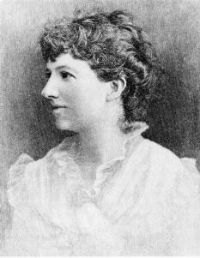 Grace Elizabeth King,
Balcony Stories
Grace Elizabeth King,
Balcony Stories
“ It must be explained for the benefit of those who do not live in the little world where an allusion is all that is necessary to put one in full possession of any drama, domestic or social, that Mr. Horace was speaking of the wedding-night of madame, when the bridal party stood as he described under the chandelier; the bride and groom, with each one's best friend. ”
Walter Cox Green, The Book of Good Manners; a Guide to Polite Usage for All Social Functions
“ GROOM. He pays for the bridal bouquet carried by the bride at the wedding ceremony, and, if he wishes, for the bouquets carried by the bridesmaids. MEN. If well acquainted with a debutante's family, a man may send her flowers at the time of her debut. After a slightly intimate acquaintance, a man can present flowers to a young unmarried woman as a token of sympathy either of joy or sorrow. It is not usual for a man to send flowers to a woman who is a mere acquaintance. BALLS. It is permissible for a man, if he wishes, to send flowers to a woman he is to escort to a ball. ”
Various, Lippincott's Magazine of Popular Literature and Science…
“ The groom makes another bow and sits down again, and the bride, dancing alone, makes a turn round the room and selects a partner from the guests, who in turn choose a woman, and so on in graceful alternation. ”
“ The bride returns the compliment by asking the sister of the groom who is nearest her own age, to be bridesmaid, or if he has no sister, she asks a cousin or even occasionally shows her courtesy by asking the groom to name a particular friend of his. ”
 Thomas Hardy,
Late Lyrics and Earlier, With Many Other Verses
(1922)
Thomas Hardy,
Late Lyrics and Earlier, With Many Other Verses
(1922)
“ To the air of "Haste to the Wedding," As after a wedding-day; Yea, up and down the middle In windless whirls went they! There danced the bride and bridegroom, And couples in a train, Gay partners time and travail Had longwhiles stilled amain! . . . ”
 Leigh Hunt,
Coaches and Coaching
Leigh Hunt,
Coaches and Coaching
“ The bride, thinking he is looking at her, casts down her eyes, pensive in her joy.The bridegroom is at once the proudest, and the humblest, and the happiest man in the world. For our parts, we sit in a corner, and are in love with the sister. ”
 Metta Victoria Fuller Victor,
The Blunders of a Bashful Man
Metta Victoria Fuller Victor,
The Blunders of a Bashful Man
“ It explains how girls may become happy wives, bachelors become happy husbands. It includes a treatise on "The Etiquette of Marriage," describing invitations, the dresses, the ceremony, and the proper behavior of bride and groom. ”
active 11th century Somadeva Bhatta, The Kathá Sarit Ságara; or, Ocean of the Streams of Story
“ And then the bride and bridegroom, now that the delightful ceremony of marriage was accomplished in accordance with their long-cherished wishes, entered the inner apartments crowded with women, adorned with pure and variegated decoration, even as they penetrated the heart of the people full of pure and various loyalty. ”
 James Hudson Taylor,
Union and Communion; or, Thoughts on the Song of Solomon
James Hudson Taylor,
Union and Communion; or, Thoughts on the Song of Solomon
“ We have already found the explanation of the fairness of the bride in her reflecting like a mirror the beauty of the Bridegroom. Well may He with satisfaction describe her beauty while she is thus occupied with Himself! The lips that speak only of Him are like a thread of scarlet; the mouth or speech which has no word of self, or for self, is comely in His sight. [41] How sweet His words of appreciation and commendation were to the bride we can well imagine; but her joy was too deep for expression; she was silent in her love. ”
“ Then horses plunged, elderly knights fussed, court ladies commented upon the heat, the bride, the presents, or their neighbors. Then the bride's father mopped his brow and the bridegroom's mother wept a little. Then there was much shaking or waving of hands or of handkerchiefs. Then the bridal carriage began to move, the bride began to smile, and rice and flowers and confetti and good wishes and slippers filled the air. ”
Anonymous, Everybody's Book of Luck
“ The groom, as the secondary figure in the day's ceremonies, escapes very easily as far as superstition goes, and may do pretty well what he pleases, save letting his hat or the ring drop, both of which are very unlucky. ”
“ A bridegroom fitted to your rank, an honest man and true." "Nay, nay, I prithee, step-dame, there is none that I can wed, Only my foster brother dear I love, alive or dead. "With this ring his troth he plighted, and whatever fate betide, He will come himself full gaily, and claim me for his bride." ”
Edward Alfred Steiner, On the Trail of the Immigrant
“ If you enter the house of the bride, you will find it full of sweltering humanity, all of it dancing up and down, down and up, while the fiddlers play and the bridegroom sings about “The sweetheart he is glad to have and wouldn’t sell to any one.” ”
 Charles Lamb,
The Works of Charles and Mary Lamb…
Charles Lamb,
The Works of Charles and Mary Lamb…
“ But with the young people all was merriment, and shakings of hands, and congratulations, and kissing away the bride's tears, and kissings from her in return, till a young lady, who assumed some experience in these matters, having worn the nuptial bands some four or five weeks longer than her friend, rescued her, archly observing, with half an eye upon the bridegroom, that at this rate she would have "none left." ”
Mrs. Alex. McVeigh Miller, The shadow between them; (1900)
“ A cousin of the heroine, coming to the city, and learning of the affair just in time to stop it, had written the bridegroom a long letter with all the facts, and referring him to the bride and her father for confirmation. On their admitting the truth he had renounced her with indignation, and the wedding was off, and the fair lady disconsolate. ”
Margaret C. Conkling, The American Gentleman's Guide to Politeness and Fashion
“ When you require an introduction to the bride, but are acquainted with her husband, you may speak first to him, and so secure a presentation. Usually a groomsman, or some other gentleman, is in readiness to present unknown visitors. ”
“ At length one was found, good and industrious, as well as pretty; and as the young man raised no objections the wedding took place at once, and the bride and bridegroom went to live in the cottage with the old woman. But no change was to be seen in the husband’s conduct. All day long he was out amusing himself in the company of his former friends, and if his wife dared to say anything to him on his return home he beat her with his stick. And next year, when a baby was born to them, he beat it also. ”
Matthew Henry, Matthew Henry's Commentary on the Whole Bible… (1700s)
“ He compares himself to the friend of the bridegroom, who attends upon him, to do him honour and service, assists him in prosecuting the match, speaks a good word for him, uses his interest on his behalf, rejoices when the match goes on, and most of all when the point is gained, and he has the bride. ”
Ella M. Hart Bennett, An English Girl in Japan
“ At the time of the marriage the bridegroom sends presents to his bride as costly as his means will allow, which she immediately offers to her parents, in acknowledgment of their kindness in infancy and of the pains bestowed upon her education. ”
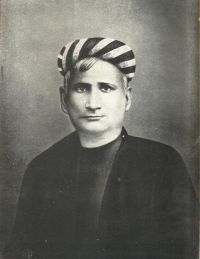 Bankim Chandra Chattopadhyay,
Indira and Other Stories
(1918)
Bankim Chandra Chattopadhyay,
Indira and Other Stories
(1918)
“ If the bride should ever see such a ring on a man's finger, she will know that that man is her husband. If the bridegroom should find such a ring on a woman's hand, he will recognise his affianced wife. ”
“ A bride and bridegroom, surrounded by all the appliances of wealth, hurried through the day by the whirl of society, filling their solitary moments with hastily-snatched caresses, are prepared for their future life together as the novice is prepared for the cloister—by experiencing its utmost contrast. ”
“ At a small wedding the duty of ushers is personally to take guests up to the bride and groom. But at a big reception where guests outnumber ushers fifty or a hundred to one, being personally conducted is an honor accorded only to the very old, the very celebrated or the usher's own best friends. All the other guests stand in a long congested line by themselves. The bride's mother takes her place somewhere near the entrance of the room, and it is for her benefit that her own butler or one furnished by the caterer, asks each guest his name and then repeats it aloud. ”
Bernhard Pick, The Apocryphal Acts of Paul, Peter… (1909)
“ And the dawn having come on, the King arrived, and having supplied the table, brought it in before the bridegroom and the bride. And he found them sitting opposite each other, and he found the face of the bride uncovered, and the bridegroom was quite cheerful. And the mother came in and said to the bride, "Wherefore dost thou sit thus, child, and art not ashamed, but actest as if thou hadst for a long time lived with thine own husband?" And her father said, "It is because of thy great love to thy husband that thou art uncovered?" ”
“ The bridegroom [Pg 195] chooses his best man and the groomsmen and ushers from his circle of relatives and friends of his own age, and from the relatives of his fiancee of a suitable age. The dresses of the bridemaids are not given unless their circumstances are such as to make it necessary. ”
 Emily PostLeo Wiener
 Donald Ogden Stewart
 Lillian Eichler WatsonTom HallFrancis James ChildWilliam Allen WhiteC. M. WestmacottEdward B. PollardK. J. ErbenMartha FinleyJ. Howard MooreS. Annie FrostJohn Guy VassarM. E. W. SherwoodGrace Elizabeth KingVariousMetta Victoria Fuller VictorAnonymous