Summary

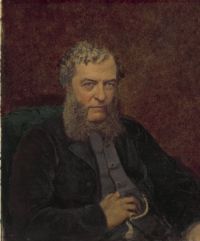
Portrait of John Lort Stokes John Lort Stokes Discoveries in Australia, Volume 1

While waiting for the tide to rise, in order to cross this natural breakwater, we landed, and struggled for a good mile through a mixture of deep mud and sand, drifted, at the coastline, into hills of from twenty-five to thirty feet high, and bound together by a long coarse grass; immediately beyond which we came upon a small lake of fresh water, where all the luxuriant growth of tropical vegetation was starting into life, and presenting an almost miraculous contrast to the barren sterility, that stamped an aspect of changeless desolation upon the rest of this inhospitable shore.
Source: Gutenberg

Portrait of John Lort Stokes John Lort Stokes Discoveries in Australia, Volume 1

The view which solicits the eye of the sea-wearied voyager as he proceeds up the harbour, is indeed well calculated to excite a feeling of mingled admiration and delight--the security and capacity of the port--its many snug coves and quiet islets with their sloping shores, sleeping upon the silver tide--pretty white cottages and many English-looking villas peeping out here and there from their surrounding shrubberies, and the whole canopied by a sky of ethereal blue, present a picture which must at once enchant the most fastidious observer.
Source: Gutenberg

Portrait of John Lort Stokes John Lort Stokes Discoveries in Australia, Volume 1

During our brief stay at Bahia I paid a visit to the grave of poor young Musters, a little Middy in the Beagle during our last voyage, who died here on the 19th May, 1832, from the effects of a fever caught while away on an excursion up the river Macacu. He was a son of Lord Byron's Mary, and a great favourite with all on board. Poor boy! no stone marks his lonely resting place upon a foreign shore, but the long grass waves over his humble grave, and the tall palm tree bends to the melancholy wind that sighs above it.
Source: Gutenberg

Get perspective with Kwize: daily news enlightened by great literature