Speculum

Definition and stakes

1911 Encyclopædia Britannica (1911)

“ It imitates the motions made in polishing a speculum by hand by giving both a rectilinear and a lateral motion to the polisher, while the speculum revolves slowly; by shifting two eccentric pins the course of the polisher can be varied at will from a straight line to an ellipse of very small eccentricity, and a true parabolic figure can thus be obtained. The speculum lies face upwards in a shallow bath of water (to preserve a uniform temperature) , and the polisher fits loosely in a ring, so that the rotation of the speculum makes it revolve also, but more slowly. ”
Source: Wikisource

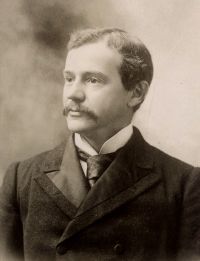
Portrait of Howard Atwood Kelly Howard Atwood Kelly,  American Medical Biographies (1920)

“ In the evolution of this operation he invented the silver-wire suture and the duck-bill speculum, the announcement of these successful cases attracting world-wide attention, and in many quarters being received with incredulity.
The invention of the speculum came about in this way: Early one morning in 1845 a countrywoman riding on horseback into Montgomery was thrown from her horse and suffered a displacement of the uterus. Sims was called to see her, and found her in bed complaining of great pain in her back and a sense of tenesmus in both bladder and rectum.
”
Source: Wikisource

The Boy Mechanic, Volume 1: 700 Things for Boys to Do

“ The polishing and testing done, the speculum is ready to be silvered. Two glass or earthenware dishes, large enough to hold the speculum and 2 in. deep, must be procured. With pitch, cement a strip of board 8 in. long to the back of the speculum, and lay the speculum face down in one of the dishes; fill the dish with distilled water, and clean the face of the speculum with nitric acid, until the water will stick to it in an unbroken film.
The recipe for silvering the speculum is:
Mix solution D and make up to 25 fluid oz.
”
Source: Gutenberg

Get perspective with Kwize: daily news enlightened by great literature