The Psalter, a compilation of religious poems and hymns central to Jewish and Christian tradition, has long functioned as a cornerstone of spiritual expression and liturgical practice. Authors such as Hartmann Grisar criticized its redundancy, contrasting earlier eloquence with contemporary spiritual emptiness, while A. R. Whitham stressed its role as a link between the Old and New Testaments, emphasizing its importance in Christian worship and its ability to unite faith across time.
W. F. Skene connected it to ascetic devotion in Celtic Scotland, portraying it as a means of spiritual journey, and Augusta Theodosia Drane noted its historical translations and continued influence in medieval scholarship. These viewpoints together reveal the Psalter as both a reflection of human hardship and a channel for divine praise, shaping religious identity throughout the ages.
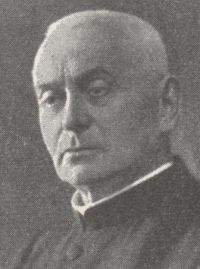 Hartmann Grisar,
Luther, vol. 4 of 6
Hartmann Grisar,
Luther, vol. 4 of 6