Antiphon

Definition and stakes

A Dictionary of Music and Musicians (1900)

“ The first, and one of the most important, of these, is the Introit; which partakes, in about equal degrees, of the characters of the Antiphon and the Psalm Tone. The words of the Introit are divided into two portions, of which the first is a pure Antiphon, and the second, a single Verse of a Psalm, followed by the 'Gloria Patri,' after which the Antiphon is again repeated in full. Except that it is perhaps a little more elaborate, the Melody of the first division differs but little, in style, from that proper to the Antiphons sung at Lauds and Vespers ”
Source: Wikisource

A Dictionary of Music and Musicians (1900)

“ Every Psalm and Canticle sung in the Divine Office is accompanied by an Antiphon, which, on Festivals, precedes and follows it, but, on Ferias, follows it only. Antiphons, selected from Holy Scripture, and other sources, are appointed for every Feast, Fast, and Feria, in the Ecclesiastical Year; and each is provided with its proper Plain Song Melody, which will be found in Antiphonarium Romanum.' It is indispensable, that, in every case, the Psalm and Antiphon should be suug in the same Mode; the Tone for the Psalm is therefore suggested by the Mode of the Antiphon ”
Source: Wikisource

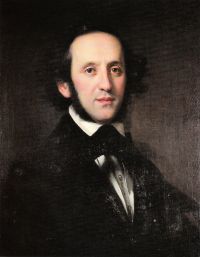
Portrait of Felix Mendelssohn-Bartholdy Felix Mendelssohn-Bartholdy,  Letters of Felix Mendelssohn Bartholdy from Italy and Switzerland

“ An antiphon, and sometimes more than one, serves as an introduction to each Psalm. These are generally sung by two counter-tenor voices, in canto fermo, in harsh, hard tones; the first half of each verse in the same style, and the second responded to by the chorus of male voices that I already described. I have kept the several antiphons that I wrote down, that you may compare them with the book. On the afternoon of Wednesday, the 68th, 69th, and 70th Psalms were sung. ”
Source: Gutenberg

Get perspective with Kwize: daily news enlightened by great literature