Emetic

Definition and stakes

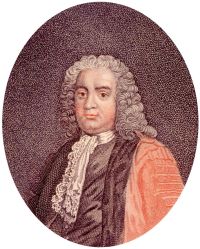
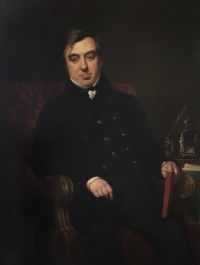
Portrait of John Ayrton Paris John Ayrton Paris,  Pharmacologia

“ The advantages to be obtained from the administration of an emetic in the cure of disease, may either depend upon its primary, or secondary operations, that is to say, upon the mere evacuation of the stomach, or upon those changes which occur in distant parts from sympathy; and the judicious practitioner, in the selection of an emetic, will always be guided by the nature of the indication which he intends to fulfil ”
Source: Gutenberg

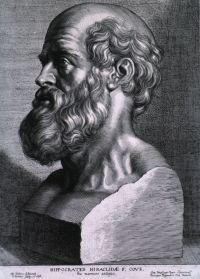
Portrait of Hippocrates Hippocrates,  The Genuine Works of Hippocrates… (1886)

“ Having administered an emetic for the purpose of evacuating bile or phlegm upwards, to induce rupture of a vessel by the act of vomiting, although the patient had previously been sensible of no pain in the region; having given an emetic to a woman with child, to induce abortion in consequence; in curing empyema, when looseness of the bowels is superinduced, and cuts off the patient; in applying an ointment for a disease of the eyes, when acute pains supervene, which end either in rupture of the eye or amaurosis, the physician in such a case gets the blame for having applied the ointment ”
Source: Gutenberg

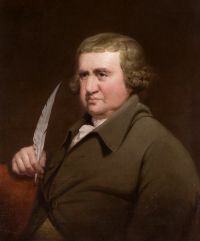
Portrait of Erasmus Darwin Erasmus Darwin,  Zoonomia, or, the Laws of Organic Life… (1796)

“ As bitters and metallic salts, exhibited in small doses, stimulate the stomach into greater action, as appears by their increasing the power of digestion, and yet become emetic, when given in larger doses; one might suspect, that they became emetic by inducing debility, and consequent retrograde actions of the stomach, by their previously exhausting the sensorial power by their great stimulus; which might be effected in a moment without producing pain, and in consequence without our perceiving it. ”
Source: Wikisource

Get perspective with Kwize: daily news enlightened by great literature